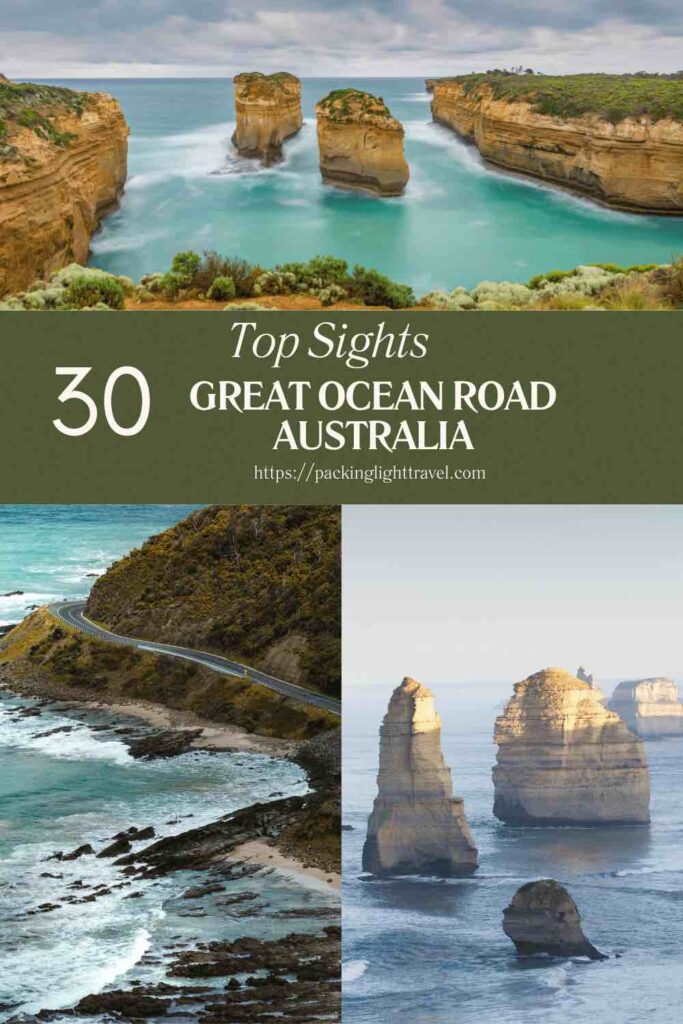
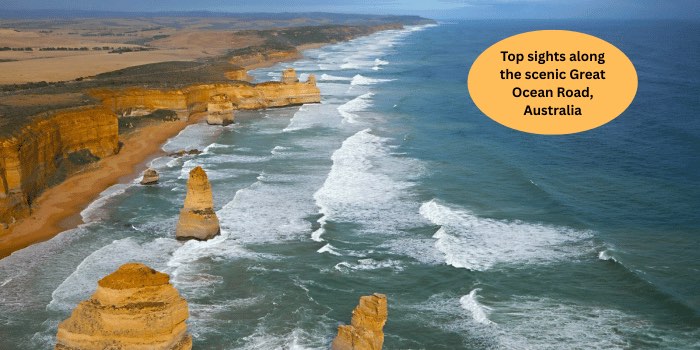
Recognised as one of the world’s best coastal drives, the Great Ocean Road extends from Torquay to Allansford (240 kilometres) along the southwest coast of Victoria. While 240 kilometres suggests a short journey, it’s a road trip not to be rushed. Plan for at least a few days to stop frequently to soak up the views, hike coastal trails, spot koalas in the wild, and enjoy fresh local seafood. These are but a small sample of the top sights along the scenic Great Ocean Road.
The legendary stretch of coastline winds its way through some of the most stunning landscapes Australia has to offer, with pristine beaches, towering cliffs, wildlife galore, and ancient rainforests vying for attention.
Travelling in a westerly direction means being in the lane closer to the ocean, with easier and safer stops at scenic points.
How to best experience the Great Ocean Road
When a Great Ocean Road adventure considers the oft-quoted statement, “It’s not about the destination, it’s about the journey,” it emphasises the importance of enjoying the process and moments along the way.
Yes, it can be ‘done’ in one long, exhausting day, much of it sitting in a vehicle, experiencing road fatigue, and stopping at whatever top viewpoints can be squeezed into 10, 12, or 14 hours. The 240 kilometres isn’t highway driving; it takes a little over four hours without stopping. Speed limits are low, usually between 50 and 80 km/h, traffic can be heavy, and safe overtaking opportunities are few.
Small-group tours of 12 or 14 hours from Melbourne include brief stops at a limited number of the top sights described below. A guided tour may be attractive to those without a vehicle and limited time. It’s worth considering if it means your best (or only) opportunity to experience the Great Ocean Road.
After considerable research, I decided six days (including the day of arrival at Melbourne Airport) were needed to see and experience my selected sights and activities. I chose a self-drive itinerary; the places where I stayed overnight are listed below. Having experienced the wonders of the Great Ocean Road, I’ve concluded that a minimum of three days is needed to maximise the benefits of such a magnificent coastal journey. Keep in mind that unplanned stops are frequent because there’s so much to see and appreciate.
 Loch Ard Gorge
Tips for touring the Great Ocean Road
- If you don’t have your own vehicle, rent a car for a self-drive tour of the Great Ocean Road. I found the best prices at SIXT. If you’re fortunate to travel with a local who has an automobile association membership, take advantage of the discount.
- Travelling at a slower pace not only allows you to take as long as you like at each stop, but it’s also an opportunity to support local businesses.
- There are other drivers on the Great Ocean Road who aren’t accustomed to left-hand drive. A slower journey is a safer journey.
- Travelling at a slower pace allows you to keep an eye out for wildlife. It can mean the difference between roadkill and seeing a koala cross a road and climb to the safety of a tree for an amazing sight.
- Travel mid-week to avoid the crowds at top attractions.
- Choose the season that aligns with your interests. Winter means fewer people, cheaper accommodation, thundering waterfalls, and the possibility of whale sightings (June to September). Summer is the season for sun-soaked beach days and seaside picnics. Autumn offers mild weather for clifftop hikes and forest walks.
- Check out the dates of festivals and events. Some may be an attraction, while others may be a deterrent to finding accommodation at a reasonable price.
- Maintenance and upgrades result in temporary closures to access roads, carparks, viewing platforms, and beach access. The Great Ocean Road Coast and Parks Authority is a reliable source of information.
- Book early if travelling in summer, especially during the December to January school holidays.
- Weather can change quickly, so pack a layer or two, including one that’s waterproof. Wear comfortable shoes with a decent tread. Sunscreen and a sun hat are year-round priorities.
Accommodation
Taking into consideration my top sights to include in a Great Ocean Road itinerary, I booked the following accommodation:
- Torquay: Torquay Tropicana Motel
- Lorne: Lorne Foreshore Caravan Park
- Apollo Bay (2 nights): Seaview Motel and Apartments
- Port Campbell: Southern Ocean Motor Inn
The Great Ocean Road ends at Allansford. One option is to continue in a westerly direction towards Adelaide, South Australia. Another is to return to Melbourne, via the Great Ocean Road or the Princes Highway. We travelled to Geelong and stayed at the historic Cobb & Co Lodge in Queenscliff to take the ferry the following day to Sorrento on the stunning Mornington Peninsula.
Top sights along the scenic Great Ocean Road
A list of 30 sights might feel daunting, but many are a short drive apart and can be covered in a three- or four-day itinerary.
1. Torquay
Torquay, the surf capital of Australia, is the official start of the Great Ocean Road, just 109 kilometres from Tullamarine Airport (MEL), the main international and domestic gateway for Melbourne.
Torquay is home to the Australian National Surfing Museum, the world’s largest surfing museum. It showcases the history and culture of surfing in Australia, featuring exhibits on the evolution of surfboards, surf fashion, surf culture, and the impact of surfing on Australian society. It houses an impressive array of surfing memorabilia, photographs, and historical artefacts. It’s a must-visit destination for surfing enthusiasts. One of the exhibits includes a shaping bay where visitors watch boards shaped from traditional malibus to high-performance shortboards.
Major surfing brands are represented in retail outlets in Surf City Plaza, including Billabong, Rip Curl, Roxy, Quicksilver, and Oakley. Venture down a side street beside the plaza to find factory outlets selling seconds and the previous season’s clothing at discounted prices.
The Torquay History Walking Trail helps preserve Torquay’s historic architecture, surf culture, and other significant sites. It starts at the Colonel Price House in Charles Lane, passes the Torquay & District Historical Society, then winds through town before continuing along the Esplanade to Point Danger. A trail map can be downloaded.
2. Bells Beach
Bells Beach is 10 kilometres from Torquay. It’s the spiritual home of surfing in Australia, hosting the Rip Curl Pro Bells Beach every Easter, the longest running event of the World Surf League World Championship Tour.
Walk along the cliff-top boardwalk to watch the surfers or enjoy a leisurely beach walk. The long strip of surf is home to several breaks, including Winki Pop, Southside, and Steps. There are plenty of vantage points on the cliff tops to watch the surfers in action.
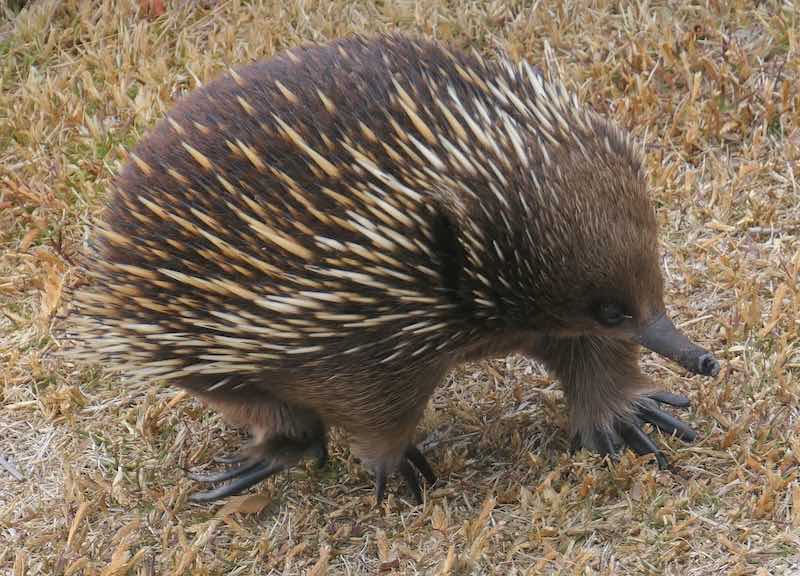
Keep a lookout for echidnas, birds, and other wildlife amongst the coastal scrub.
3. Anglesea Golf Course
The golf course, 14 kilometres from Bells Beach, is famous for its mobs of Eastern Grey Kangaroos numbering around 300. They can be seen during the day on the fairways, but they mostly lie about in the shade and seem unperturbed by golfers and golf balls.
Freshly cut grass doesn’t seem to be at the top of their menu, preferring the young shoots and grasses at the edges of the course. Or watch out for a joey feeding from its mother.
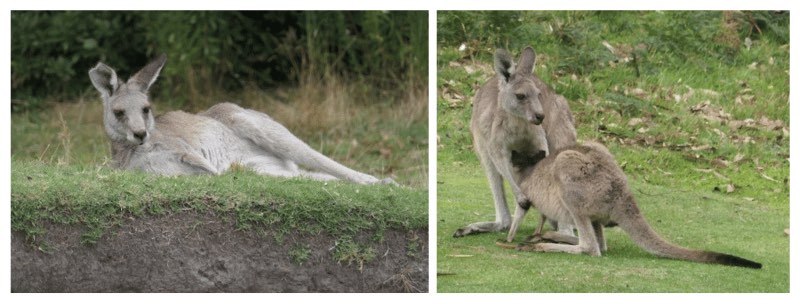
The golf club organises 25-minute tours in motorised tour carts conducted by volunteers. Book online to select a date and time slot.
The 19th Hole Bistro is open for lunch and dinner.
4. Aireys Inlet
Aireys Inlet, 10 kilometres from the Anglesea Golf Course, is a popular seaside getaway. Built in 1891 and perched on the cliffs 70 metres above sea level, the Split Point Lighthouse is the subject of local ghost stories and maritime legends. Take a tour to learn more about the region’s past and enjoy sweeping coastal views.
5. Great Ocean Road Memorial March
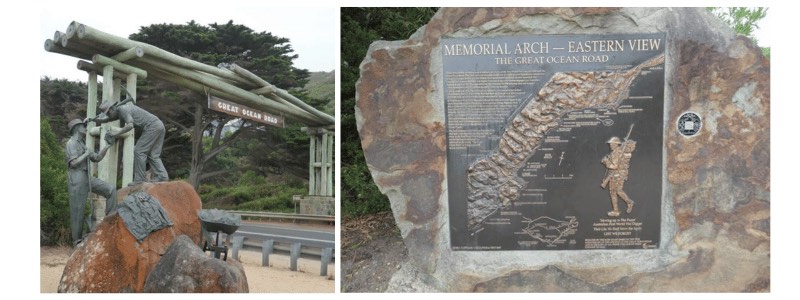
The Memorial Arch is 5.5 kilometres from Aireys Inlet. The arch commemorates the construction of the road as a memorial to the fallen soldiers of World War I, and, as such, is the largest war memorial in the world.
More than 3,000 returned soldiers built the road beginning in 1919 as a postwar employment project. One of the most photographed Great Ocean Road stops is the Memorial Arch that pays tribute to those who built the road under challenging conditions. Pull over into the carpark to view the sculpture and information panels, and take photographs of the arch from the east or west.
6. Lorne
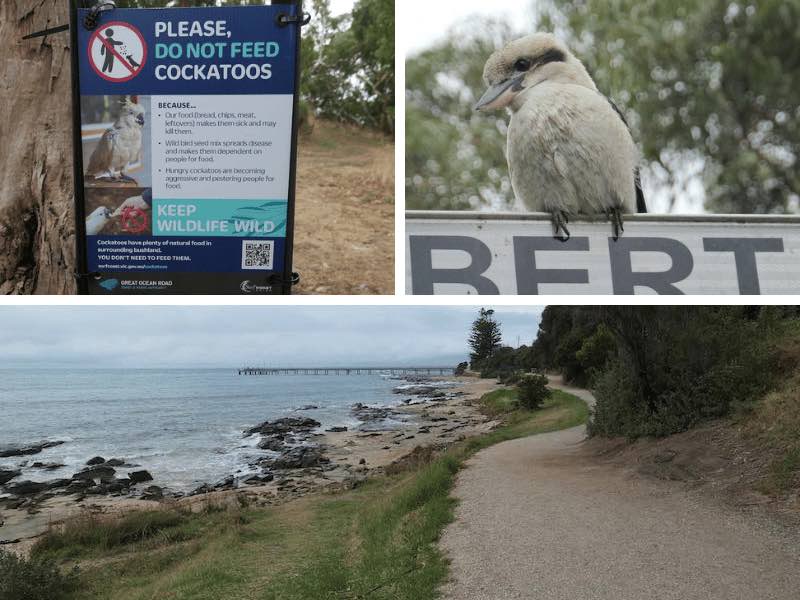
Lorne, 13 kilometres from Memorial Arch, is a trendy coastal town with boutique shops and cafés along the main street. The beach in town is popular with visitors. Enjoy fish and chips on the beach, but expect to be joined by many sulphur-crested cockatoos. Signs discourage people from feeding them.
Keep in mind that the popular, 1.2-kilometre Lorne Pier to Pub, one of the largest open-water swims in the world, attracts over 5,000 swimmers in early January. At other times, enjoy a leisurely stroll along the coastal path to the pier.
Experience The Great Ocean Road Story: Building Australia’s Most Famous Road, a permanent exhibition in the Great Ocean Road Heritage Centre within the Lorne Visitor Centre.
While exploring Lorne, keep an eye out for kookaburras.
7. Lorne Hotel
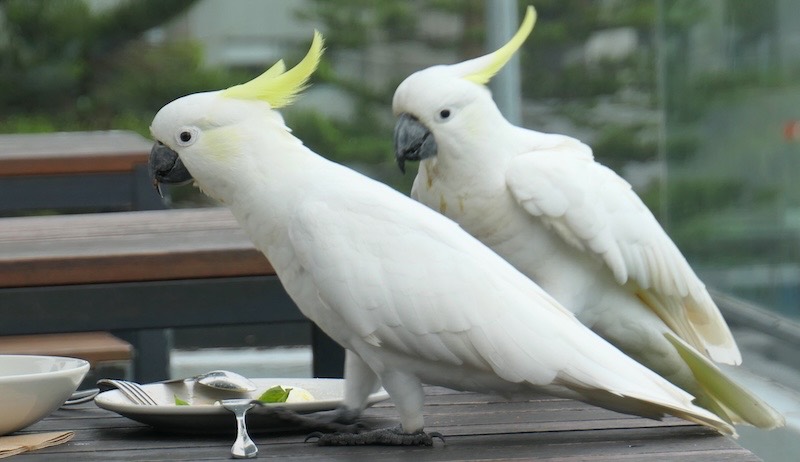
The ‘pub’ in the Lorne Pier to Pub refers to the Lorne Hotel located on the foreshore, where the race concludes at the Lorne Surf Life Saving Club situated directly in front of the historic pub. Enjoy lunch on the rooftop terrace, where cockatoos wait patiently for a feed. As patrons leave their table, cockatoos swoop in for the leftovers. Staff are kept busy shooing away the birds and clearing tables as quickly as possible.
8. Teddy’s Lookout
Teddy’s Lookout is 2.4 kilometres from Lorne. It offers panoramic vistas of the merging of the Southern Ocean, the Saint George River, and the hinterland. It’s a five-minute walk from the carpark to the popular viewpoint for some of the best views of the Great Ocean Road as it winds around the coastline cliffs. It’s a steep ascent but worth it, especially if dolphins and rays are spotted.
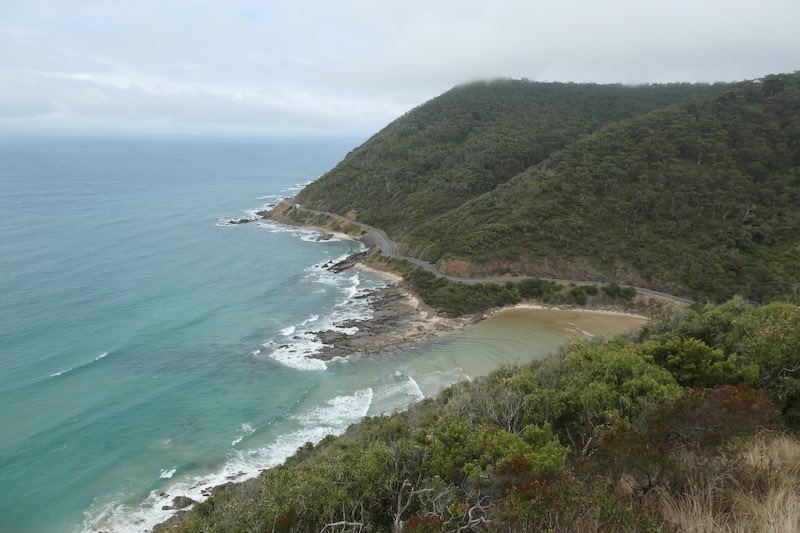
9. Erskine Falls
Erskine Falls, 30 metres high, towers above a lush green forest to descend into a fern-filled gorge. It’s one of several waterfalls within 10 kilometres of Lorne. The car park is just 9 kilometres from Lorne, and a short walk leads to the top lookout with a view of the falls. Continue down 230 stone steps to reach the bottom viewpoint, which offers a better vantage point for photos.
10. Kennett River Koala Walk
The Kennett River Koala Walk, formally known as the Grey River Road, is 23 kilometres from Lorne. It’s regarded as one of the best places in Australia to observe koalas in their natural surroundings. Head to Kafe Koala and General Store, park the vehicle, and look for a dirt road lined with eucalyptus trees between the café and the RV park. This is the start of the Kennett River Koala Walk.
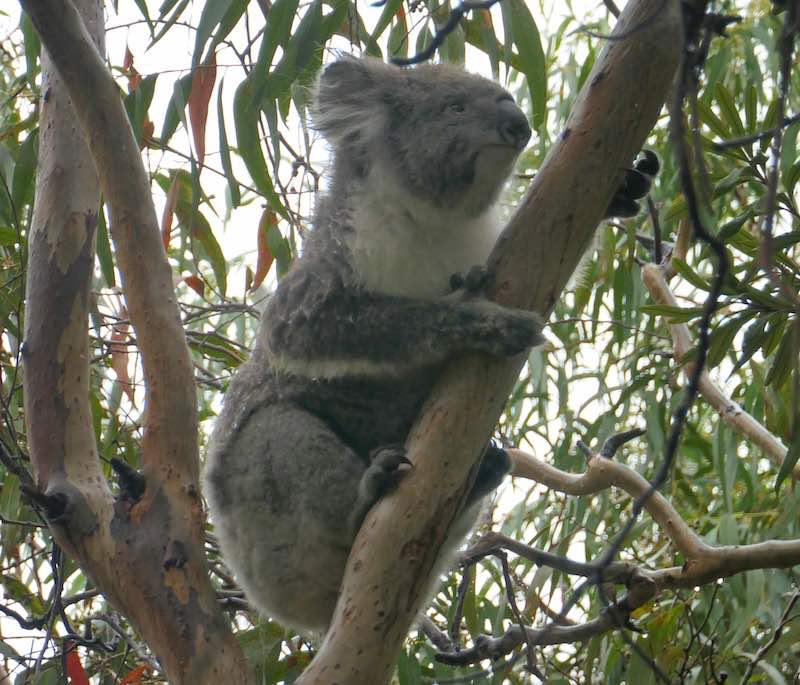
Take a leisurely stroll, scouring the trees for sleeping koalas, while keeping an eye out for other wildlife such as wallabies, king parrots, crimson rosellas, and kookaburras. Koalas aren’t easy to spot, but it’s likely there will be other folks looking, pointing upwards, or taking photographs.
11. Apollo Bay
From the Kennet River Koala Walk, Apollo Bay is 23 kilometres away. It’s a laidback coastal town, ideally situated as a base for exploring some of the region’s highlights. Skipping Apollo Bay or spending an hour or two won’t be enough. This stunning village is popular for its beaches, fresh seafood, and being the gateway to the Great Otway National Park. The area has so much to experience that spending two nights in Apollo Bay may be warranted.
The Apollo Bay Bakery and Café is famous for its scallop pie. The lamb, honey, and mustard pie comes well recommended. Or grab fish and chips takeout from the Apollo Bay Fisherman’s Co-op or Apollo Bay Seafood Café. Dooley’s Premium Ice Cream is a popular spot that offers a rich range of unique flavours.
A popular scenic drive is along the Barham River Road. It follows the Barham River inland from the coast through the lush rainforest of the Barham Valley, eventually ending up at the Marriners Falls. It’s about a 25-kilometre round trip.
12. Apollo Bay Fishermen’s Co-op
For seafood lovers, the harbourside Apollo Bay Fishermen’s Co-op is worth a look, with its wide variety of seafood dishes on the menu. Fish, crayfish (Southern Rock Lobster), crabs, scallops, prawns, oysters, and more are all available to eat out on the deck overlooking the ocean. I chose grilled calamari with feta and watermelon salad. It was delicious!

Note: The harbour site is closed for redevelopment with an expected completion date in late 2026. In the meantime, fresh fish and hot food are available at the temporary location at 18 Pascoe Street.
13. Hopetoun Falls
Beware of the spray and the noise as Hopetoun Falls, 41 kilometres from Apollo Bay, plunge 30 metres into the Aire River. Take in the view from the upper platform (an easy 20-metre walk from the carpark) or descend 200 steps through stands of tree ferns to the base of the falls.
14. Californian Redwood Forest
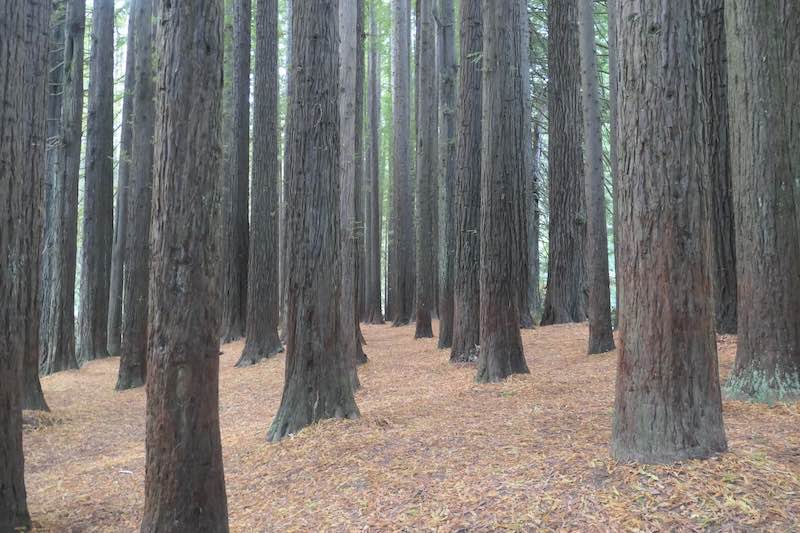
Just 1.3 kilometres from Hopetoun Falls, the Californian Redwood Forest is the result of an experimental planting of Sequoia Sempervirens trees in 1936. Despite their non-indigenous status, this stand of the world’s tallest tree species has thrived in Otway soil, far from their native habitat in the USA. Still in their youthful growth phase, the Otway Redwoods may one day claim the title of the tallest trees in the world. The easy walk is 500 metres return.
15. Otway Tree Top Walk
The Otway Tree Top Walk offers a bird’s eye view of the forest below. The elevated walkway, 600 metres long and 25 to 30 metres above the forest, includes a cantilever perched above Young’s Creek and a 47-metre-tall Spiral Tower with a staircase leading to an observatory with panoramic views of the forest canopy. A courtesy shuttle bus transports visitors every hour between the Visitor Centre and the tree-top walk. Timed tickets can be purchased online.
Thrill-seekers can take a zip-line tour across the canopy. The Otway Tree Top Walk is 15 kilometres from the Otway Redwoods.
16. Maits Rest Rainforest Walk
Apollo Bay to Maits Rest is 17 kilometres. The self-guided walk weaves through a Cool Temperate Rainforest, a rare pocket of unlogged forest with giant rainforest trees up to 300 years old.
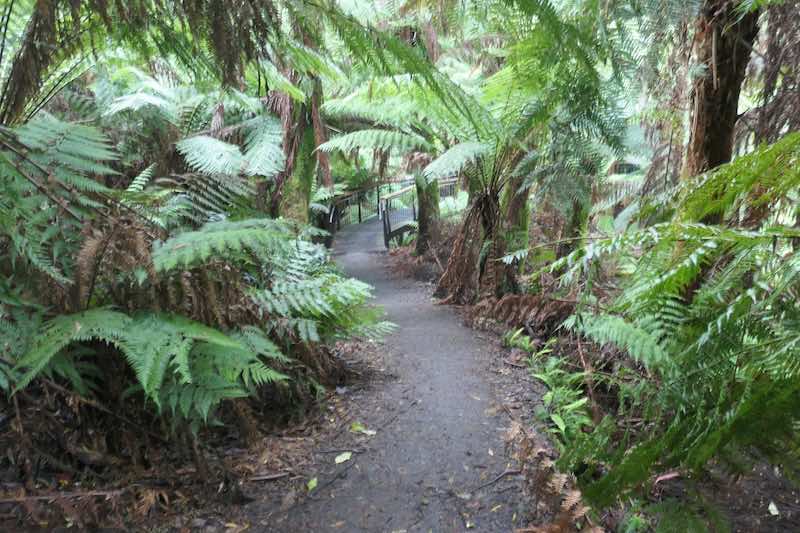
The wooden boardwalk has been built over tree-fern gullies and moss-covered roots of ancient rainforest trees, protecting the delicate ecosystem while providing visitors with unique views of the forest. Except for clearing the trail, trees and other plant matter remain and decompose where they fall.
Look out for wildlife that includes swamp wallabies, koalas, ring-tailed possums, and grey kangaroos. Rarely seen, but often heard at night, are the yellow-bellied gliders. The 800-metre trail begins and ends at the Maits Rest carpark.
17. Wildlife
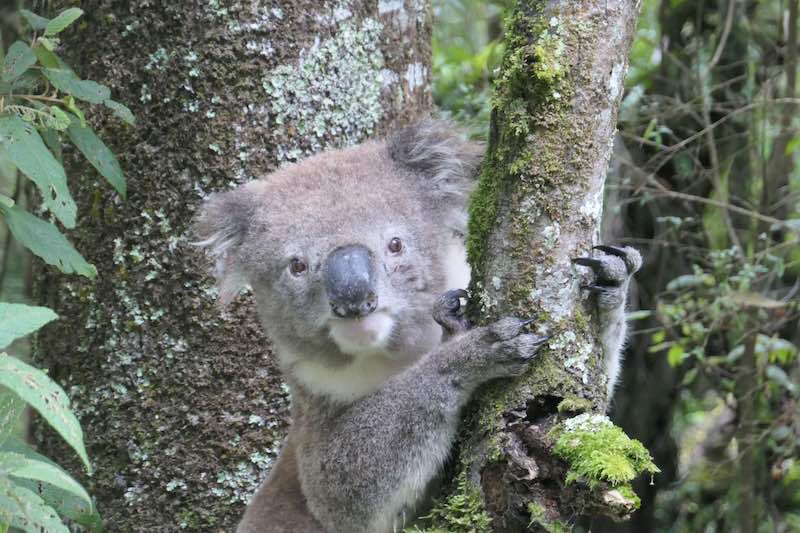
Keep an eye out for wildlife in the Otway National Park. The Great Ocean Road is home to plenty of native wildlife, but one of the highlights is the chance of encountering a koala in the wild.
Such an opportunity presented itself when a koala successfully crossed the road in front of our vehicle, sought refuge in a tree, and obligingly posed for photographs. It was a treat afforded to very few people, being so close to a koala in the wild and a definite highlight of travelling along the Great Ocean Road.
18. Cape Otway Light Station
Cape Otway is 33 kilometres from Apollo Bay. The Cape Otway Light Station is the oldest surviving lighthouse on mainland Australia and is considered the most significant. It was built in 1848 after hundreds of lives were lost along the ‘Shipwreck Coast,’ the 130-kilometre stretch of coastline from Cape Otway to Port Fairy. The treacherous waters are notorious for the powerful Southern Ocean swells, strong westerly winds dubbed the ‘roaring forties,’ limestone reefs, and dense fog, making it a historic graveyard for as many as 700 ships. Matthew Flinders, during his circumnavigation of Australia in 1802, wrote: “I have seldom seen a more fearful section of coastline.”
For many 19th-century migrants, Cape Otway was their first sight of the Australian continent after leaving Europe, Asia, or North America. Sitting 90 metres above Bass Strait, the light station offers amazing views. A short 78-step climb to the circular viewing platform is worth the effort.
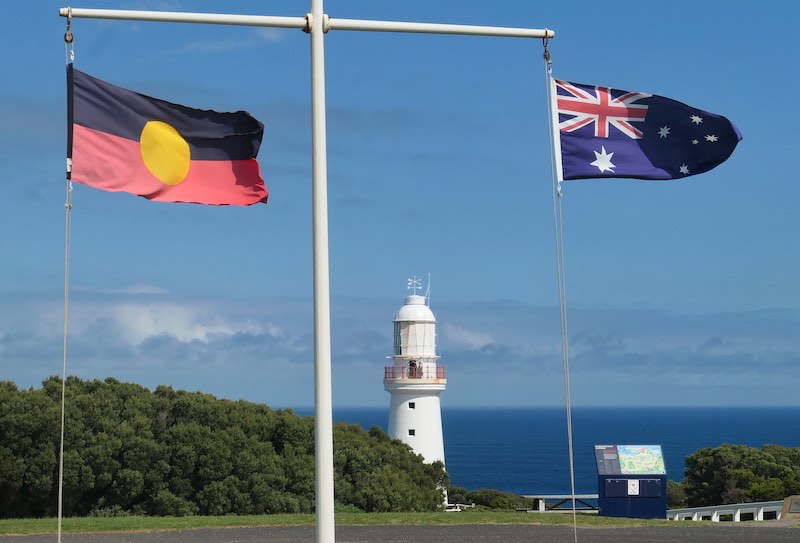
A visit of a few hours is warranted. A ticket to the precinct grants access to:
- 1848 Cape Otway Lighthouse
- 1850s Keepers Quarters and Workshop
- 1859 Telegraph Station
- WWII Radar Bunker
- Whale Interpretation
- Lightkeeper’s Cafe
- Gift Shop
- History Talks running throughout the day
19. Johanna Beach
Towering cliffs frame Johanna Beach, 30 kilometres west of Cape Otway. The pristine sandy beach, 3.6 kilometres long, attracts advanced surfers for the high waves, beach breaks, and fast jumps. The excellent surfing conditions make it an attractive alternative venue to Bells Beach for the Rip Curl Pro. The unpatrolled waters are generally considered unsafe for swimming due to the larger waves and unpredictable rips. With its natural beauty and tranquil environment, it’s a popular destination for those seeking a more serene and less crowded location in a picturesque setting. Johanna Beach was named after the brig ‘Johanna’ that was wrecked at the mouth of the Johanna River in 1843.
20. Gibson Steps
The Port Campbell National Park stretches for 33 kilometres of the Great Ocean Road from Princetown to Peterborough. It includes many of the Shipwreck Coast’s top sights, including Gibson Steps, Twelve Apostles, Loch Ard Gorge, London Arch, and The Grotto.
Gibson Steps (50 kilometres from Johanna’s Beach) is a popular scenic lookout above Gibson Beach with stunning views across the cliffs towards the Twelve Apostles. The 86-step narrow staircase chiselled into the cliff face descends to the beach for sea-level views of Gog and Magog, limestone stacks just offshore that aren’t officially part of the famed 12 Apostles.
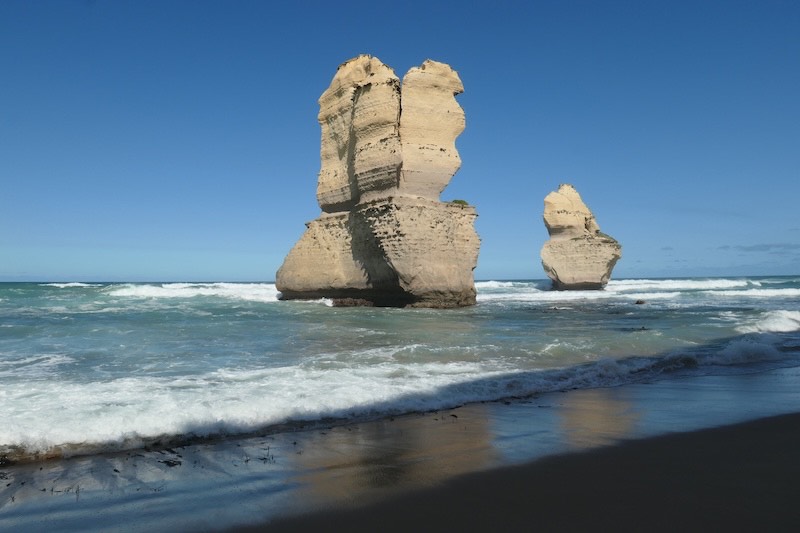
Check with Parks Victoria as Gibson Steps has been temporarily closed due to rockfalls and ongoing geological instability since mid-2025.
21. 12 Apostles
The 12 Apostles (950 metres from Gibson Steps) is a popular attraction with its own visitor centre and several lookouts. They’re the poster child of Victoria’s (and Australia’s) tourism industry, so the site attracts many visitors. Try to time your arrival for sunrise or sunset. The crowds will be gone, and hopefully, you’ll be rewarded with stunning photo opportunities.
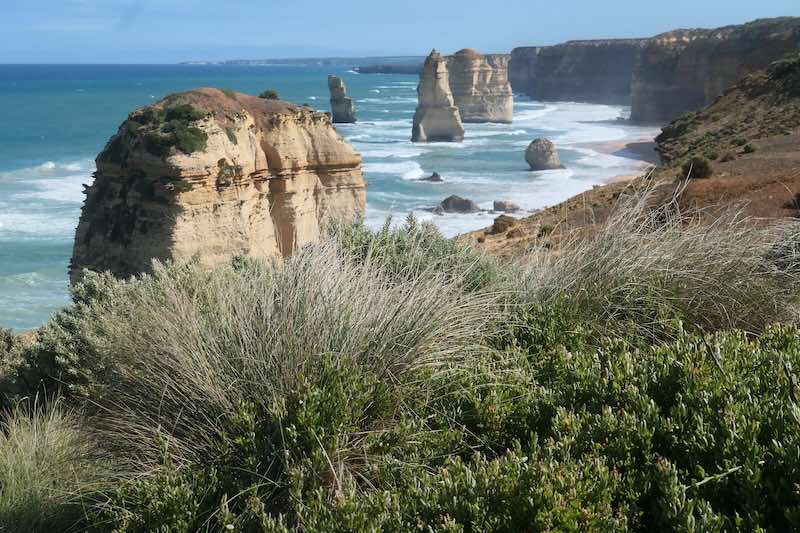
The 12 Apostles never numbered 12. George Bass named the limestone stacks the ‘Sow and Piglets’ in 1798 when it is believed there were nine. He saw Mutton Bird Island as the ‘Sow’ (mother pig) and the surrounding limestone stacks as her ‘Piglets.’ The name was changed to ‘The Twelve Apostles’ in the 1920s for tourism and marketing purposes. As of 2025, just seven remain.
22. Loch Ard Gorge
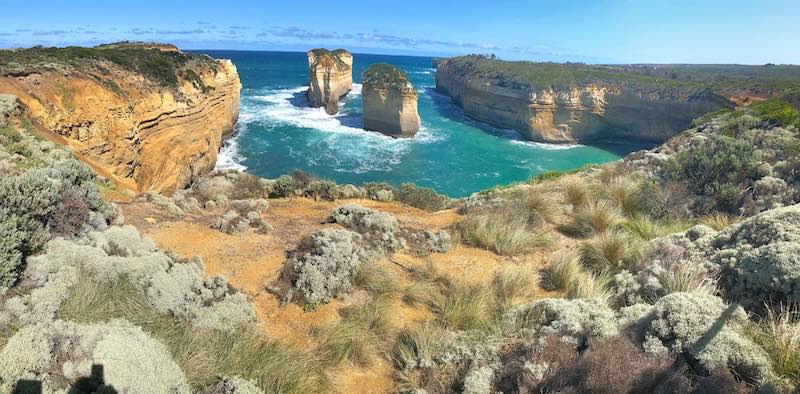
The Loch Ard Gorge (3.5 kilometres from the 12 Apostles), is a must-see stop on every Great Ocean Road itinerary. For me, it was a definite favourite. It was named after the clipper Loch Ard that was shipwrecked on a voyage from England to Melbourne in 1878. A story about the two survivors is posted on an information board at the gorge. At the top of the cliffs is a monument to the 52 people who didn’t survive, and the graves of those whose bodies were recovered.
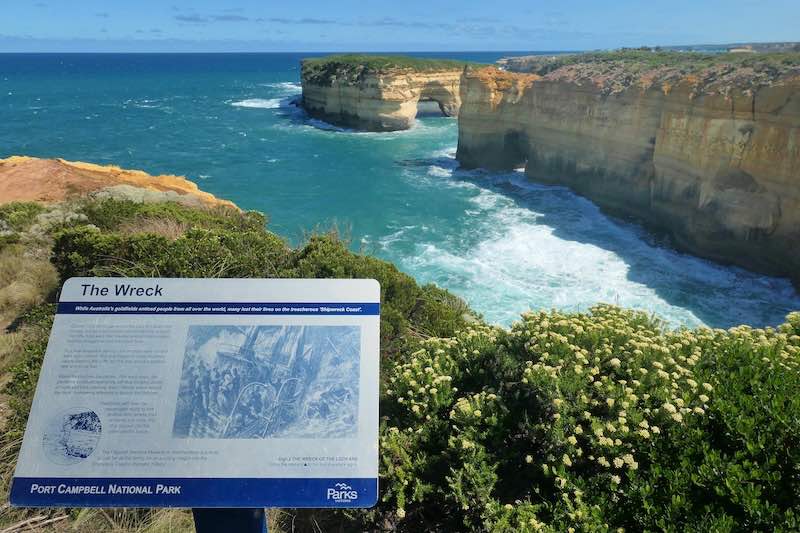
The two survivors who managed to get ashore sought refuge in a cave until one of them had the strength to climb out of the gorge and go for help. Today, a 79-step wooden staircase takes visitors to the beach for more spectacular views from sea level.
Nearby lookouts with viewing opportunities include the Tom and Eva Lookout (Tom Pearce and Eva Carmichael were the two survivors from the Loch Ard), Mutton Bird Island Lookout, and Thunder Cave.
23. The Razorback
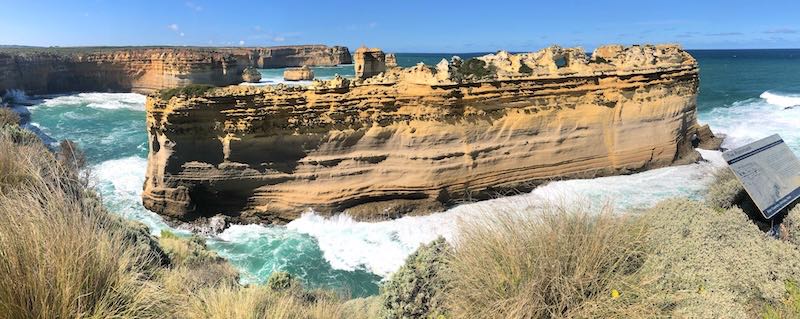
The Razorback’s sharp edges are hardened by wind-blown spray. Wave energy carves deep, smooth grooves just above sea level. With one wave every 14 seconds, The Razorback looks very different with each passing century. The Razorback is 190 metres from Loch Ard Gorge.
24. Thunder Cave
Loch Ard Gorge, Thunder Cave, and The Razorback Lookout are part of the same easy, scenic network within walking distance of each other. Thunder Cave is a unique natural wonder featuring a hollowed-out part of the limestone cliffs. Powerful ocean waves thunder as they crash into the cave’s entrance.
25. Port Campbell
Port Campbell, 5 kilometres from Thunder Cave, is a sleepy seaside town with a calm sandy beach for swimming, a jetty, shops, galleries, bakeries, and some fabulous eateries.
Port Campbell to Allansford is 51 kilometres along the remaining stretch of the Great Ocean Road.
26. The Arch
The Arch (6 kilometres west of Port Campbell) has a viewing platform reached by a 320-metre walkway from the carpark. The view extends back to the Twelve Apostles.
27. London Arch
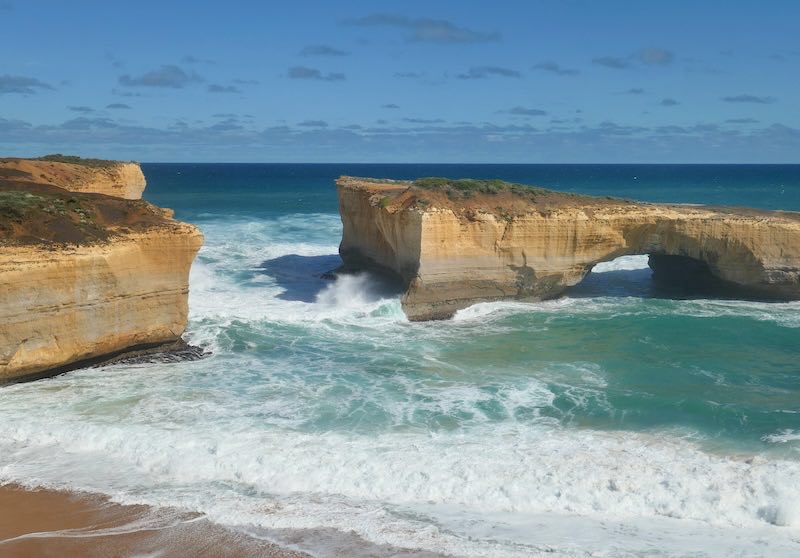
London Arch, formerly London Bridge (1.2 kilometres from The Arch), was a double-span natural bridge until 1990; it is now an offshore natural arch. When the span closer to shore collapsed, two tourists were stranded on the outer span until they were rescued by helicopter.
28. The Grotto
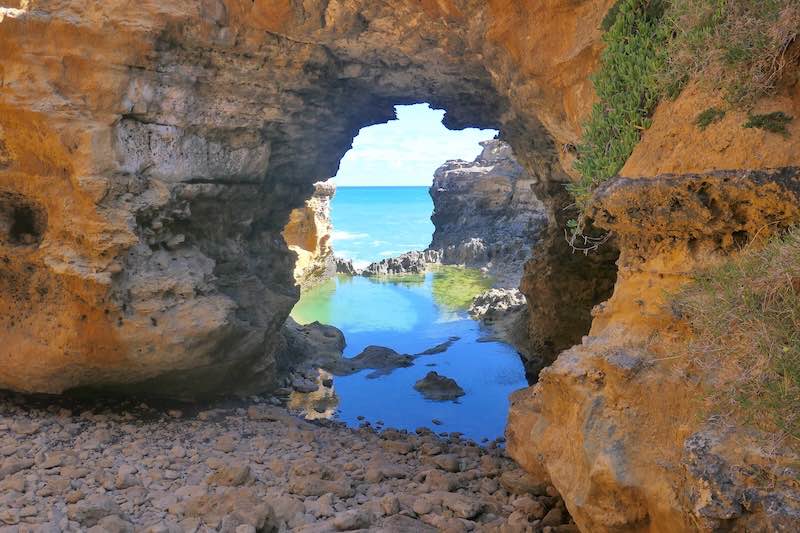
The Grotto, 2.1 kilometres from London Arch, is a unique natural phenomenon that combines a cave, sinkhole, and archway. The geological gem can be admired from the viewing platform, where information panels describe some of the features. At sea level, the calm, clear water inside the limestone rock pools is a pleasant contrast to the crashing waves of the ocean behind. The best and safest time to visit is at low tide.
29. Bay of Martyrs
Bay of Martyrs, 6 kilometres from The Grotto, is 2.5 kilometres long and includes two smaller bays: Crofts Bay and Massacre Bay. As the latter name suggests, the area was the site of horrific events according to Aboriginal oral history, with stories that have spanned generations. European settlers supposedly murdered a large group of Karrae-Wurrong men by running them off the cliffs, while women and children were killed in a nearby swamp. There’s no written evidence, but it is also known that the indigenous population decreased from a few thousand to almost none. Some theories suggest this was a result of mass migration, but local folklore suggests otherwise.
The dramatic cliffs, rock formations, and serene views are part of the Bay of Islands Coastal Park, offering a quieter yet equally impressive alternative to the nearby 12 Apostles and Loch Ard Gorge.
30. Bay of Islands
Bay of Islands (4.5 kilometres from Bay of Martyrs) boasts limestone formations much like the 12 Apostles, and every bit as stunning. The peaceful, photogenic stretch of coastline attracts fewer people, and the views are spectacular at sunset.
Conclusion
Given so many top sights along the scenic Great Ocean Road, a self-driving tour offers significant advantages in flexibility, privacy, timing, and pacing, with more opportunities to explore charming seaside towns, linger longer at popular spots like the Twelve Apostles, or make impromptu stops at lesser-known lookouts, hiking trails, and secluded beaches.
If Australia is on your travel list, you may be interested in one or more of the following posts. If so, the desired article is a click away:
- 33 Magical sights on a self-guided walking tour of Sydney
- Charming terrace houses and vibrant street art in Melbourne
- A relaxed and safe Melbourne bike tour of the top sights
- 35 Top free and affordable things to do in Brisbane
- Brisbane to Cairns on the Spirit of Queensland: Is the RailBed sleeper worth it?
- Cairns Kuranda day trip by train and rainforest cable car
- Cycling Uluru/Ayers Rock: Australia’s iconic natural landmark
- The extraordinary wildlife of Alice Springs Desert Park
- Buying a SIM card in Australia
If you found this post helpful, please share it by selecting one or more social media buttons. Have you travelled along Australia’s Great Ocean Road? If so, are there additional sights you found of interest? Please add your thoughts in the comments. Thank you.
Care to pin for later?