
Updated January 2, 2026
A lightweight dry bag is a useful multipurpose item worth its weight in gold if you need to keep something dry. But what are the other reasons to travel with dry bags?
Table of Contents
- What is a dry bag?
- Dry bags vs dry sacks
- 13 Useful reasons to travel with dry bags
- 1. They keep stuff dry
- 2. Use as a packing ‘cube’ or organizer
- 3. Separate dirty or damp clothes
- 4. Create extra storage space
- 5. Wash clothes
- 6. Use as a bucket
- 7. Use as a makeshift pillow or cushion
- 8. A dry bag is reusable
- 9. Dry bags are easy to clean
- 10. Use as a soap bar case
- 11. Use for solid shampoo and conditioner
- 12. Use a combination dry bag and backpack
- 13. Swim with a waterproof pouch
What is a dry bag?
Dry bags are designed to keep gear organized, protected, and dry. They differ in size, thickness, weight, design, materials, colour, durability, intended use, level of waterproofness, and cost.
Key features relating to thickness, durability, level of waterproofness, and intended use are often reflected in the product’s name.
- A ‘dry bag’ more likely refers to those built for activities around snow, water, or other wet environments (e.g., Sea to Summit Big River Dry Bag).
- A ‘dry sack’ is more commonly used for carrying in a backpack or travel bag (e.g., Outdoor Research Ultralight Dry Sack).
‘Dry bag’ is the general term that applies to both.
Dry bags vs dry sacks
The more durable dry bags are built to withstand damage from potentially abrasive environments associated with water adventures. Picture a dry bag tossed in the bottom of a boat, carried on a snowmobile, strapped to a motorcycle, submerged in water, dragged over rocks, or brushing against branches and logs. They’re made of heavier fabric such as PVC or 200 or 300-denier nylon with a polyurethane coating. The durability and level of waterproofness of these products are more important than how much they weigh.
Dry sacks have the average traveller and commuter in mind. These bags are ultralight and easily slide into another bag. Many lightweight dry sacks are made from siliconized nylon, known as silnylon. It’s made by impregnating thinly woven nylon fabric with liquid silicone. Some companies add a polyurethane laminate. They’re not built to be submerged in water (unless they’re packed in a durable dry bag made for water adventures). Still, on their own, they’re expected to keep things dry during rain showers. Some are rated to provide protection during heavy rainfall or a continuous downpour.
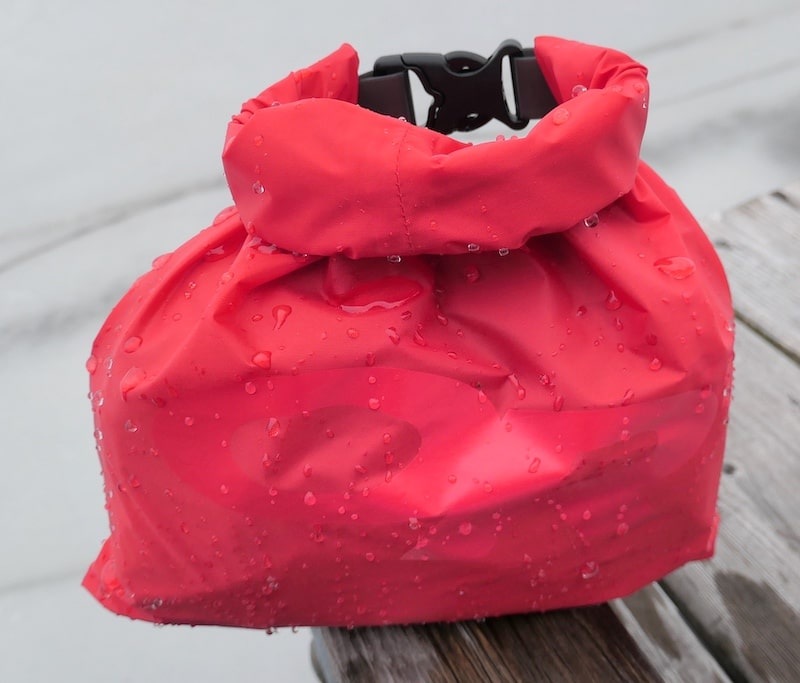
Both dry bags and dry sacks feature a range of closures. Roll-top closures with an interlocking buckle are the most common and regarded as the most effective. Tightly rolling the top down with at least three folds creates a watertight seal. Doing so squeezes out air and helps compress the contents.
13 Useful reasons to travel with dry bags
1. They keep stuff dry
(i) Double bag important items
On my last trip to New Zealand, I expected periods of rain while hiking and cycling for several days. I had a great deal of faith in my packable Sea to Sky waterproof daypack from Arkadia Supply. However, I needed additional assurance that my phone, camera, and warm layers of clothing would remain dry. Dry bags to the rescue: they boosted peace of mind and delivered in the keeping-stuff-dry department.
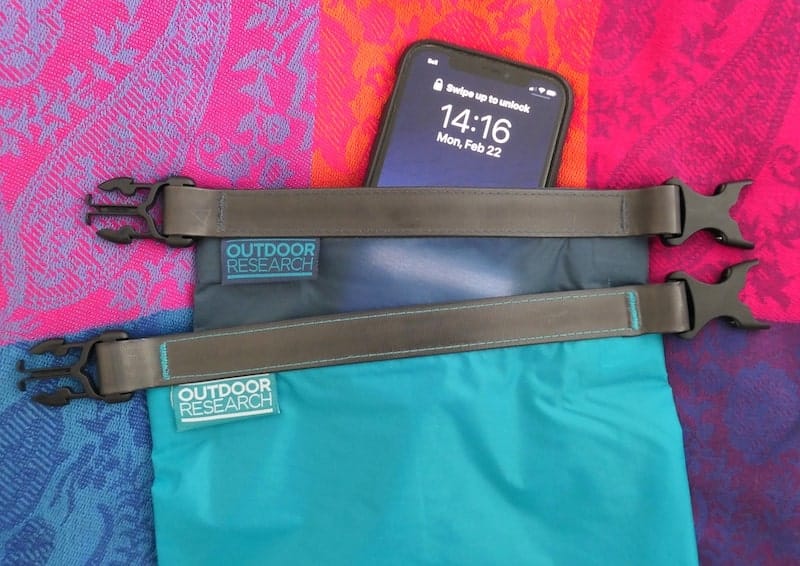
I double-bagged my phone for extra insurance using two bags from the three-piece set of Outdoor Research Dry Ditty Sacks. This did the trick. It also offered protection in dusty conditions.
(ii) Use as a bag liner
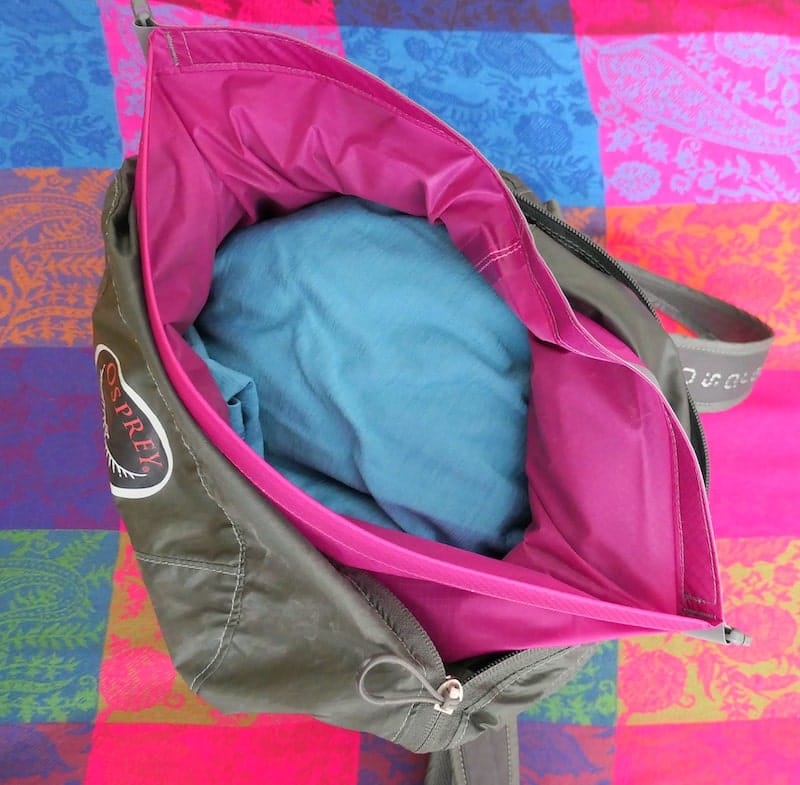
If a daypack, travel bag, or motorcycle storage unit isn’t waterproof, consider keeping a larger dry bag rolled up inside your bag in case of wet weather. It takes up very little space and can be used as a liner. Or get one that’s large enough to stuff your day bag inside. My 20-litre Sea to Summit Ultra-Sil Drysack fits most day bags and was purchased for this purpose. It’s made of 30-denier high-tenacity Cordura nylon and is seam-sealed to enhance waterproofness.
(iii) Protect electronics
Do you need to protect electronics and other gadgets packed in your personal item stowed under the seat in front during takeoff and landing?
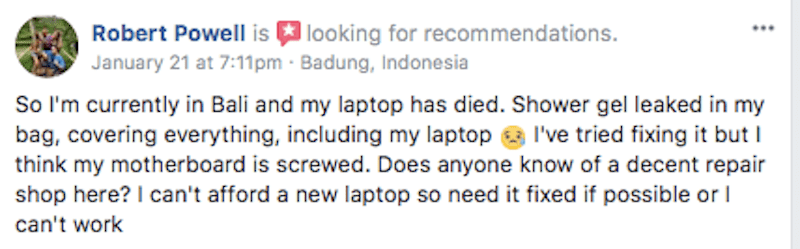
“I stored my tote bag under the seat with my MacBook and Apple Watch in it. The people in front of me left a huge open water bottle in their seat which leaked into all of my things and my laptop will no longer work. I couldn’t work my entire trip and was just so stressed out. The flight attendants felt awful, the people in front of me did not care at all. I was told to make a claim with Delta.” (Posted in a Facebook travel group)
I had a similar experience on a short flight from Halifax to Montreal. I had neglected to move my personal item to rest against my own seat after takeoff and it could have been a very expensive oversight. It wasn’t until I entered the air bridge in Montreal and proceeded to wear instead of carry my small backpack, I noticed it was very wet.
Inside the terminal, I removed my MacBook Air from its protective case that had absorbed a considerable amount of water, and my pocket camera from its wet case. Presumably, the item dropped by the passengers in front during the flight had been a full water bottle they neglected to immediately retrieve. Thankfully, it was a short flight and the water hadn’t had time to do any damage. My personal item is now lined with a dry bag on every trip to guard against in-flight mishaps associated with liquids.
(iv) Prepare for sudden downpours
Is your passport protected from water damage? Is your camera safe during a sudden downpour? Travelling in tropical climates during the rainy season when showers can appear with little notice, a dry bag offers protection for your belongings. Use one as a bag liner or keep one accessible for quickly stowing your stuff.

(v) Protect against leakages
Could leaking toiletries damage your laptop or other gadgets? Averting these and other travel casualties are compelling reasons to travel with dry bags.
2. Use as a packing ‘cube’ or organizer
When empty, a dry bag lays flat and takes up very little space. Or it can be used as a packing organizer to keep things compartmentalized and protected. With a set of different colours, it’s easier to distinguish between different sacks.
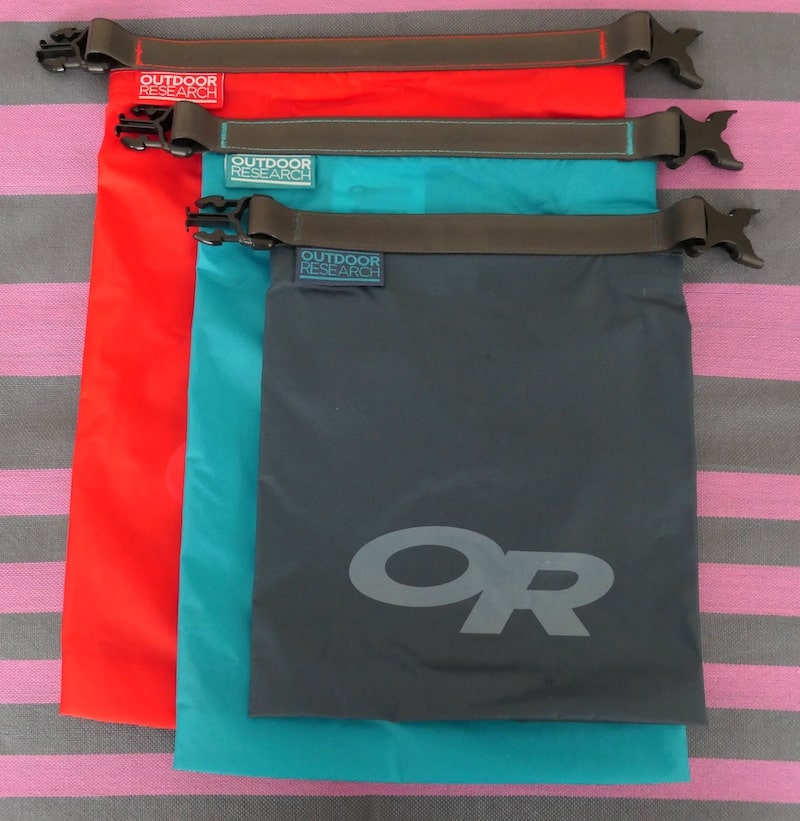
I use one as extra protection for a toiletry bag to guard against leakages. I travel with two small hanging toiletry kits (Tom Bihn 3D Organizer Cube), one for liquids (that doubles as a 3-1-1 bag) and the other for non-liquids and solids. The liquids bag easily slides in and out of a dry bag if it needs to be removed at a security screening checkpoint.
3. Separate dirty or damp clothes
A dry bag is handy when there’s no time or facilities to dry a wet swimsuit or damp travel towel before packing for a transit day. Isolate the wet or damp items from everything else by packing them in a dry bag.
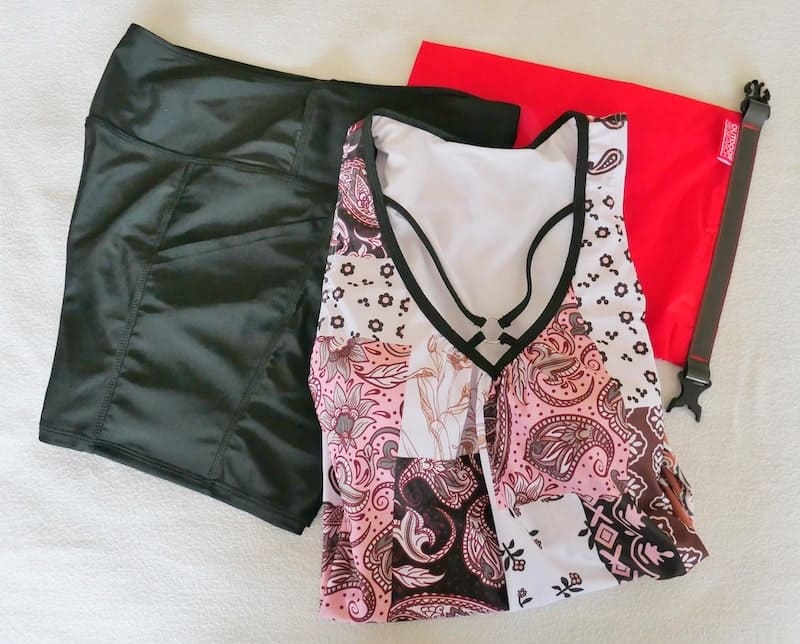
Seal in the funk and any unpleasant odours by packing dirty laundry or shoes in a dry bag. Or use one to carry your garbage until it can be appropriately discarded. Dry bags are easy to clean, and they air-dry relatively quickly.
4. Create extra storage space
Dry bags with roll-top closures are easy to attach to a day bag or backpack. Clip the interlocking buckle to an external attachment point or lash a larger dry bag to the top or bottom of a backpack or travel bag.
5. Wash clothes
Have you come across the ‘Scrubba?’ It’s a traveller’s ‘washing machine.’ The Scrubba is a type of dry bag, with a handy built-in washboard, valve, and see-through window.
A lightweight dry bag of a similar volume is more versatile and can perform the same task at a cheaper price.
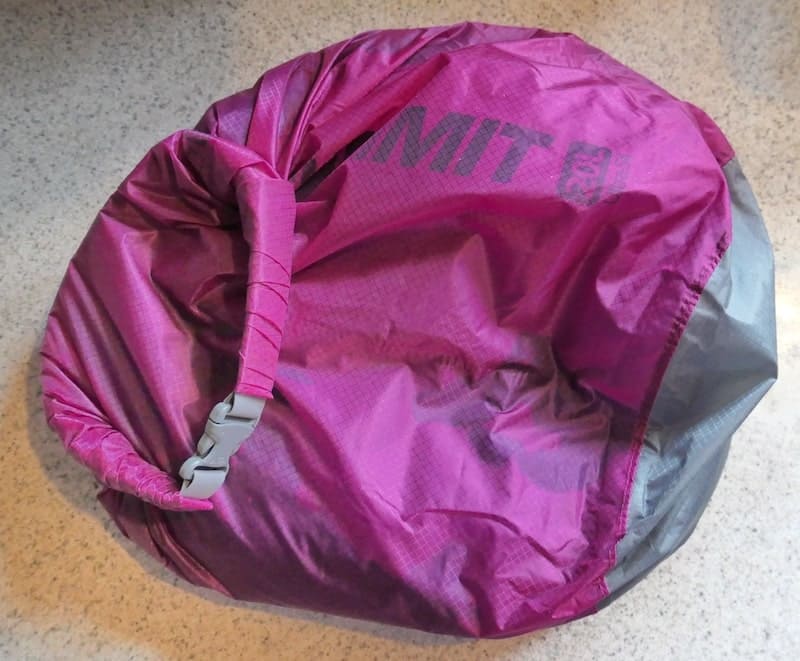
Grab a laundry detergent sheet or bar of eco-friendly soap and toss the clothes in a dry bag with water. Dr Bronner’s Pure-Castille Bar Soap is biodegradable and lathers well. Rub the bar on the areas needing extra attention, such as the collar, underarms, and crotch. The process usually produces enough lather to wash the rest of the load. Agitate with your hand, close and shake, then drain and rinse. Repeat as necessary.
6. Use as a bucket
If water can’t enter a dry bag, it can’t exit either. If you need to move or carry water, a dry bag can act as a bucket.
Or use one to carry ice from a hotel ice machine to your room for cooling cans or bottles of drinks. Many people shy away from using hotel ice buckets out of fear that they’ve been inadequately cleaned and sanitized. Most hotels provide plastic bags, but these are small and their single-use function doesn’t make them an environmentally appropriate choice.
7. Use as a makeshift pillow or cushion
Roll the opening three or four times and clip the buckle to seal in the air. It should create a passable pillow for a few hours. If not, stuff the dry bag with a sweater or another piece of clothing. It’s no substitute for a real pillow. Still, it’s an alternative to resting your head on airport or railway station seats of questionable cleanliness.
A dry bag, empty or stuffed, could also serve as a kneeling mat or cushion in damp surroundings.
8. A dry bag is reusable
Some travellers advocate using zip-top bags as packing organizers and to keep things dry. Some backpackers suggest using plastic trash compactor bags as internal bag liners to keep the inside of a rucksack dry.
Dry bags have the edge on durability and sustainability. They’re difficult to tear and will outlast plastic bags that need to be discarded regularly. These ‘one-and-done’ plastic options aren’t good for the environment.
In the keeping-things-dry department, plastic bags aren’t reliable. Compactor trash bag liners can suffer tears and punctures much more readily than dry bags. The seal on zip-top plastic bags can have gaps in the corners or anywhere along the closure where there are manufacturing flaws or dust or grit preventing a tight seal. The heat-sealed seams of the other three sides can quickly fail without too much pressure being applied.
9. Dry bags are easy to clean
To curb the development of mildew, air-dry bags after each use. Wash them if they’ve been exposed to dirt, dust, or sand. Fine particles of dust or sand can work their way into the bag’s fabric and act like sandpaper to wear away the waterproof coating. Undetected food particles can lead to mould and odours that may be difficult to eradicate.
- Wash bags inside and out with cold water from a hose or tap.
- To remove dirt, hand wash with a mild dishwashing soap such as Dawn, Seventh Generation, or Dr Bronner’s. Lightly scrub any spots or stains with a sponge.
- To dry the bags, turn each inside out, making sure the corners and inside seams are visible. Air-dry the interior first, then reverse the process to dry the outside.
10. Use as a soap bar case
The Matador FlatPak Soap Bar Case deserves a special mention because it resembles a dry bag. The sealing rolltop makes it waterproof in a way that’s similar to dry bags. The buckle closure means it is easy to hang or connect to attachment points.
It’s a game-changer for travellers who pack bar shampoo and bar soap.
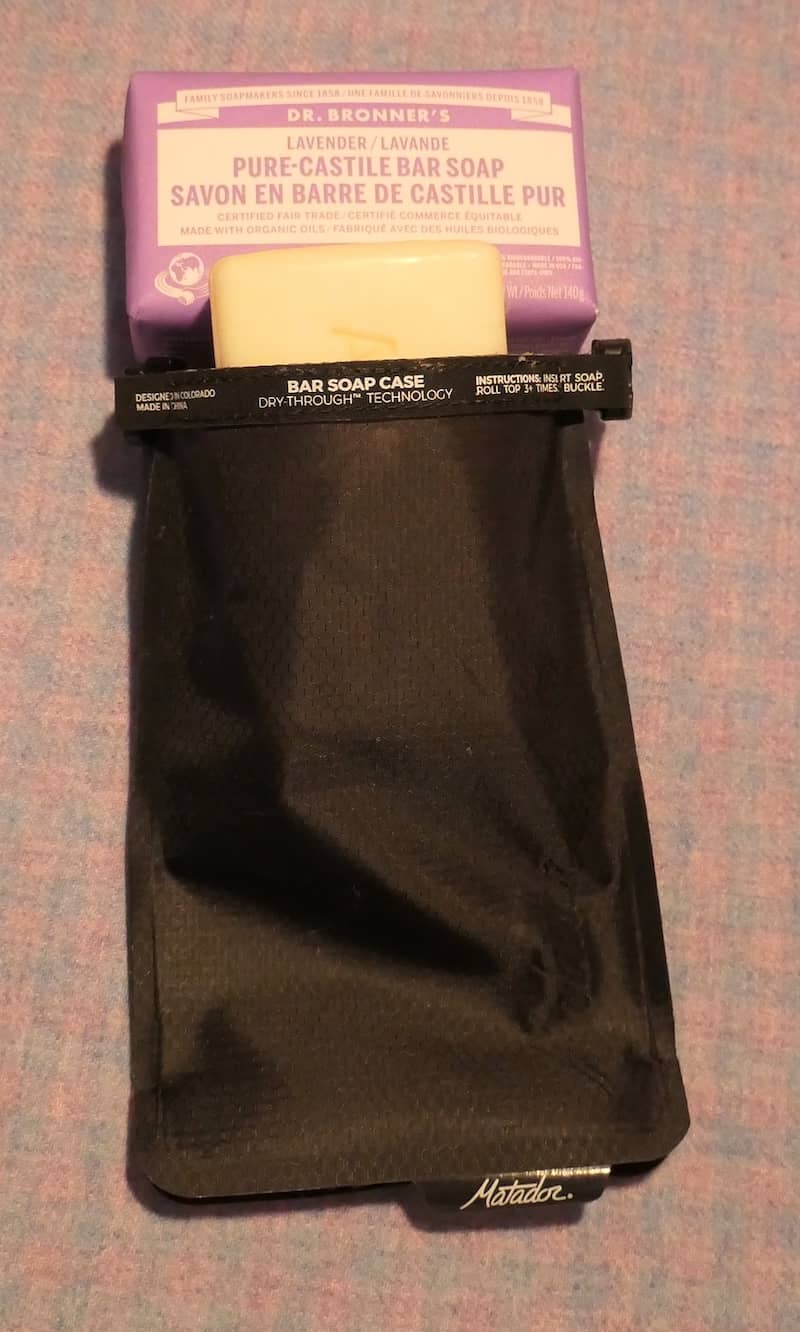
Its waterproof, breathable material keeps liquid inside while the soap dries through the fabric. This feature is nothing short of miraculous. Insert the bar wet, and the next time you reach for the soap, it’ll be dry. Even ventilated soapboxes don’t do that well.
At 11 grams (0.4 ounces), it’s three times lighter and six times more compact than a plastic soap bar case of average size. The soft-sided case adapts to the size of the bar. As the bar becomes smaller with use, so does the case. Unlike plastic and tin cases, it changes in size according to the size of its contents.
11. Use for solid shampoo and conditioner
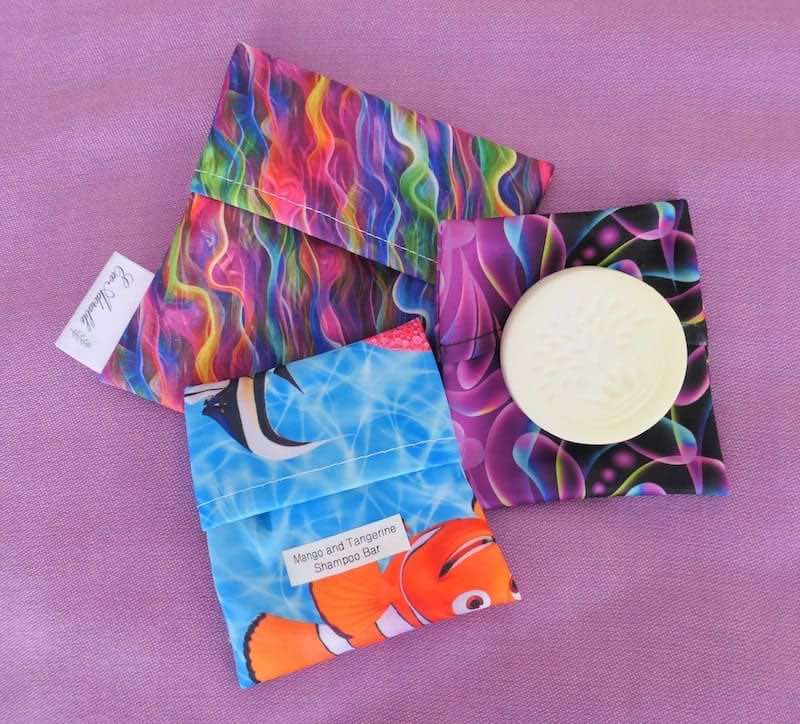
For a smaller pouch to carry shampoo and conditioner bars, check out Etsy. Look for PUL (polyurethane laminate) pouches or ‘wet bags.’ PUL is a breathable, durable, waterproof fabric designed for hospital use as it can withstand many hot washes. Unsurprisingly, it gained popularity as a protective waterproof layer in cloth diapers, and travellers have discovered it for keeping wetness contained in a travel bag. Wet bags made of PUL are useful for storing dirty clothes, wet swimwear, cloth diapers, reusable menstrual pads, and solid soap and shampoo bars. Mine are made entirely of PUL fabric from EcoAdorable.
12. Use a combination dry bag and backpack
The 20-litre Osprey Ultralight Dry Stuff Pack is a lightweight, packable backpack, perfect for one-bag travel. It works well as a personal item and day bag, and its packability means it can nest inside another travel bag when necessary. It features one large interior compartment, a zippered front pocket with a small security pocket that is the built-in storage pouch, and two external side pockets.
- The zippered front pocket has an aqua-guard zipper and protective flap. It’s water resistant, not waterproof. However, anything packed inside the main compartment stays dry, even when the bag is submerged.
- It can be used as a day bag in all kinds of weather, and it doesn’t need a rain cover.
- The roll and clip closure allows for the main compartment to be secured in two ways – at the top or the sides (the sides being my preference).
- Many water bottle pockets on minimalist bags aren’t secure enough to keep water bottles in place. The cinch straps are a much appreciated feature, making the side pockets more secure for water bottles or other items.
- It’s large enough to carry what’s needed for a day out and about.
- The height-adjustable sternum strap (with a whistle) helps keep the shoulder straps in place and makes for a more comfortable carry.
- There’s a handle at the top for hanging the bag on a hook, and several attachment points on the shoulder straps (and bottom of the bag) for carrying lightweight items such as a mini flashlight or compass.
- The small security pocket has a key clip and fabric hook for tethering a wallet or phone.
- It weighs 194 grams (6.84 ounces).
13. Swim with a waterproof pouch
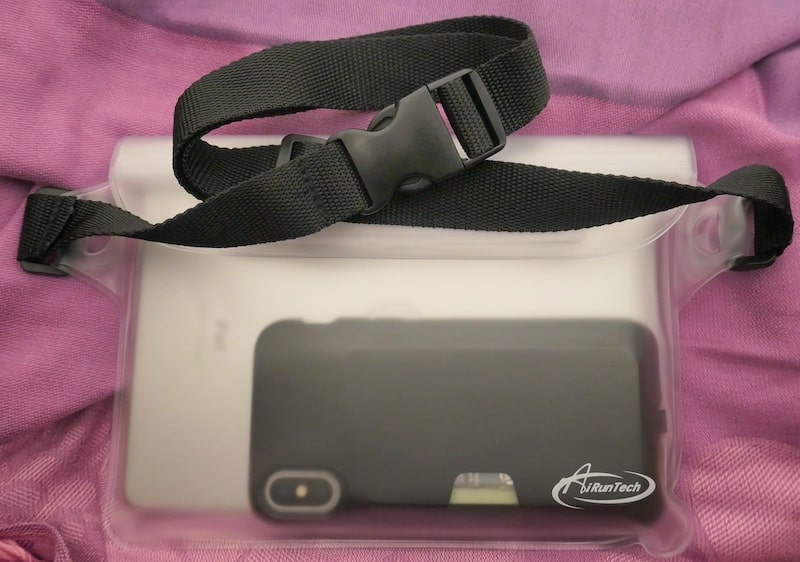
A dilemma facing many travellers and holiday makers is what to do with valuables such as a phone or wallet when visiting the pool or hanging out at the beach, especially when it’s time for a swim. There are several wearable waterproof pouches on the market featuring neck straps and waist belts.
My AiRunTech Waterproof Pouch functions like a dry bag. The three zip-lock closures provide a waterproof seal, and rolling the top three times before closing the Velcro strip offers additional protection. It’s large enough to hold an iPad mini, and rated to remain waterproof when submerged up to 10 metres / 32 feet.
Might you be interested in these related posts?
If you found this post helpful, please share it by selecting one or more social media buttons. Would you like to join the conversation on reasons to travel with dry bags? If so, please do so in the comments. Thank you.
Care to pin it for later?
The Amazon links on this page are affiliate links. This means that if you use one to buy something, you don’t pay more but Packing Light Travel earns a small commission that helps with the costs of maintaining the site. Thank you for your support.




I completely agree with using dry bags for any travel, including backpacking. They inspire confidence that your electronics and clothing won’t get wet and/or ruined when on the move.
I enjoyed this post. I don’t currently have any dry bags but as soon as the travel routes start opening again, I will be looking into it. What I like most about them, from information in this post, is that they are reusable – but also that they have multi-purpose uses.
Thank you Terri for dropping by and leaving a comment. You’re right, can’t beat reusable and multipurpose. I’m trying to cut down on single-use plastic, and dry bags are definitely more sustainable.
Oh! I love dry bags. They are indispensable, especially when travelling. Used them a lot.
Here are some of the things you might want to pack in your dry bag:
– A raincoat or poncho for sudden downpours.
– A towel for when you need to dry off after a dip in the water.
– A portable water filter, so you can fill up from any fresh water source.
– Plastic bags, so you can store dirty clothes and keep them separate from the clean ones.
– An extra change of clothes and underwear.
– Insect repellent, sunscreen, and lip balm with SPF.
Thanks.
I had no idea that most of those products exist. Now I have a solution for how to deal with wet swimsuits when traveling!
I guess with all the electronics we have these days a dry bag is a must have for every traveler.