
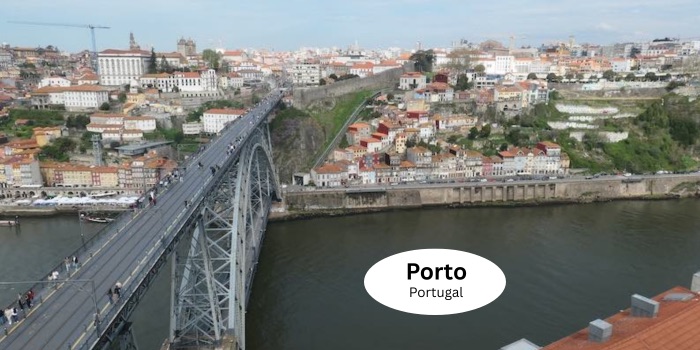
Porto, Portugal’s second-largest city, is a favourite of travellers for its rich history, stunning architecture, dramatic riverside scenery, beautiful churches, picturesque streets, and unique food scene. It’s often seen as Lisbon’s more walkable, more authentic, and less hilly counterpart. Try to spend as many days as possible to take advantage of the many top free and inexpensive things to do in Porto.
Firstly, some tips
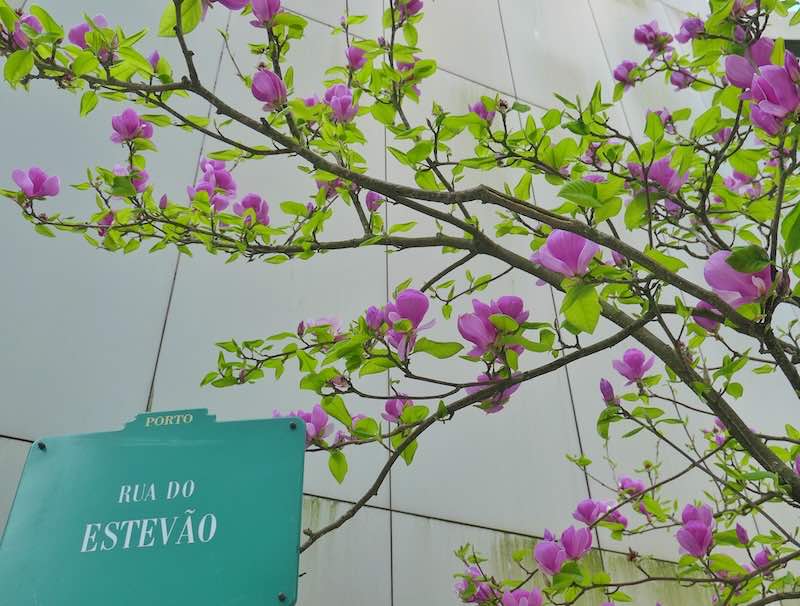
I spent ten days in Porto in late March of 2026 with two other travellers. We had planned for rain, but the weather was superb, with temperatures in the late teens (Celsius). Coming from Canada, it was refreshing to enjoy such mild temperatures and admire blooms that appear at home only in June.
(i) Train to Porto
Take the newer, faster, and more comfortable Alpha-Pendular from Lisbon. The cost of travelling in first class isn’t much more than the price of a seat in a second-class carriage. Choose a seat on the left side of the train heading north. Above-seat luggage racks can accommodate carry-on bags. Trains to or from Porto arrive and depart from Campanhã train station. The Lisbon – Porto express trains do not stop at São Bento, but there are regular urban trains from Campanhã to São Bento, and the six-minute journey is included in the cost of a ticket.
There are advance-purchase discounts and senior discounts. For tickets, schedules, and to set up a MyCP account, visit the Comboios de Portugal site (national railways of Portugal) and download the CP app from the app store.
(ii) Getting around Porto
An Andante card is a contactless, rechargeable public transport ticket for the Porto Metropolitan Area, used for buses, metro, and trains, with fares based on zones and journey. There are options for single trips and day passes (Andante Tour). Credits can be loaded at stations and kiosks, then validated when starting journeys or changing lines, making it a convenient way to use various transport systems with one card. It doesn’t include the historic trams, the Funicular dos Guindais, and the Teleférico de Gaia (cable car).
(iii) Ride-sharing services
As we were three people, ride-sharing was more cost-effective and convenient than using public transportation. When we weren’t walking, we booked a ride share. We found Bolt to be slightly cheaper than Uber. Download both apps, link a credit card, and check both services before a ride to compare prices and arrival times. We avoided taxis because we’d read about the possibility of being scammed and that a taxi fare could be twice as much as a ride-sharing service.
(iv) Some other tips
- Most Porto museums are closed on Mondays, and many churches have limited access hours on weekends.
- The Porto Welcome Centre (main tourist information centre) is across the street from the São Bento Railway Station.
- Choose shoes carefully. Most streets and sidewalks in Porto are paved with Calçada Portuguesa, a distinctive style of mosaic pavement made from small, hand-laid stone cubes. Some are elevated, and many gaps require repair.
- Credit cards are widely accepted, but some cash will be needed. Many payment terminals offer the option to pay in your home currency or euros. Always choose euros and don’t allow the merchant to do so. A merchant who may or may not understand Dynamic Currency Conversion might think you’d prefer to pay in your home currency (at inflated rates).
- Where possible, choose credit and debit cards with banks that don’t charge foreign-exchange fees. I’m fortunate that in Canada I had access to two cards, the Scotiabank Passport Visa Infinite Card (a credit card that earns Scene+ points) and the Wealthsimple Prepaid Mastercard attached to a free chequing account that earns interest and refunds all ATM fees. For more information for Canadian readers, see:
(v) Our accommodation
Porto’s increasing popularity means accommodations fill up months in advance, especially in the most sought-after areas and high seasons. Book as far in advance as possible.
We chose the Spot Family Apartments on Rua do Bolhão, 109, União de Freguesias do Centro, Porto, 4000-436 Portugal (Tel: +351 (960) 311846).
The location was perfect, around the corner from the Bolhão Market, and within short walking distances of City Hall, Avenida dos Aliados, Rua de Santa Catarina, and São Bento Railway Station. It was well equipped with a fridge, dishwasher, toaster, dinnerware, cutlery, and coffee maker. Highly recommended.
Top free and inexpensive things to do in Porto
Most of the following sights and experiences are grouped within the same geographical areas.
1. Walking tour
To obtain a quick orientation and be introduced to some of Porto’s top sights, consider taking a free (tip-based) walking tour (Take True Tours, Guru Walk, Freetour, Strawberry Tours, Porto Walkers, Porto Free Walking Tour with Eugenia, and many others are available).
2. Tuk-tuk tour
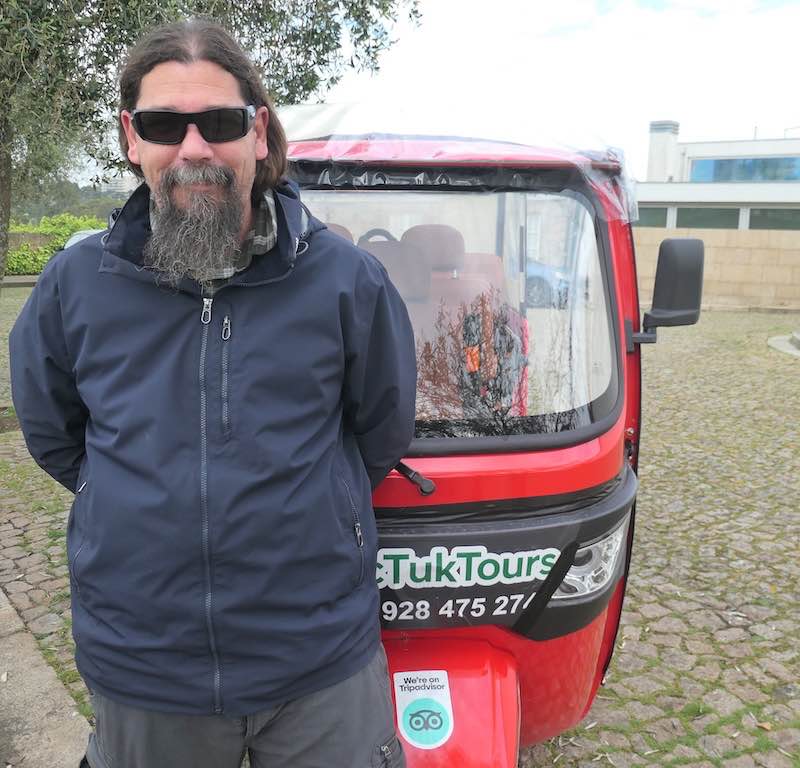
While not inexpensive, we took a four-hour tuk-tuk tour, and it was worth the cost. João Fortes TukTuk Tours came highly recommended. We liked the idea of booking directly with a local guide and covering a wide area within a short period. João introduced us to many top sights and classic viewpoints that were on our travel list. An advantage is that several of these could be checked off, saving us the trouble of finding them ourselves. There were many photo stops, and the buildings we passed were much easier to find later to venture inside. It was a wonderful orientation and introduction to Porto. João Fortes can be contacted at jfortescom@gmail.com or via WhatsApp at +351 912 736 641.
3. Mercado do Bolhão
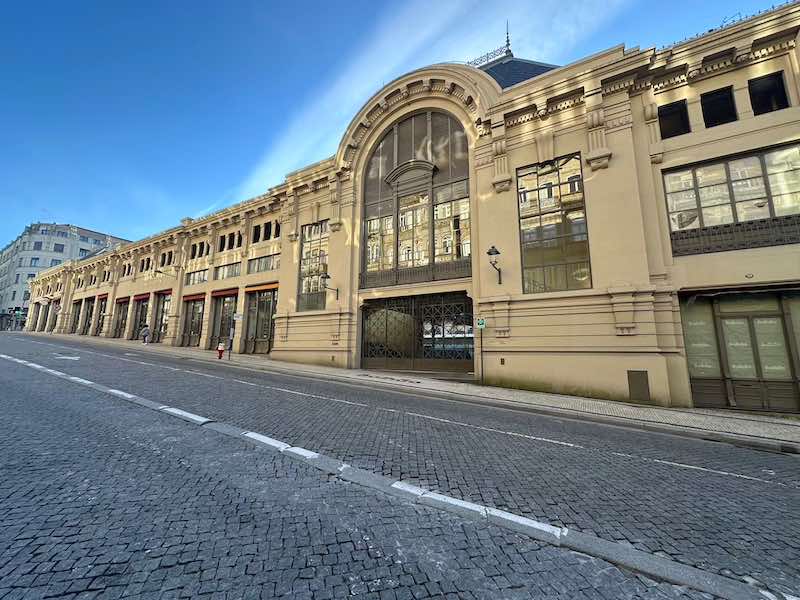
The recently renovated Bolhão Market next to the Bolhão Metro Station is an upscale version of the old market, offering an endless array of traditional foods, delicacies, and quick bites. It has two levels, with the upper floor dedicated to cafés and restaurants, each of which is obligated to buy 50 per cent of its produce downstairs. The lower level has stalls for flowers, fresh produce, cheeses, meats, fresh fish, baked goods, and seafood.
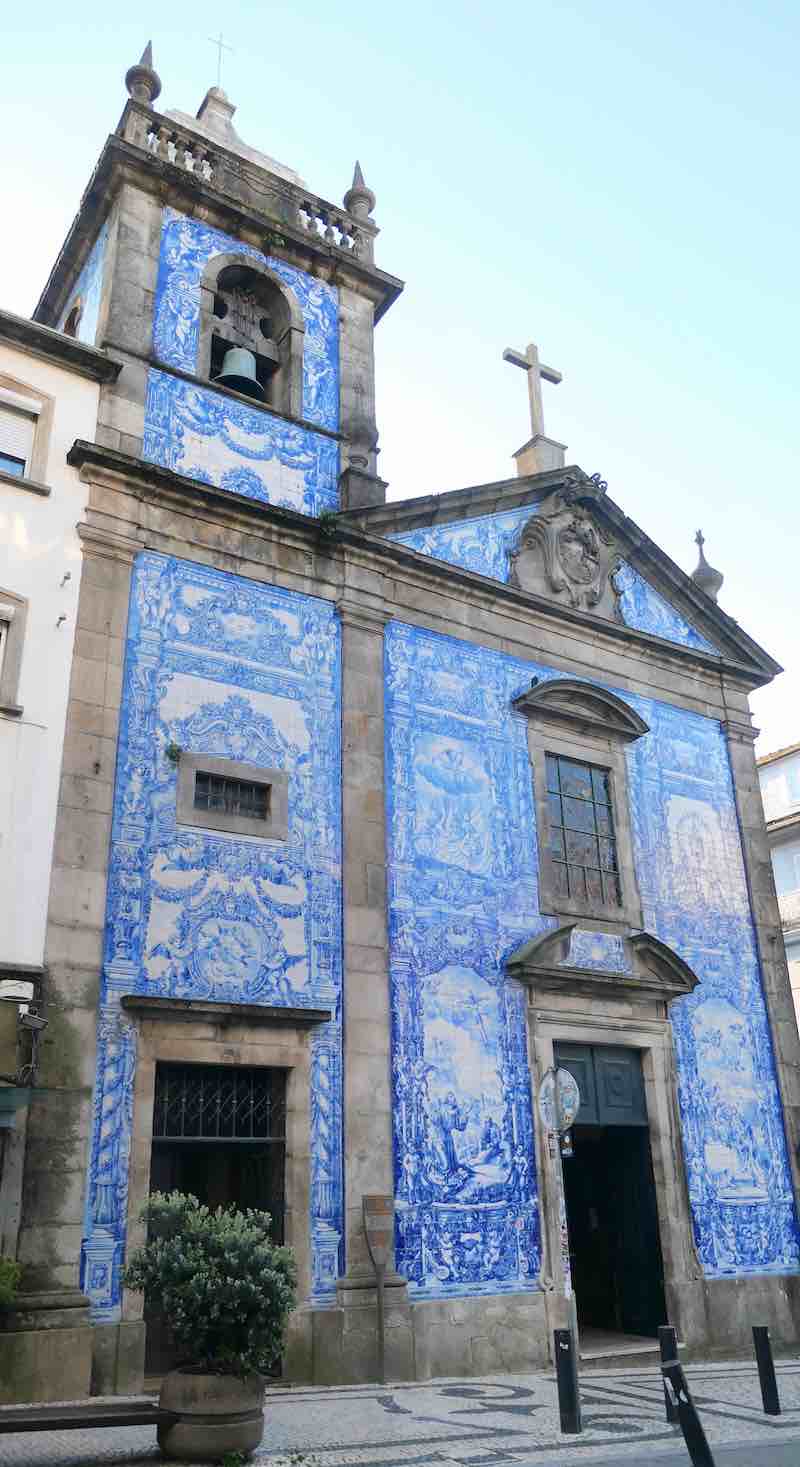
4. Capela das Almas
The Chapel of Souls is also known as the Chapel of Santa Catarina. It’s on Rua Santa Catarina near the Bolhão Metro Station. All the exterior walls are covered with blue-and-white ceramic tiles by Eduardo Leite, installed in 1929. They depict scenes from Christian history and legend, such as the death of Francis of Assisi and the Martyrdom of Saint Catherine. The artist closely adhered to the rules of the 18th-century art form and used approximately 15,947 azulejo tiles, covering 360 m² of the exterior wall space. The stained glass windows by Amandio Silva date back to the 19th century.
The interior is not as impressive as the exterior, but there are a few interesting pieces, including the image of Nossa Senhora das Almas (Our Lady of the Souls). We visited many churches during our 10-day stay in Porto, and this unpretentious working church, attracting many parishioners throughout the day, was my favourite.
5. Rua de Santa Catarina
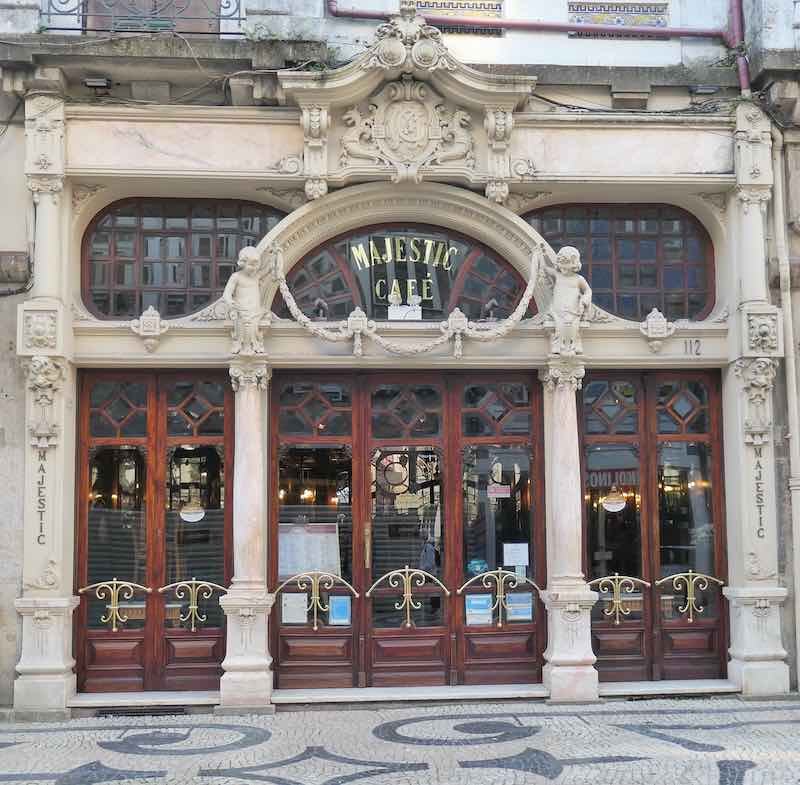
Next to the Bolhão Metro Station is Santa Catarina Boulevard, Porto’s main shopping street that dissects the centre of the neighbourhood. The pedestrian street is lined with cafés, high-end boutiques, souvenir shops, small local craft stores, and the famous Café Majestic.
6. Café Majestic
Café Majestic maintains its 1920’s beauty and charm with ornate mirrors, chandeliers, and historic glamour. It’s considered a treasure of Portugal’s Art Nouveau style. It’s expensive, and most customers are tourists. However, it’s attractive both inside and outside, and worth at least a quick peek (and perhaps a coffee to enjoy the interior).
7. Avenida dos Aliados
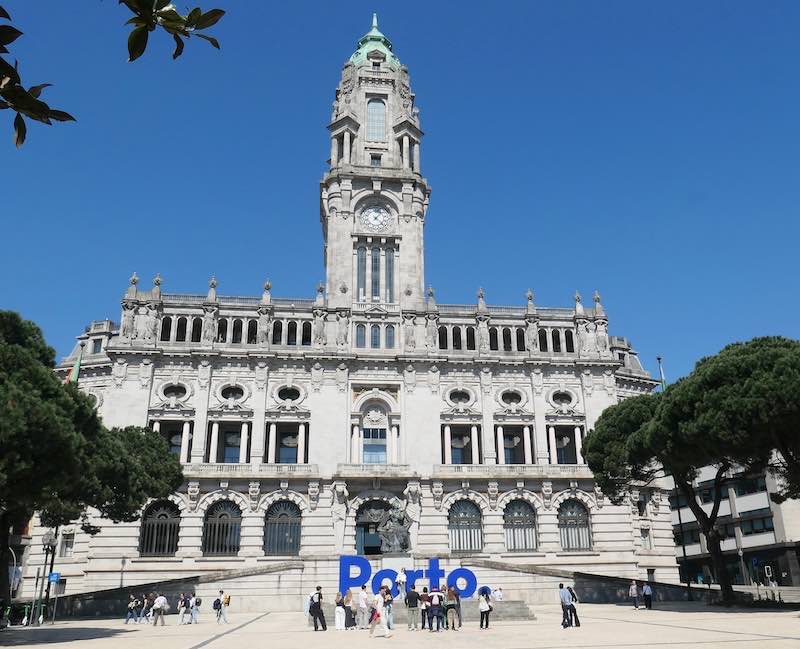
Avenue of the Allies is a grand, stately central boulevard honouring an alliance created when Portugal joined the Allies during World War I. It’s one of Porto’s most beautiful streets, inspired by the grand avenues of Paris, Buenos Aires, and Budapest, lined with Beaux-Art façades, including the beautiful Câmara Municipal do Porto (Porto City Hall)
8. Câmara Municipal do Porto
Anchoring the north end of Avenida dos Aliados is the Porto City Hall. Designed by architect António Correia da Silva, it boasts a grand granite façade, 12 Greek-style caryatids on the upper floor, a 70-metre tower, and statues by José Caldas and Henrique Moreira. Construction began in 1920, but after significant delays, it was finally completed in 1955 and became operational in 1957. The immense plaza in front hosts the Porto sign and is a common venue for public celebrations, concerts, and other festivities.
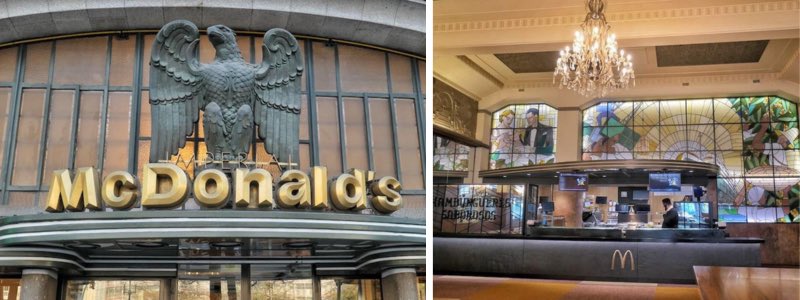
9. Imperial McDonald’s
Occupying what was once the Imperial Café from 1936 is one of the fanciest McDonald’s in Europe. Opened in 1995 in the former Imperial Café on Avenida dos Aliados, McDonald’s preserves the building’s historical heritage, maintaining the imposing bronze eagle by Henrique Moreira on the façade, the iron friezes, and the letters of the name: “Imperial.” Inside are the crystal chandeliers, the hammered glass, the ornate ceiling friezes, and the stained-glass windows by Ricardo Leone.
10. São Bento Railway Station
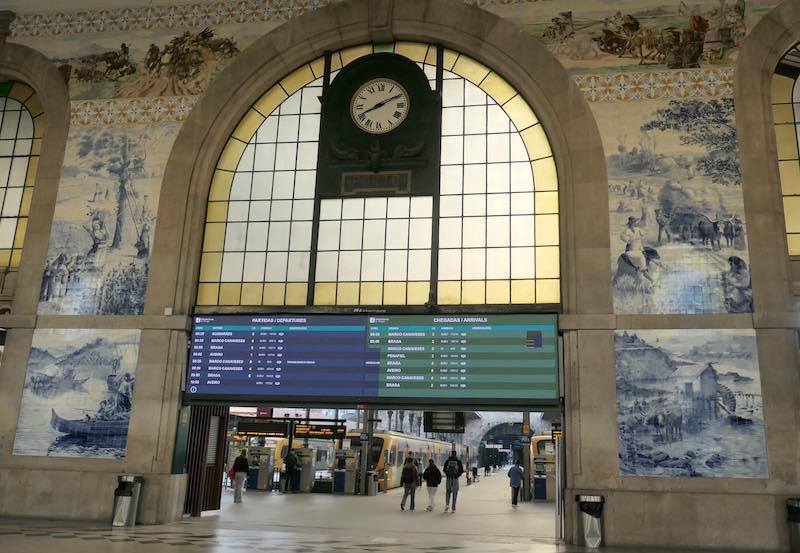
Tile-hunting is one of the favourite activities of visitors to Portugal. Originally a Benedictine convent, the stunning São Bento Railway Station is famous for its 20,000 azulejos (decorative blue tiles) depicting scenes from Portuguese life and history, told in a series of panels in the entrance hall by renowned Portuguese painter Jorge Colaço. The blue tiles filling the walls (above the doorways to the tracks) celebrate the traditional economy, such as the transportation of Port wine. There are panels depicting medieval battles, and the 1387 wedding of King João I and the English princess Philippa. It is considered one of the most beautiful train stations in the world.
11. Livraria Lello
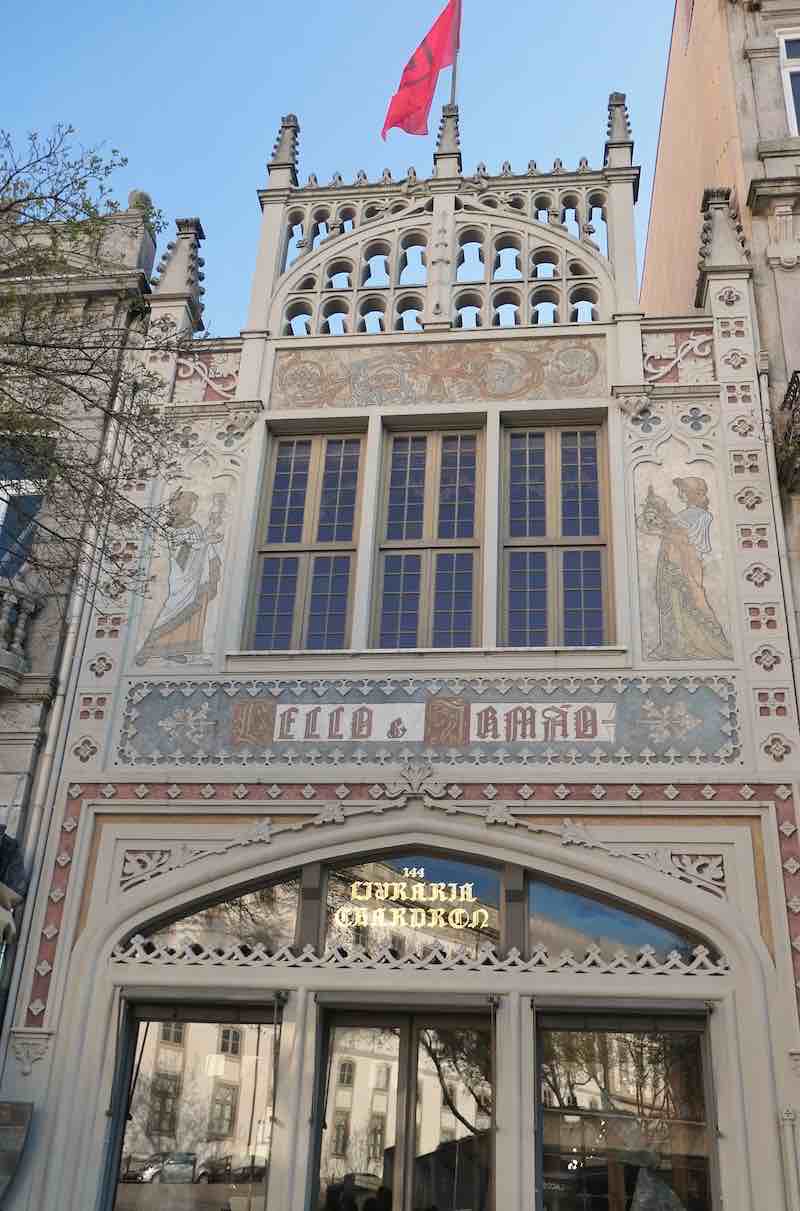
On the façade of the beautiful Livraria Lello in the Clérigos neighbourhood are two painted figures representing science and art. One of the most famous bookstores in the world, it is known for its stunning architecture, carved arches, lavishly carved plasterwork with gold leaf, stained-glass skylight, and signature carved red staircase. Opened by the Lello brothers, Jose and Antonio, in 1881, the store became a meeting place for intellectuals, book lovers, and social gatherings. Today, it’s a popular tourist attraction, especially among Harry Potter fans.
12. Torre dos Clérigos
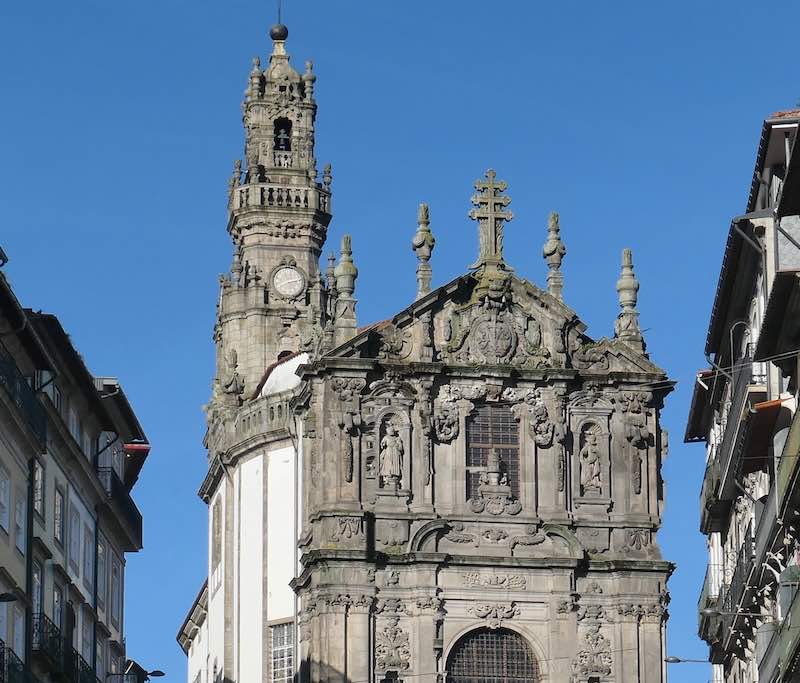
Opened in 1763, the 18th-century Clérigos Tower is almost 76 meters tall and home to a church (Igreja dos Clérigos), a bell tower, and the Clérigos Museum. The church is a popular destination for concerts and shows, with free organ concerts daily. The narrow, spiral staircase of 225 stone steps climbs to a viewing platform with unbeatable 360° views of Porto’s spires and rooftops, and Vila Nova de Gaia. It was designed by the renowned Italian architect Nicolau Nasoni (1691-1773) in the mid-1700s.
13. Fonte dos Leões
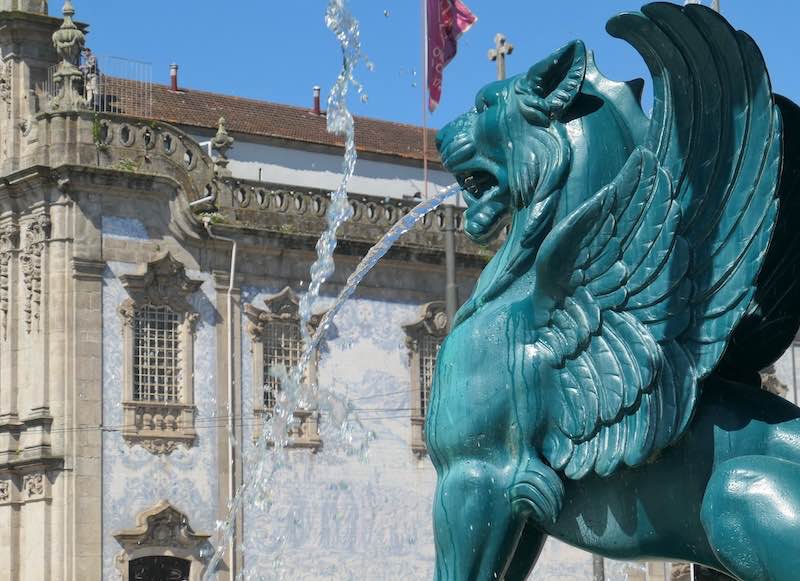
The Fountain of the Lions is in Praça de Gomes Teixeira Square, named after the University of Porto’s first rector and revered maths professor. Next to the square is the Rectory of the University of Porto, founded in 1911. Built in the 19th century to provide drinking water to the area, water gushes from the mouths of four resting lions.
14. Igreja dos Carmelitas and Igreja do Carmo
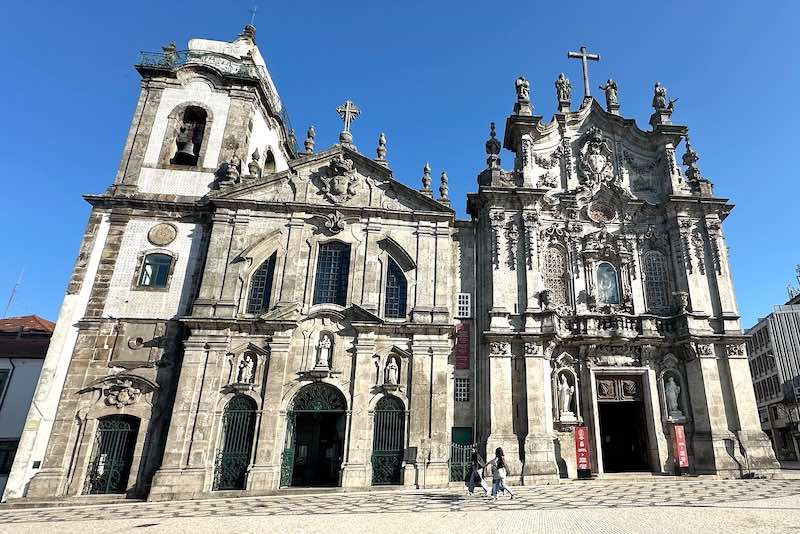
Just around the corner from the Lello bookstore and across the road from the Fountain of the Lions are two churches, the Churches of Carmo and Carmelitas. Igreja dos Carmelitas, with its opulent gilded interior, was built in the 17th century for the nuns of the Carmelite order.
Igreja do Carmo was built in the 18th century for the Carmo monks. It has a beautiful gold-covered altar inside, and an entire outside wall facing the street is covered in azulejo tiles.
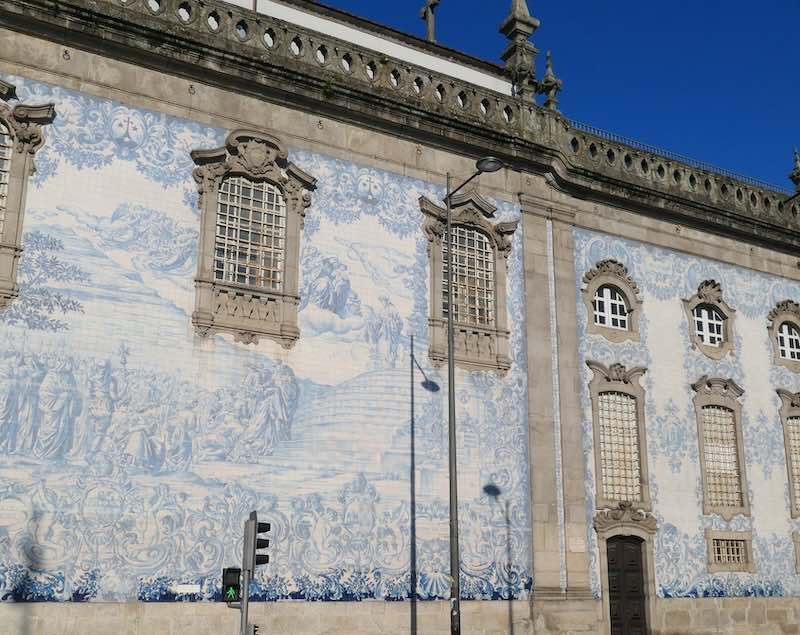
The two churches appear to be a single structure, but they are actually separated by a narrow house (Casa Escondida or Hidden House) sandwiched between them. The house is about 1.5 metres wide at the entrance and three stories high.
15. Praça do Infante Dom Henrique
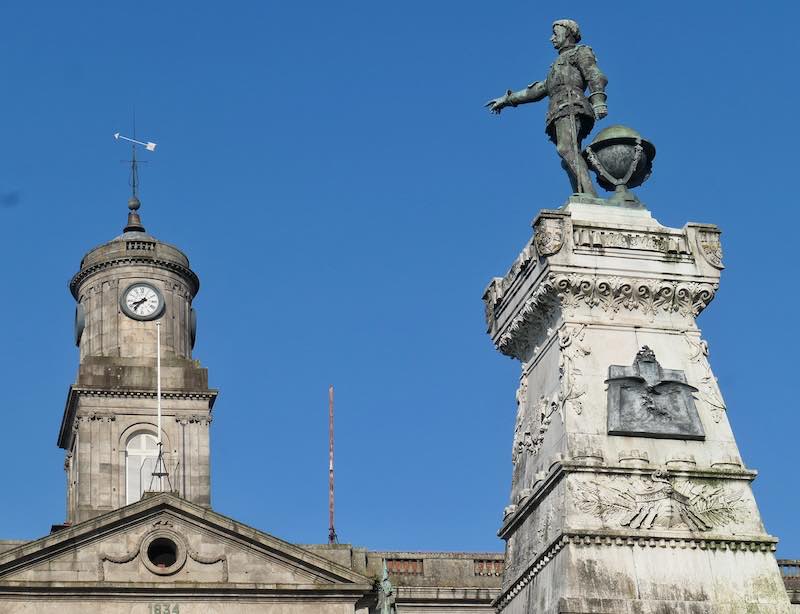
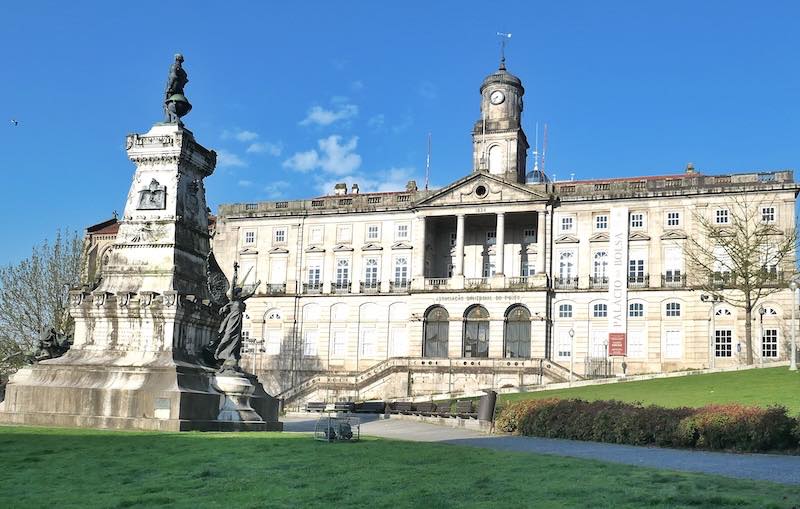
In the centre of Henry the Navigator Square is a statue of Henry pointing from his hometown to the sea. Considered by many to be the most famous Portuguese of all time, Henry the Navigator never sailed on any of his expeditions and rarely left Portugal, but he became known as Prince Henry the Navigator because of his patronage of explorers who increased the world’s known geographical information through the sharing of knowledge and by sending expeditions to places previously uncharted. His sponsorship and organisation allowed Portugal to dominate early maritime exploration, setting the stage for 400 years of colonisation.
16. Palácio da Bolsa
The Bolsa Palace, built between 1842 and 1910, dominates the Henry the Navigator Square. It is the headquarters of the Commercial Association of Porto and stands as a testament to Portugal’s opulence during the 19th century. It’s regarded as the most stunning interior in Porto. Built on the ruins of St. Francis Church, it originally operated as the Portuguese Stock Exchange, where the glamorous interior was meant to encourage wealthy investors to support Portugal’s trade endeavours.
Visit the opulent Salão Árabe (Arab Room, inspired by the Alhambra Palace) with its fine wooden floor and intricately decorated columns, ceiling, and walls. The Gallery of Former Presidents displays portraits of presidents of the Commercial Association of Porto. The stunning Pátio das Nações (Hall of Nations, the original trading floor) is a courtyard with a glass-and-metal dome ceiling and a ceramic mosaic floor surrounded by the coats of arms of the countries with which Portugal traded at the time.
The beautiful Court Room features coloured glass, large wall paintings, and wooden furniture. There is a grand staircase to the first floor, designed by Goncalves e Sousa, and a ceiling above the stairs features frescoes by Antonio Ramalho. The granite stairs are decorated with stone carvings of vines, garlands, flowers, and columns. There are two chandeliers hanging above the stairs, one of which was the first to be electrified in Porto. Other rooms include the Room of Juries, Room of Telegrapho, Office of Gustave Eiffel, the President’s Office, Golden Hall, Room of General Meetings, and the Hall of Pictures decorated in the Louis XVI style with an unusual floor.
The admission price includes a 30-minute guided tour, the only way to visit the interior. Spots on the tour can’t be booked online. With several tours a day in English, people usually don’t have to wait long for one.
17. Igreja de São Francisco
The Church of St. Francis, Porto’s most famous church, is also known as the ‘Church of Gold.’ It was originally built for the Franciscan Order in 1223, but the church gained its famous interior decoration in renovations carried out in the 17th and 18th centuries by Filipe da Silva and Antonio Gomes. The interior is lavishly decorated with over 300 kilograms of gold covering intricately carved wood. In the north aisle is one of the most beautiful altarpieces: the “Tree of Jesse” (1718), a wooden sculpture by Filipe da Silva and António Gomes depicting the family tree of Jesus, is considered one-of-a-kind.
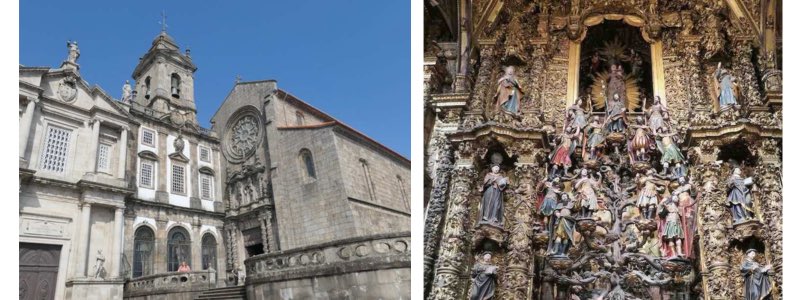
Beneath the church are ancient catacombs where the Franciscan monks are buried, as well as members of Porto’s wealthiest families. The wealthy scored the wall niches; the floor spots were assigned to the less affluent. The catacombs also house an ossuary with thousands of human bones, which can be seen through a glass floor. While regular services are no longer held, there are classical music concerts and the occasional religious ceremonies, including baptisms and weddings. The church is open to the public. The entrance fee grants access to the entire complex: St. Francis Church, the Church of the Third Order, the museum, and the Catacombs.
18. Ride the historic tram
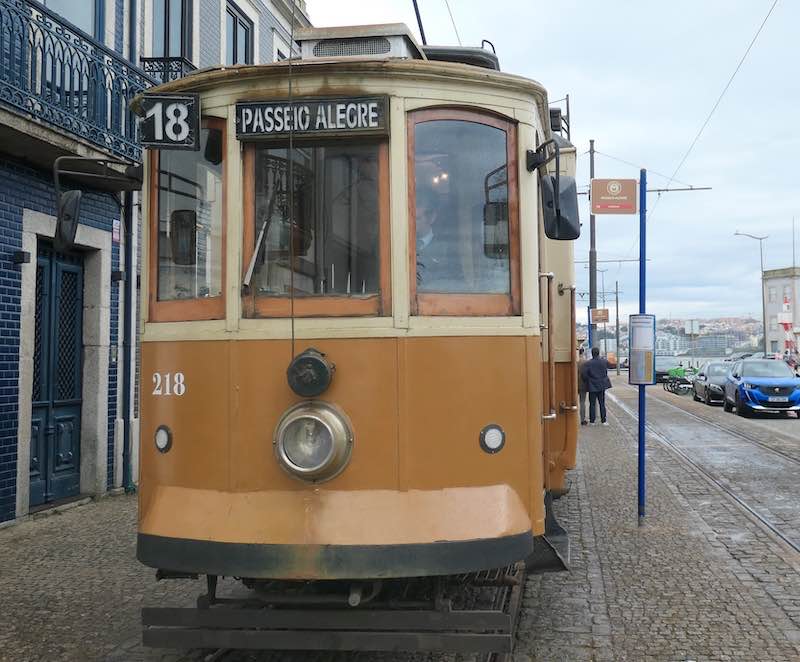
Ride one of the historic trams on the nostalgic electric tramway system dating back to 1872, when trolleys were pulled by horses and oxen. The service was electrified in 1904. There are two lines (Line 1 and 18; Line 22 has been suspended since November 2021 due to construction works on the Metro Pink Line). Both travel from the historic centre out to the Foz do Douro area of Porto at the mouth of the Douro River. Trolley #1 follows the Douro River from the Ribeira (below São Francisco Church). Trolley #18 begins at the Clérigos Tower with views of Gaia past the Tramway Museum. Both trolleys stop at the Tramway Museum. Cash or card is accepted.
19. Museu do Carro Eléctrico
The Tramway Museum is in a beautiful Art Deco warehouse a few metres from the river and the sea, in the Foz neighbourhood at Alameda Basílio Teles, 51. See the old trams from various eras that once glided and rattled through Porto streets, 1950s buses, photographs, and old machinery profiling an era when streetcars played an important role in the city.
20. Visit a living sardine museum
The century-old Conservas Pinhais is in Matosinhos, home of traditional Portuguese canned sardines from NURI and Pinhais, the authentic Sardine Museum in Porto. Discover the century-old artisanal process firsthand through the popular factory tour followed by tastings.

21. Enjoy seafood in Matosinhos
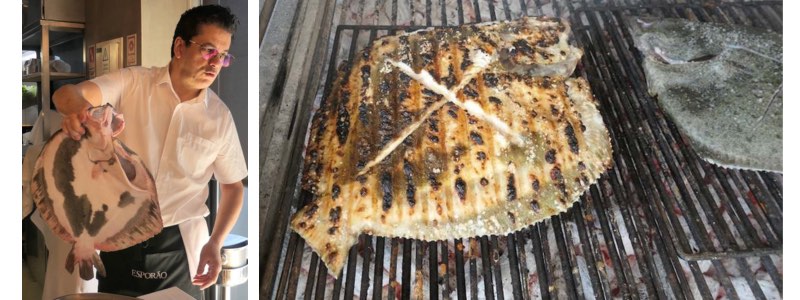
At O Valentim Restaurant in Matosinhos, we enjoyed grilled turbot, my best seafood meal in Portugal. We were five people sharing a 2.6-kilogram grilled turbot.
22. Stroll the Ribeira District
Porto’s historic Ribeira District is a UNESCO World Heritage site peppered with colourful buildings, narrow streets, superb views of the Douro River, and endless photo opportunities. Walk along the Riberia Promenade (Cais da Ribeira) on the Porto side to admire the Dom Luís I Bridge. ‘Ribeira’ translates as ‘on the river.’ Before tourism, the Ribeira was a working port where the river bordered the arches, which served as loading zones for merchants, before the promenade was reclaimed from the river. Cargo-laden riverboats unloaded wine and produce, but today the old arcades are occupied by restaurants and souvenir shops. There are many restaurants with high prices and not necessarily the best food.
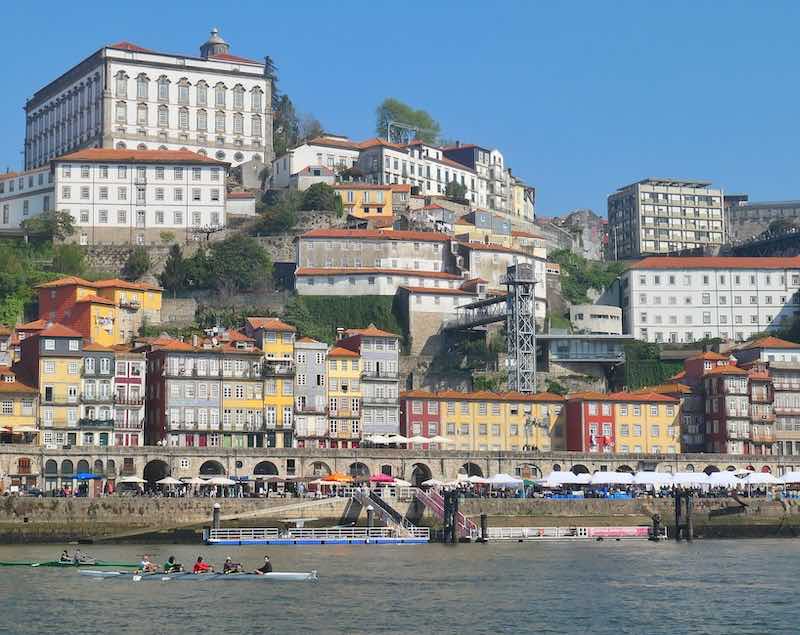 Rebeira riverfront from Vila Nova de Gaia
23. Ponte de Dom Luis I
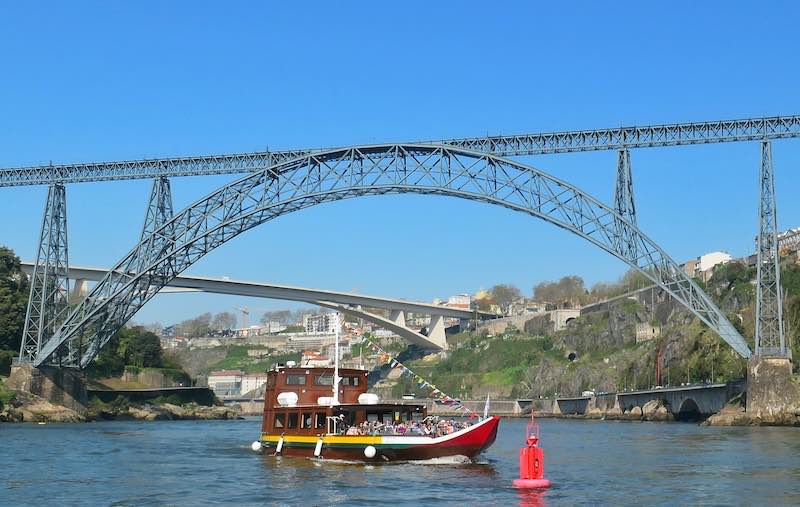
Of the six bridges that cross the Douro River in Porto, the Dom Luis I Bridge, completed in 1886, is the most famous. The arch bridge, almost 400 metres long, connects the historic centre of Porto to Vila Nova de Gaia (a separate municipality from Porto). It has two decks: the lower one for motorists and the upper for the metro. Both decks are pedestrian-friendly. Designed by Teofilo Seyrig, a partner of Gustave Eiffel, it’s one of Porto’s classic symbols. Walking across the bridge at sunset is a popular experience.
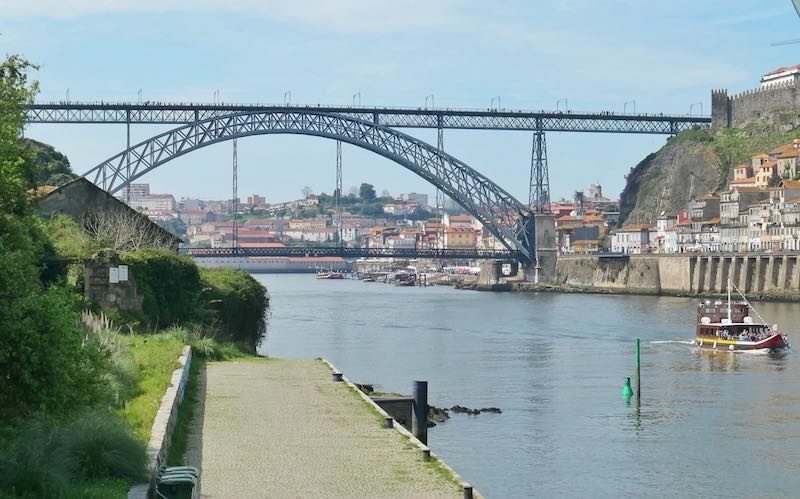
24. Funicular dos Guindais
The Guindais Funicular was reopened in 2004 and fully modernised after being closed for over a century due to an accident. The original service opened in 1891. The funicular offers an alternative to climbing the stairs from the Ribiera waterfront to the upper level of the city behind the Porto Cathedral. A segment of the restored city wall is visible near the top of the funicular.
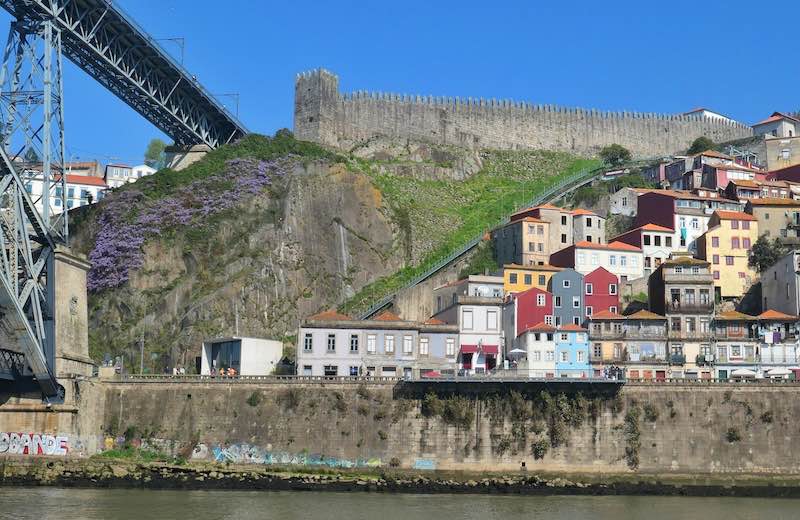
The lower station is across the street from the lower level of the Dom Luís I Bridge (Riberia station), and the upper station is across the street from the Church of Santa Clara (Batalha station). Each car accommodates 25 passengers. The track is 281 metres long and rises steeply before entering a tunnel 90 metres long near the top of the slope. A loop at the lower end of the tunnel allows two cars to pass each other. While the upper 90 metres of the line are in a tunnel, travellers can enjoy wonderful views during the other sections of the journey and during the last few minutes when the car emerges from the tunnel.
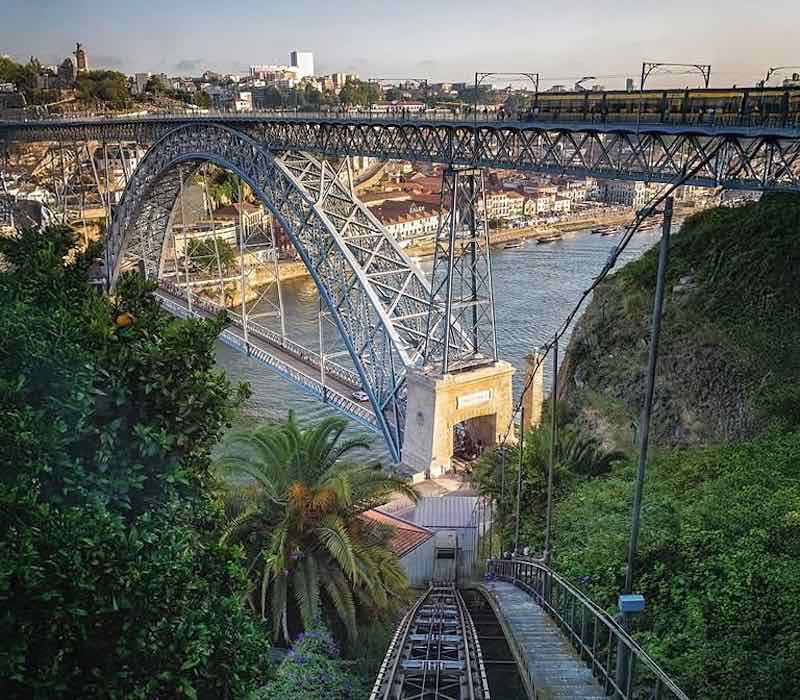
It takes about three minutes to reach the top station after emerging from the tunnel, and these three minutes are the best time to grab a shot of the breathtaking views.
25. Sé do Porto
Dating back to the 12th century, Porto Cathedral is next to the walls that once protected the city. Strategically located on a hill overlooking the Douro River, this fortress-like cathedral is an eclectic mix of architectural styles. The exterior resembles a fortress with battlements, unlike the beautiful interior. The 15th-century cloister is decorated with beautiful blue-and-white tiles depicting historical religious scenes. Climb the narrow stone staircase to the top of the tower for additional views of the area.
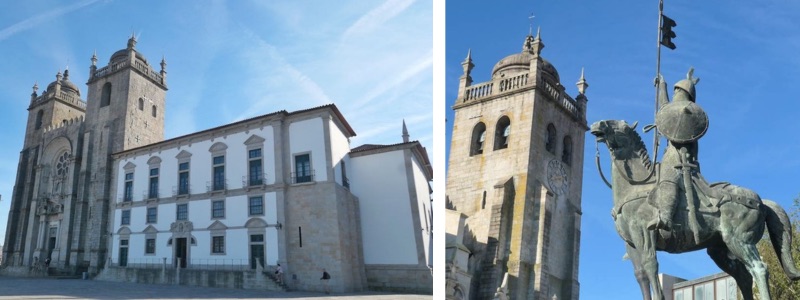
From the terrace, enjoy the views of the old town, the Douro River, Vila Nova de Gaia, and the Clérigos Tower dominating the city skyline.
26. Upper deck, Dom Luis I Bridge
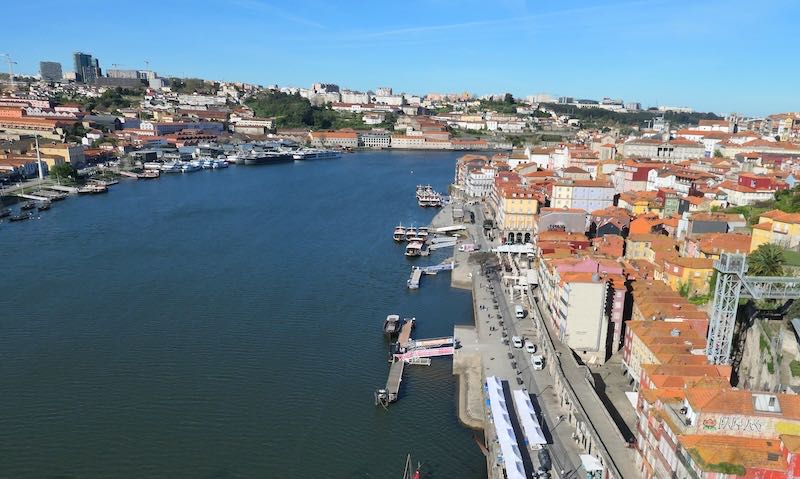
The scenic top level of the Dom Luis I bridge is accessed just around the corner from the Porto Cathedral, and ends near the Jardim do Morro. Watch out for metro trains.
The upper deck offers a commanding view of the historic centre of Porto and Vila Nova de Gaia across the river.
27. Jardim do Morro
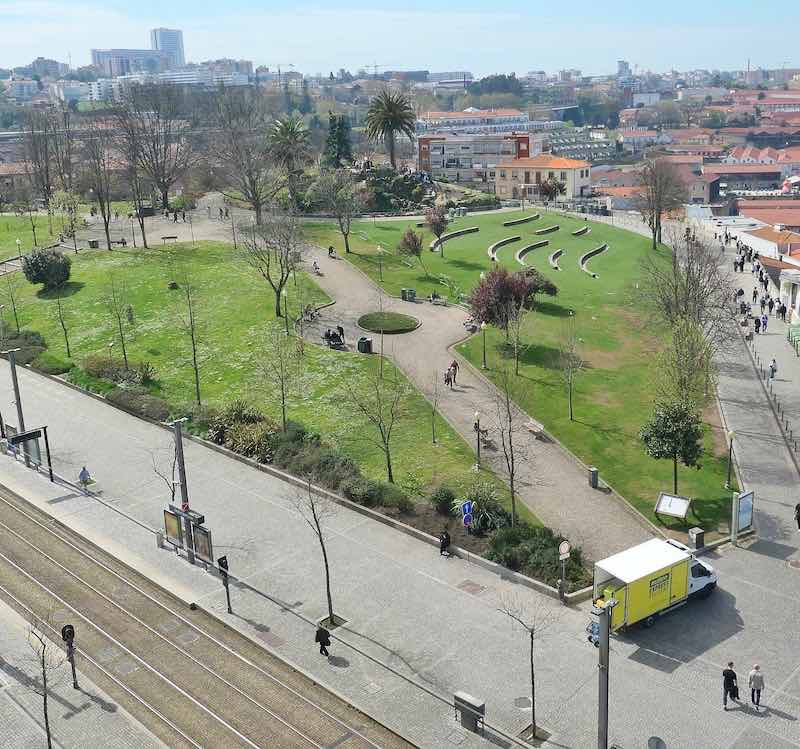
The top level of the Dom Luis Bridge ends near the Jardim do Morro, a botanical garden where both locals and tourists gather every evening to enjoy the sunset.
28. Teleférico de Gaia
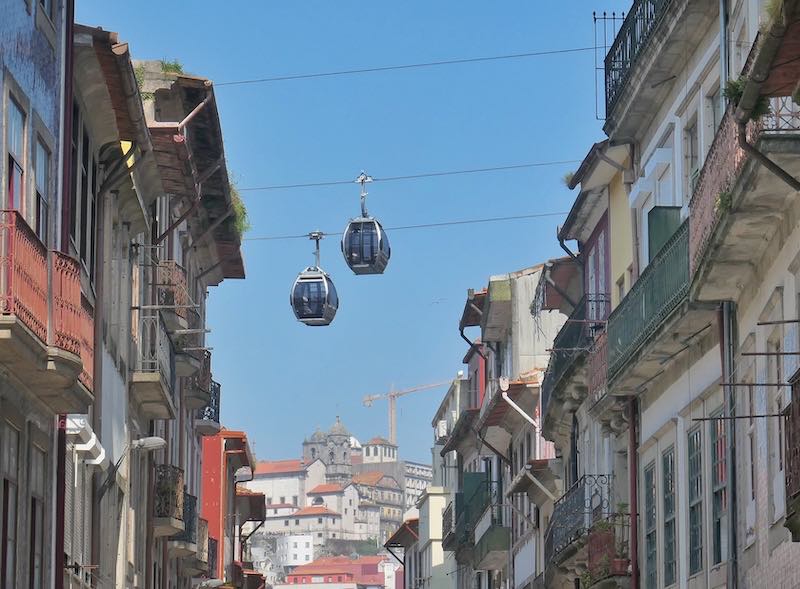
The Gaia Cable Car is a short, five-minute ride connecting the Gaia riverfront with the Jardim do Morro. It travels from the Lower Station, in front of the Cais de Gaia Municipal Market, to the Upper Station, next to Jardim do Morro (near the bridge’s upper deck). It travels alongside the Douro, soaring above the characteristic roofs of the Port wine lodges in Gaia, with views over both banks and the Dom Luís I Bridge. It’s handy for connecting the upper and lower parts of Gaia. Each cabin accommodates eight people and avoids a steep climb to the upper deck of the Dom Luis I Bridge.
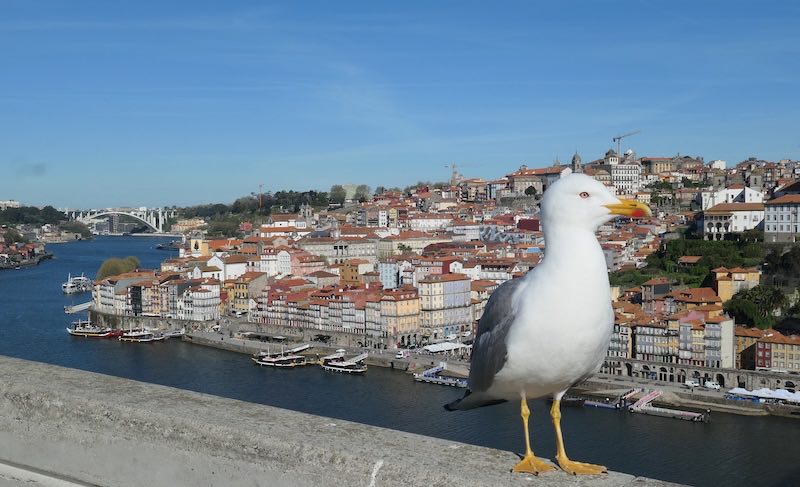
The view from the upper station overlooks Porto and its riverfront.
29. Take a boat cruise on the Douro
A boat cruise on the Douro River is a popular way to enjoy Porto from a different perspective and gain an understanding of the river’s key role in the city’s history. Taking a traditional Rabelo boat, once used to transport people and goods, offers a unique glimpse into Portuguese history. See the many Port houses and cellars from the river, and learn about the significant contributions of Port wine to Porto’s history. The most popular is the ‘Porto 6 bridges tour,’ which cruises under the city’s six bridges and takes about 50 minutes. Tours from Gaia were €2 cheaper than those from Ribeira.
30. Port lodges of Vila Nova de Gaia
Gaia is on the opposite side of the Douro River from Porto, one of 13 municipalities within the Porto Metropolitan Area.
Rules for storing and naming of Port wine are governed by strict regulations to ensure the authenticity and quality of the protected designation ‘Porto’ (or ‘Port’ in English).
Key rules include the geographical origin and specific fortification and aging categories that dictate how long a bottle can be stored before or after opening. Before 1986, it was mandatory for all Port wine to be stored, matured, and exported from the milder, humid coastal climate of Vila Nova de Gaia, rather than in the hot climate of the Douro Valley where the grapes are grown. Since 1986, changes in regulations and modern climate-control practices have allowed producers to age and sell Port in the Douro Valley, but many brands continue to use their historic cellars in Gaia.
The wine was transported downriver in flat-bottom boats called rabelos to be stored in barrels in cellars in Vila Nova de Gaia. Today, Port wine is taken to Gaia in tanker trucks while rabelos line the waterfront as a tribute to past practices.
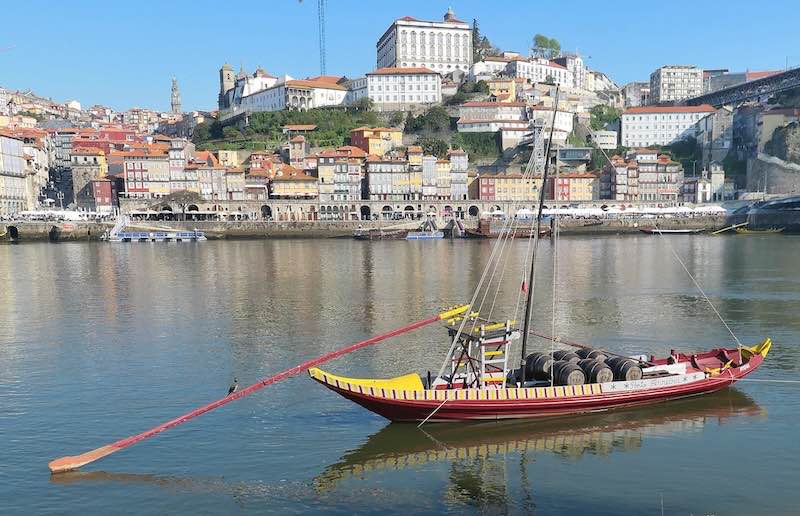
Since the 1700s, Port lodges, or Port cellars (Caves de Vinho do Porto), have occupied a prominent place on the Gaia side of the Douro River. Today, there are 62 Port lodges, many of which offer tours and tastings. We were keen to book a tour of Cockburn’s to see coopers at work repairing barrels and to learn about the production of Port, but we were late making a booking.
However, we had learned about Antónia Adelaide Ferreira (1811 to 1896) on our tuk-tuk tour and were able to book a tour of the Ferreira cellars. Ferreira is recognised for her leadership and innovations in winemaking, advancing Portugal’s wine industry. She fought against the phylloxera disease, which eventually destroyed much of the European grape crop, including those in Portugal and her own vineyards. Ferreira travelled to England to learn about effective techniques to combat the disease and bring them back to Portugal. It captured our interest that a woman of that era could play such an instrumental role in Portugal’s wine industry.
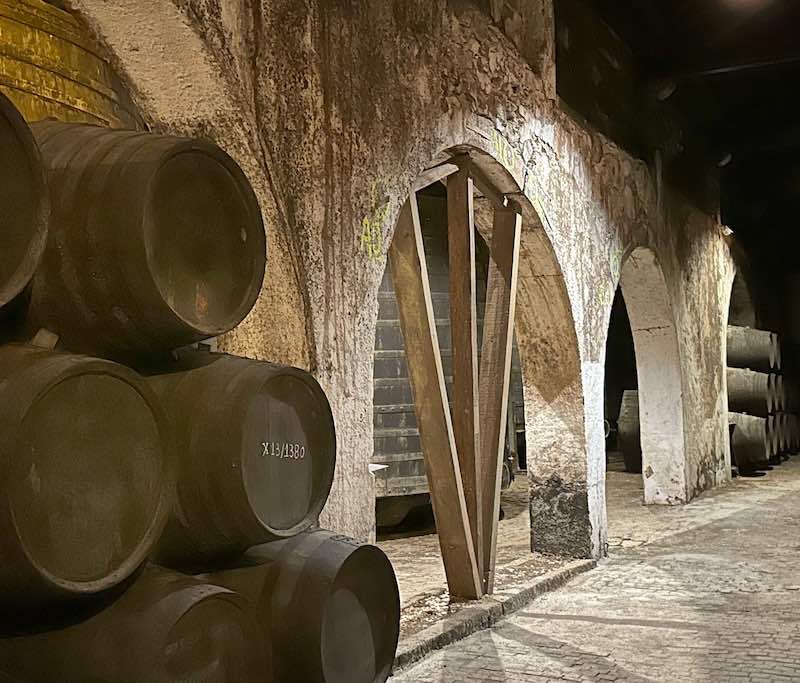
Three Port tastings concluded the tour: a white, a tawny, and an LBV (Late Bottled Vintage), a high-quality Port wine from a single harvest.
31. Head to Afurada
Walk down the riverfront to the charming village of Afurada, a fishing community with an abundance of fabulous seafood restaurants. It may take an hour or two, so combine it with a ride-sharing service. In Afurada, it’s common to see large grills on the street where different varieties of seafood are on offer.
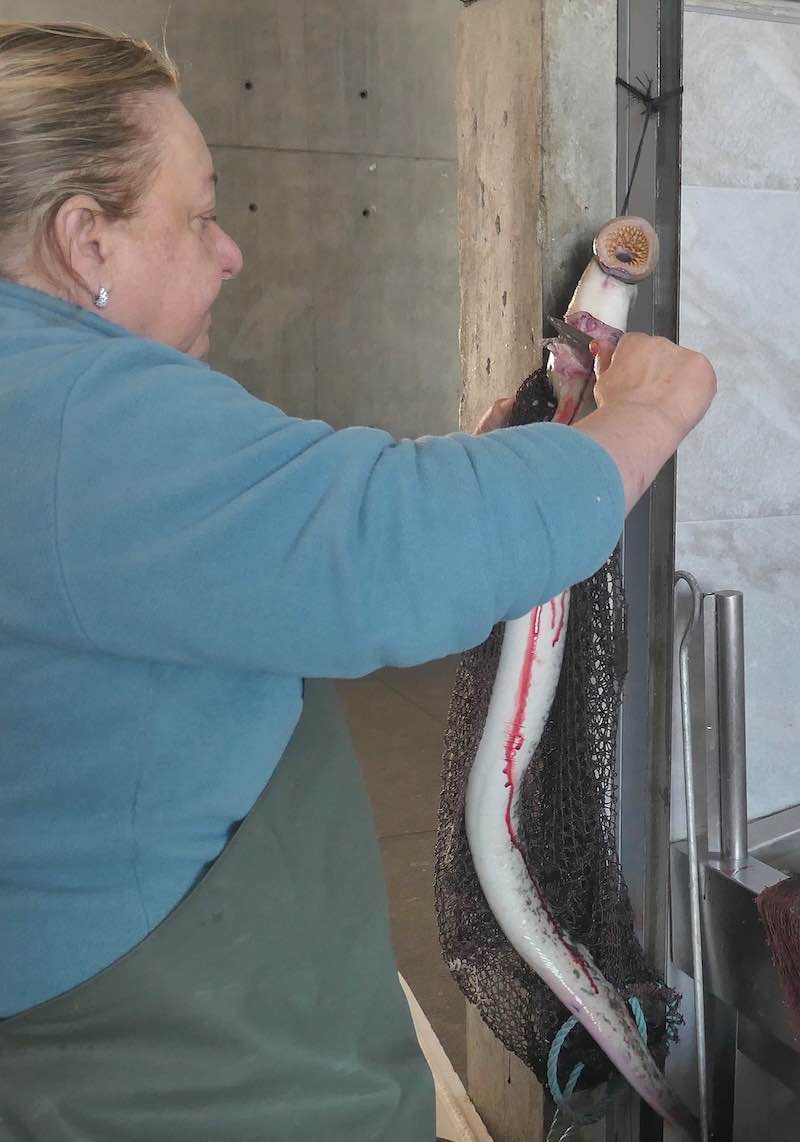
Our Uber driver dropped us at the local fish market, where we watched a worker preparing a live lamprey eel for a customer.
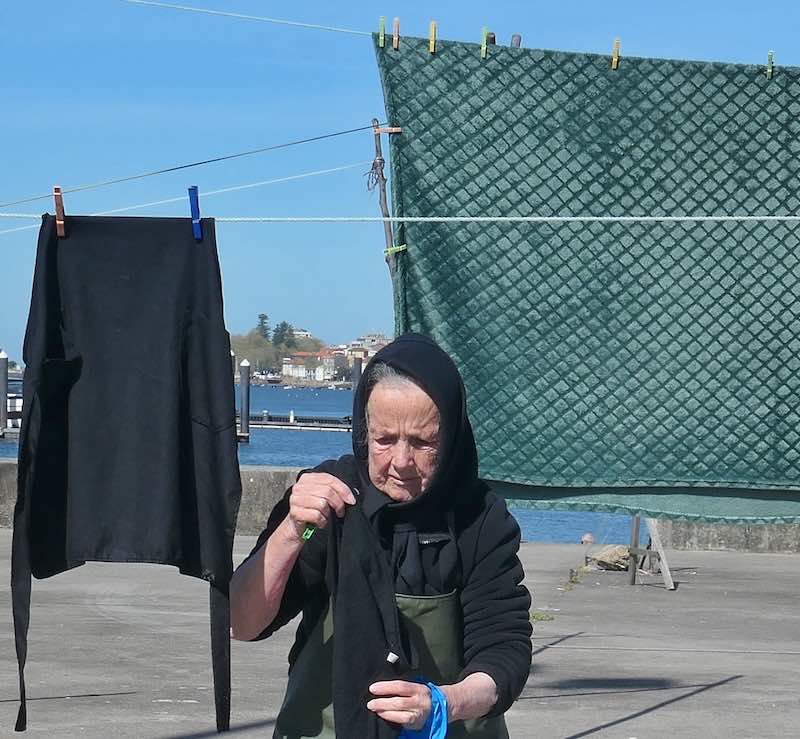
Another treat was stumbling across the communal washing facilities where ‘lavadeiras’ wash clothes, rugs, and blankets in huge tanks and hang them on lines on the waterfront to dry. One woman explained that the tanks are excellent for scrubbing floor rugs that are difficult to clean with other techniques and equipment.
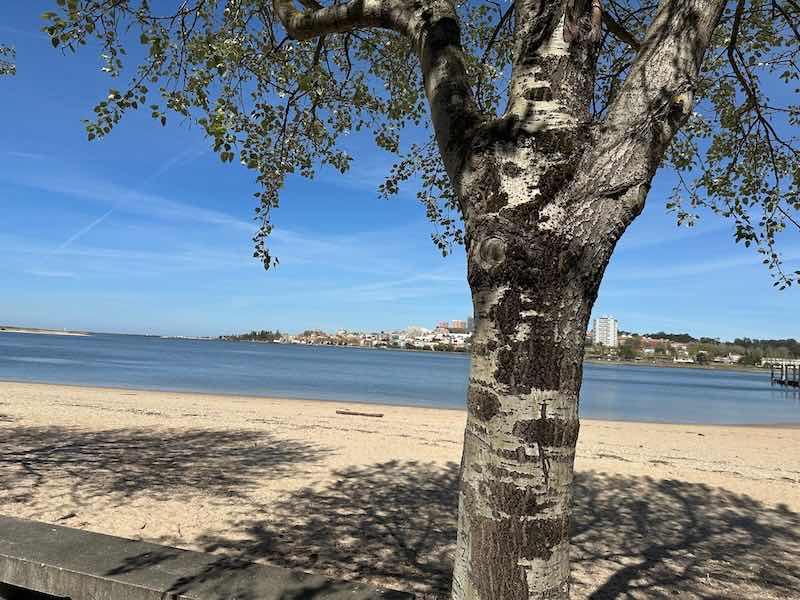
The riverfront walkway out to the estuary is lined with cork trees.
32. Visit Porto’s classic viewpoints
Miradouro is the Portuguese word for viewpoint, and several on both the Porto and Gaia sides of the Douro offer stunning vistas.
(i) Miradouro da Serra do Pilar
After crossing the upper level of Ponte Luís I to Vila Nova de Gaia, head to Miradouro da Serra do Pilar, the large terrace of the hilltop monastery of the same name. Construction of the monastery started in 1538 for the Augustinian monks, though its iconic circular church was completed later in 1672, with final phases wrapping up by the late 17th century. The church has a unique circular shape mimicking the Santa Maria Redonda in Rome. It is topped by a dome surrounded by a balcony, and circular cloisters with 36 Ionic columns. This design is the only one of its kind in Portugal.
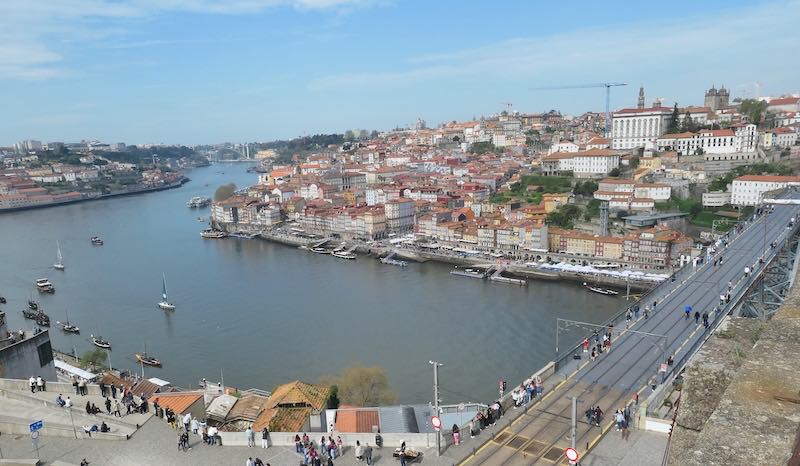
From the church terrace, the views stretch all the way to the Arrábida Bridge in one direction and the São João Bridge in the other direction. The monastery and its terrace, which serves as the viewpoint, were designated as a UNESCO World Heritage Site in 1996.
(ii) Miradouro da Vitória
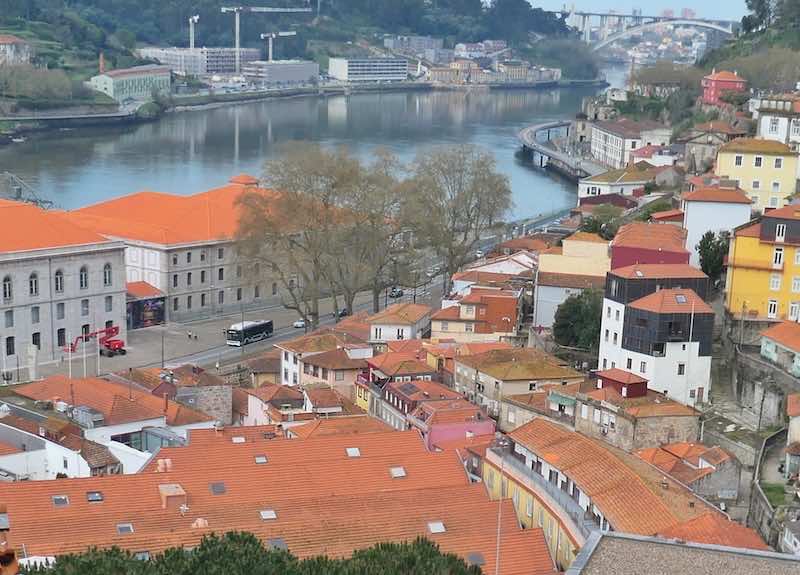
The Miradouro da Vitória is a popular site in Porto and perhaps the best known of Porto’s viewpoints. The view over Ribeira takes in the Dom Luis I bridge, and the Porto Cathedral and Bishop’s Palace are easy to spot above the patchwork of terracotta roofs below. Its address is Rua de São Bento da Vitória 11, with the viewing platform on private property, but there’s a sign indicating tourists are welcome.
(iii) Miradouro do Passeio das Fontaínhas
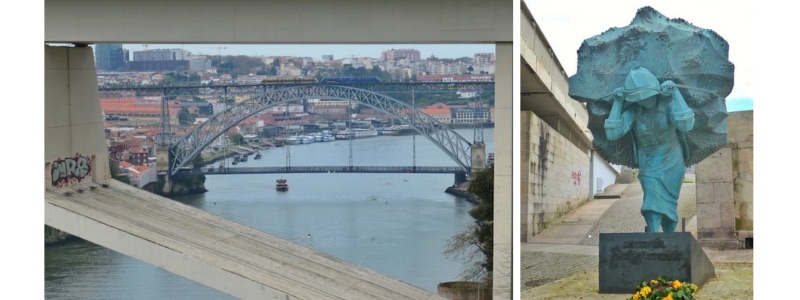
The Fontainhas viewpoint has a statue commemorating the Carquejeiras, the Gorse Women of Porto who, in the late 19th century, transported loads of 40 to 50 kilos of gorse from the Douro River up steep slopes to the historic centre. Gorse was an essential resource, primarily used as fuel for bakers’ ovens and fireplaces.
(iv) Passeio das Virtudes
The view from Passeio das Virtudes overlooks the terra-cotta roofs of the historic centre and the Douro River.
33. Enjoy Portuguese snacks
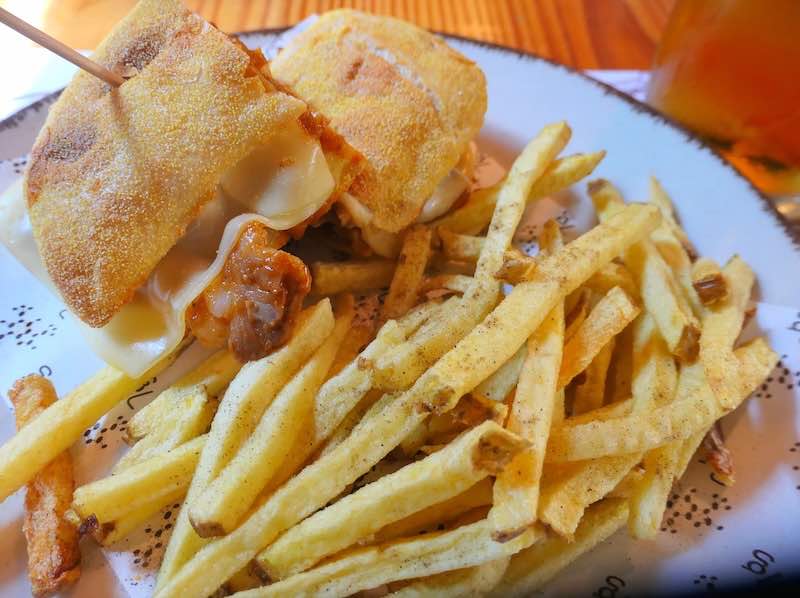
Bifana is a popular Portuguese street-food sandwich featuring thinly sliced pork marinated in garlic, white wine, and spices, then simmered in a flavourful sauce and served in a soft bread roll, often with some of the cooking liquid poured over it (and accompanied by fries).
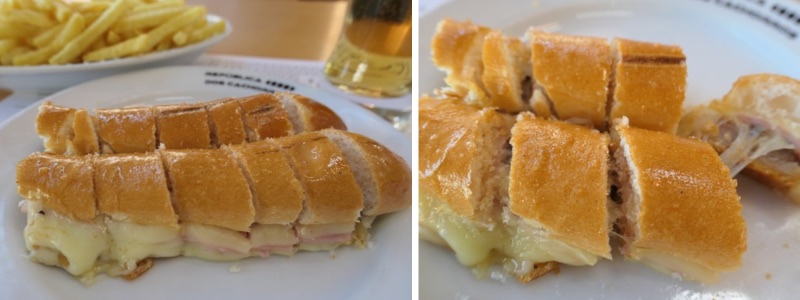
Another must-try Porto favourite is ‘cachorrinho do Porto,’ a crunchy, cheesy mini hot dog with ham and cheese. It’s wonderful when accompanied by fries (and Porto fries are exceptional) and beer.
34. Take a day tour
Porto offers many superb experiences beyond its city limits. With the beautiful Douro Valley and medieval towns within easy reach, Porto is an ideal base for day trips.
(i) Douro Valley
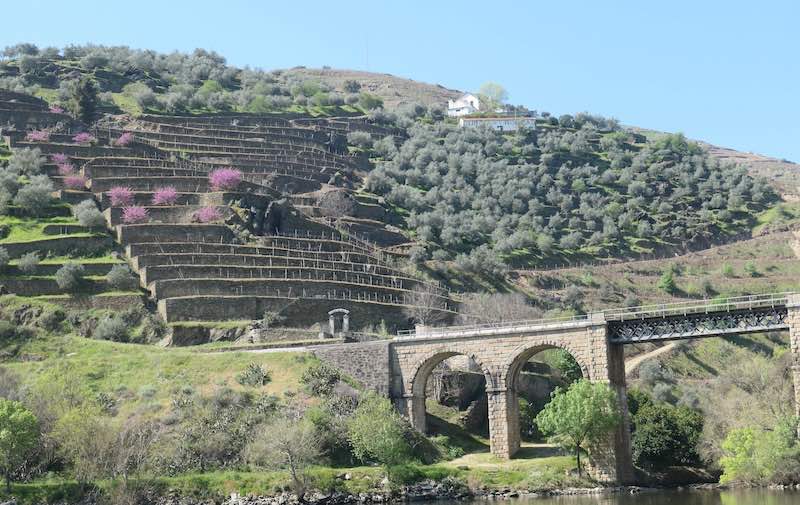
I highly recommend booking a tour of the Douro Valley and leaving the organising to the experts. Most tours combine wine tasting, lunch, sightseeing, and a boat cruise from Pinhão. The Douro offers some of the finest river scenery in Western Europe and the dramatic, mountainous terrain with steep slopes carved into terraces for cultivation creates a unique cultural landscape.
(ii) Braga and Guimarães
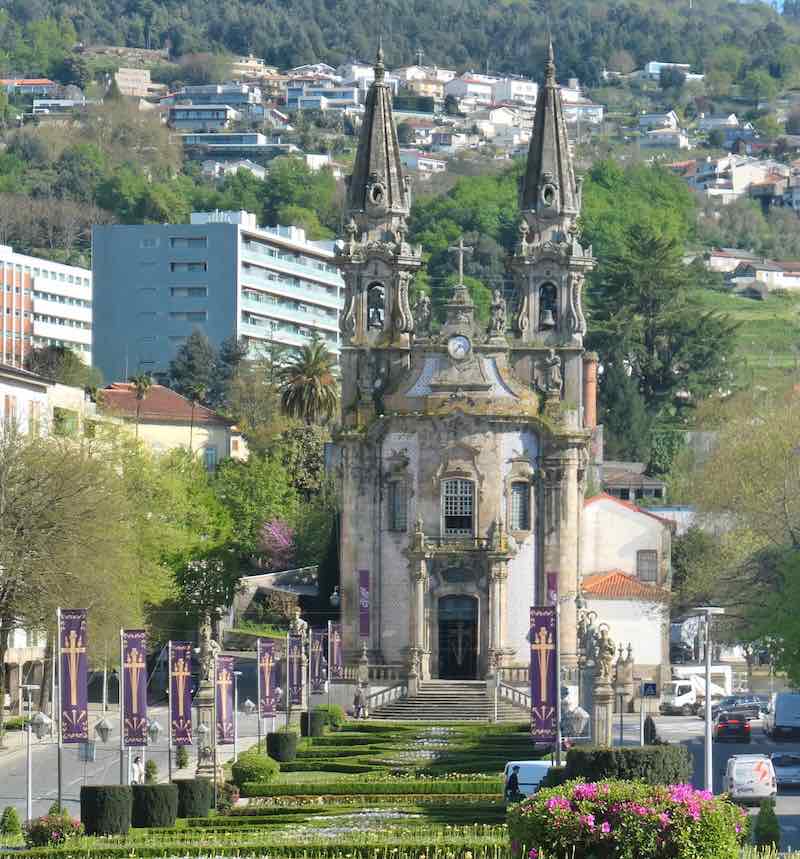
The small-group historical tour of Braga and Guimarães was excellent. It involved hotel pickup and drop-off, a knowledgeable tour guide, and visits to impressive sights and monuments in Braga and Guimarães.
Conclusion
If you love walkable destinations with architectural treasures, stunning viewpoints, and a strong sense of identity, consider adding Porto to your travel list. There’s so much to see, do, eat, and experience that Porto warrants several days, or as many as you have available.
If you found this post helpful, please share it by selecting one or more social media buttons. Have you visited Porto? What other sights and experiences would you add to the list? Please add your thoughts in the comments. Thank you.
Care to save for later?




Thank you for this wonderful tour of Porto. The descriptions and the pictures are a real treat!