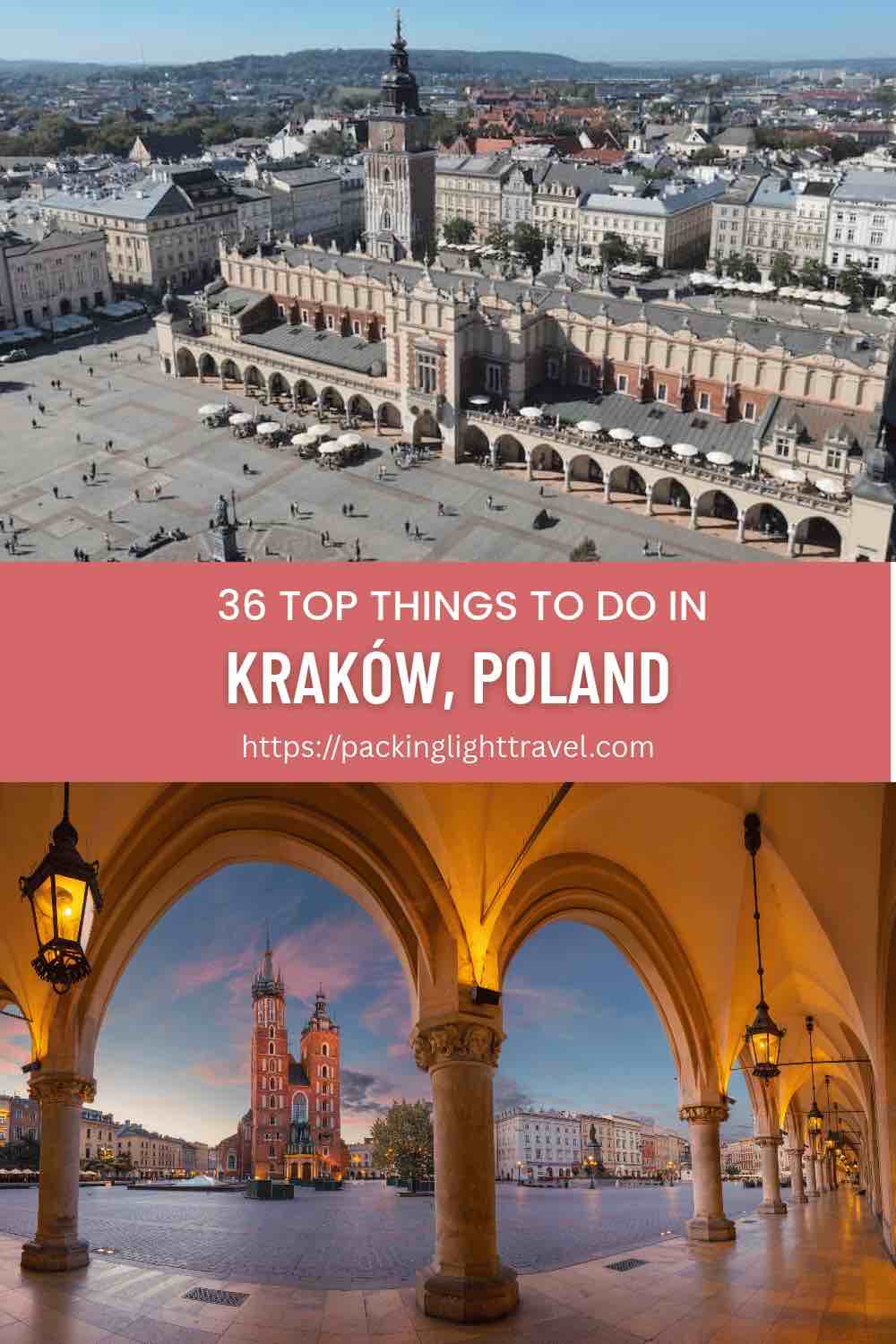
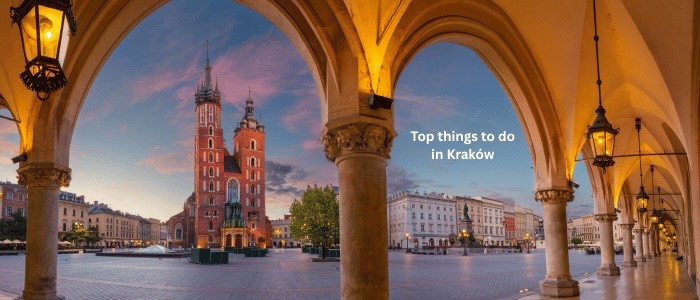
The top things to do in Kraków include exploring the city’s well-preserved medieval history and historic centre, its World War II history, the profound impact of Solidarność on European politics, and enjoying delicious Polish cuisine.
Top things to do in Kraków Poland
During World War II, the Nazis wreaked havoc, destruction, and unimaginable horrors through racial laws, mass arrests, closing of public institutions, and the establishment of forced labour camps and extermination centres. However, unlike other Polish cities such as Warsaw and Gdańsk, Kraków’s buildings and infrastructure remained virtually intact. Kraków was an administrative centre of the Third Reich, and with the rapid advancement of Soviet forces (and retreat of the Nazis) in January 1945, the city escaped large-scale damage.
1. Take a free, tip-based walking tour
Navigating a new destination can feel overwhelming. Free, tip-based walking tours offer value because they help visitors get their bearings, see major sights, and connect with a local expert who can share insider tips and information. They offer an initial orientation and a brief overview of history, politics, architecture, and culture.
There are plenty of free tip-based walking tours in Kraków. On my two visits to Kraków, I took three with Walkative Tours:
- Jewish Kraków: Kazimierz and WW II Ghetto Guided Tour
- Kraków Old Town and Wawel Hill Guided Walking Tour
- Nowa Huta: Kraków’s Ideal Communist City Tour
Another tour with Krakow Explorers was of the Jewish Quarter and the Former Ghetto. All were excellent. I learned a lot, and gained valuable intel on places I could visit on my own later.
2. Visit the Barbican and City Walls
The Barbican of Kraków (Barbakan) is a medieval defensive structure that once served as a city entrance. Originally surrounded by a moat, the round fortress with seven cylindrical towers is at the northern edge of Kraków’s Old Town. The upper walkway offers stunning views of the Florian Gate, the surviving stretches of the wall, and the green belt of Planty Park.
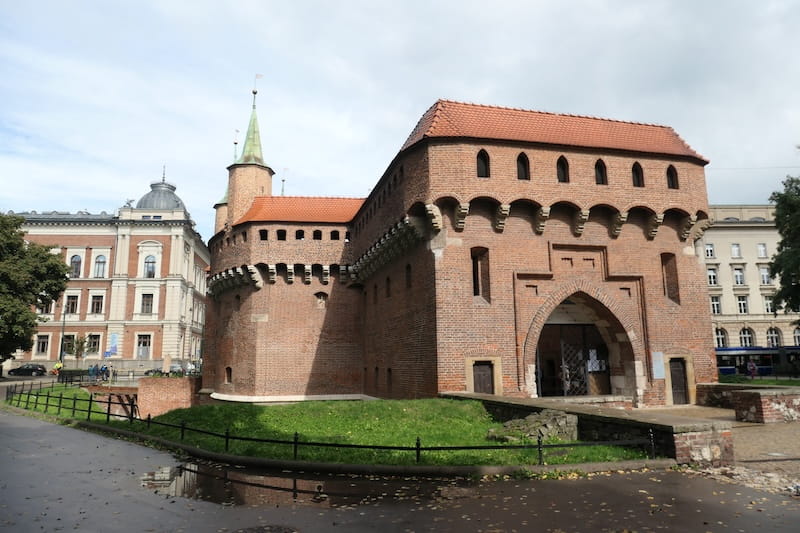
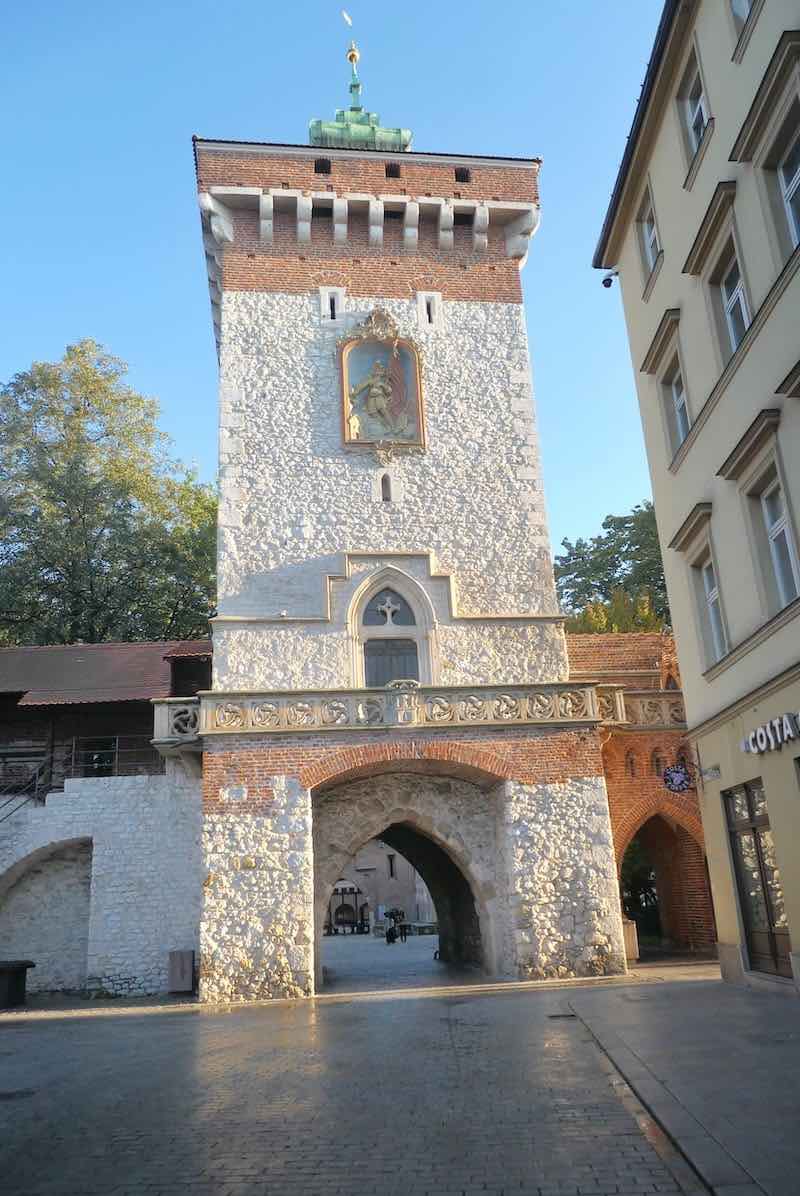
Built in 1498, it protects the main Florian Gate (Brama Floriańska) behind it. The Gothic tower of Florian Gate dates from around 1300, with additions in the 14th and 15th centuries. It is the only gate that survived the early 19th-century demolition campaign; eight others were demolished.
The ‘Medieval Kraków Tour’ includes tickets to the Rynek Underground Museum, the Town Hall Tower, the City Defence Walls, and the Barbican.
3. Wander around Market Square
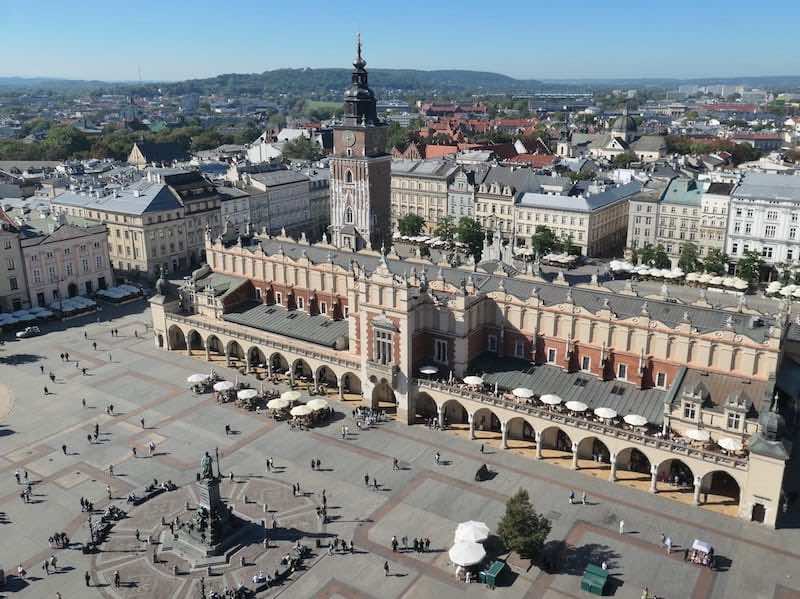
Laid out in 1257, Market Square (Rynek Główny) is considered one of the most beautiful medieval squares in Europe. The immense square, the centrepiece of the old town, is bordered by a plethora of restaurants, pubs, clubs, music bars, souvenir shops, and historical landmarks. It is also the home of the stunning St Mary’s Basilica, the Cloth Hall, and the Town Hall Tower.
4. Shop at the Cloth Hall
The Cloth Hall (Sukiennice) dominates the centre of the Market Square. It dates to the 13th century as the main trading hub for spices and cloth. Today, the interior has two rows of stalls selling mostly jewellery, souvenirs, and handicrafts.
On the upper floor is the Gallery of 19th-century Polish Art of the Sukiennice Museum, a division of the National Museum, Kraków.
The Adam Mickiewicz Monument sits in the foreground of the Cloth Hall. Mickiewicz (1798–1855) is regarded as Poland’s greatest poet and a foundational figure in Polish, Lithuanian, and Belarusian literature.
5. Look for the hanging knife
Hanging in the central passage of the Cloth Hall from the side of the monument to Adam Mickiewicz is an ancient relic of Magdeburg Law. Under Magdeburg law, petty theft was punishable by cutting off the ears, and more serious theft by cutting off a hand. The Cloth Hall was the centre of trade, and the visible presence of the knife was a deterrent to thieves.
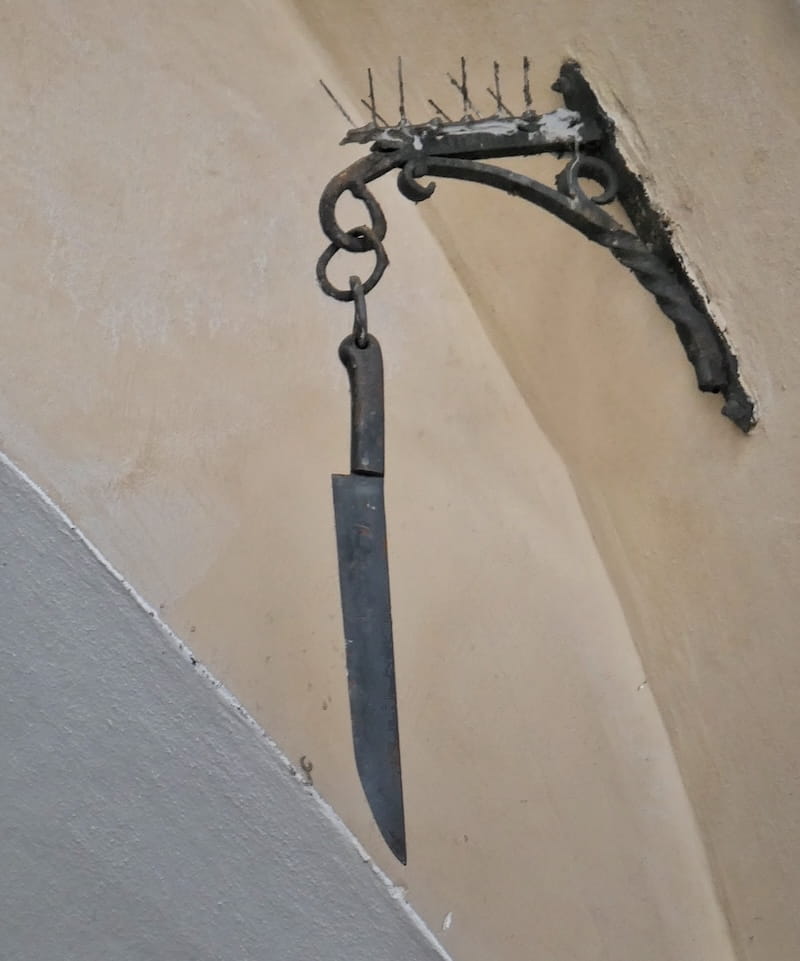
The knife is a replica. The original disappeared during the Second World War; its fate remains unknown.
6. Visit the Rynek Underground Museum
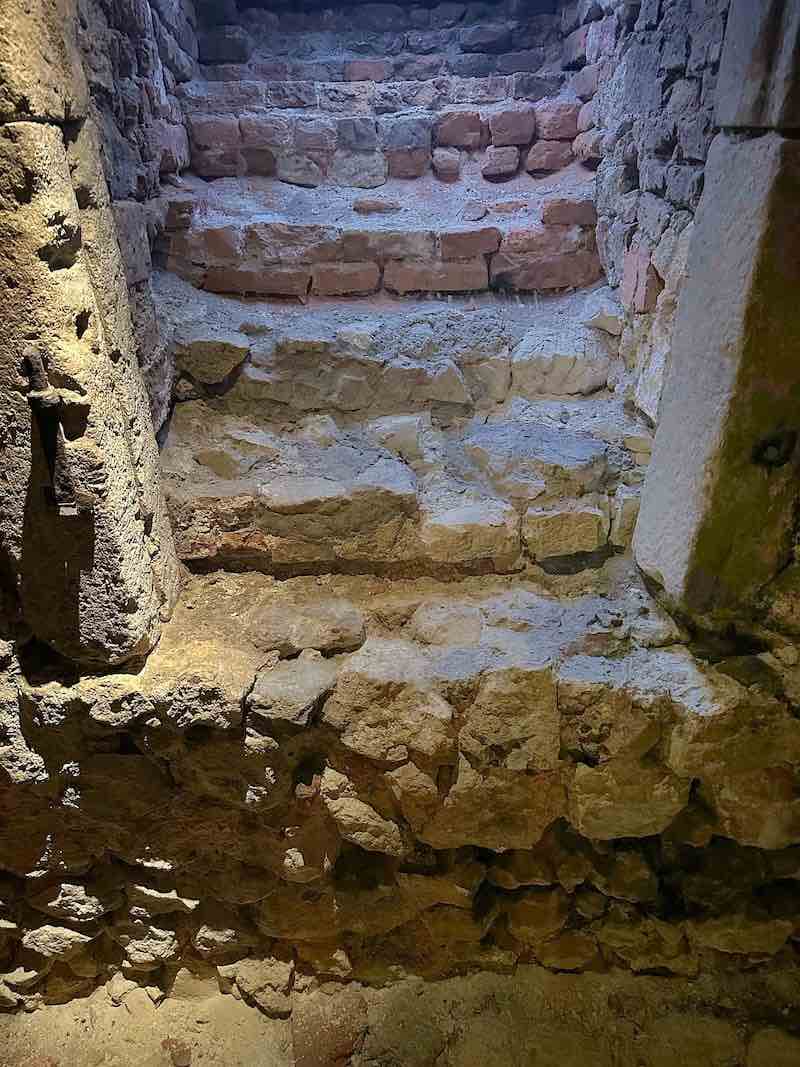
Under the Cloth Hall is the Rynek Underground Museum. This subterranean history and archaeology museum is one of Poland’s newer museums, based on early 21st-century excavations.
Beginning in 2005, the excavation project uncovered the foundations of 13th- and 14th-century market stalls, medieval workshops, a cemetery, and a wealth of period objects. The immersive museum explores medieval Kraków with excavated pathways, ancient market stalls, and a reconstructed blacksmith’s workshop. It’s a fascinating way to see how the city was built, layer by layer.
7. Climb the Town Hall Tower
The Town Hall Tower (Wieża Ratuszowa) is all that remains of the Kraków Town Hall, built of stone and brick around 1300 and demolished in 1820 as part of the plan to expand the Market Square. In 1680, a storm damaged the tower, causing it to lean slightly, and it still tilts today about 55 centimetres (22 inches) to the southwest.
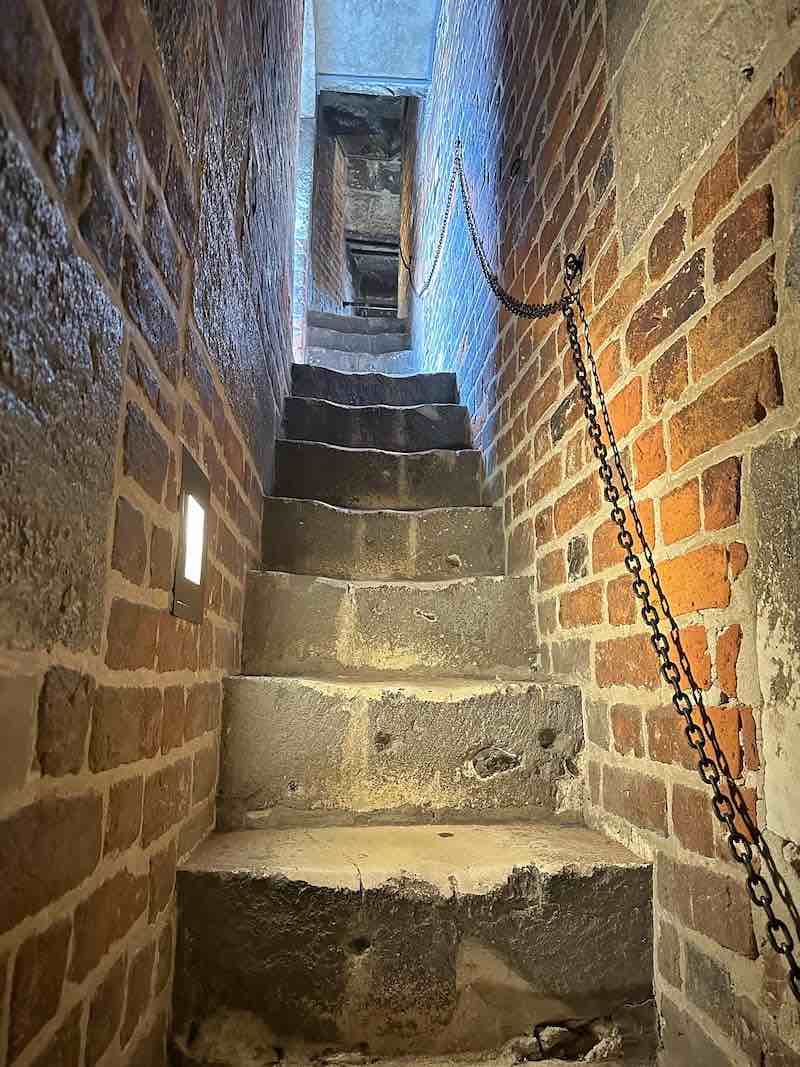
At over 70 metres (230 feet), it offers a vantage point for panoramic views of the old town. I found the 107-step climb to the Town Hall Tower harder than the 270 steps to the St Mary’s Basilica Tower owing to the significant rise between the stone steps.
The view of St Mary’s Basilica was almost worth the effort.
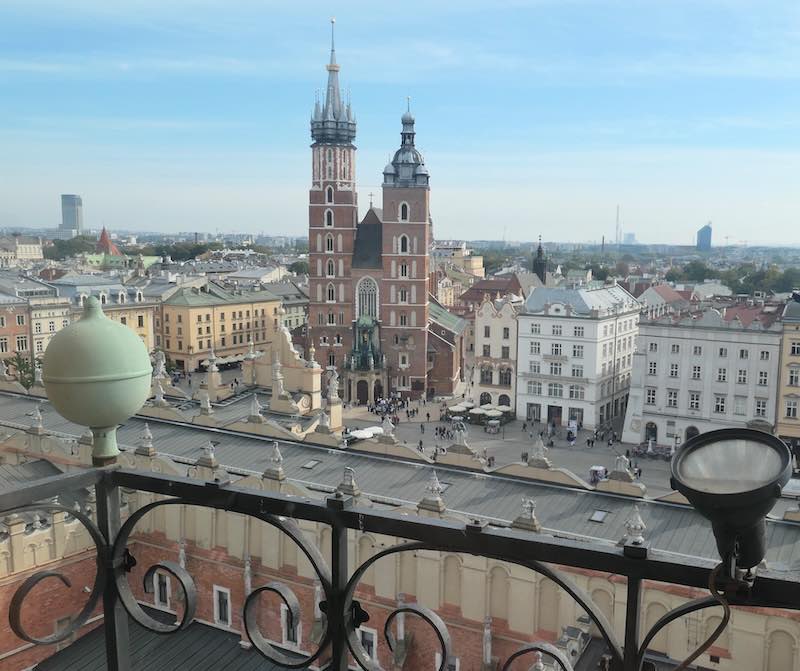
The Town Hall Tower is a branch of the Kraków Museum. The ‘Medieval Kraków Tour’ includes tickets to the Rynek Underground Museum, the Town Hall Tower, the City Defence Walls, and the Barbican. The tower is usually closed from late November to early March.
8. Admire St Mary’s Basilica
With its two unequal towers of different heights and architectural styles, St Mary’s Basilica (Kościół Mariacki) dominates a corner of Kraków’s Market Square. Built in the 14th century, it stands on foundations dating to the early 13th century.
The main entrance facing the square is for prayer only; entry is free, but views of the interior are limited. The visitor/tourist entrance is on the south side of the church opposite the Visitors Desk at 7 Mariacki Square. Half of the church is open to visitors, including the presbytery and the main altar. Admission to this part of the Basilica requires a ticket.
Separate tickets can be purchased for entry to the church and the bugle tower. Your bugle tower ticket will indicate your entry time. The bugle tower is closed on Mondays and from November to March inclusive.
9. Observe the Polish bugle call
Every hour on the hour, 24 hours a day, 365 days a year, a five-note Polish bugle call (Hejnał mariacki) is issued from the taller tower, four times in succession from windows facing the four cardinal directions. The plaintive tune breaks off mid-stream to commemorate the famous 13th-century trumpeter who was shot in the throat while sounding the alarm before a Mongol attack.
He successfully alerted the city but was killed by an archer’s arrow before the tune was finished. After each call, the trumpeter waves to the audience below.
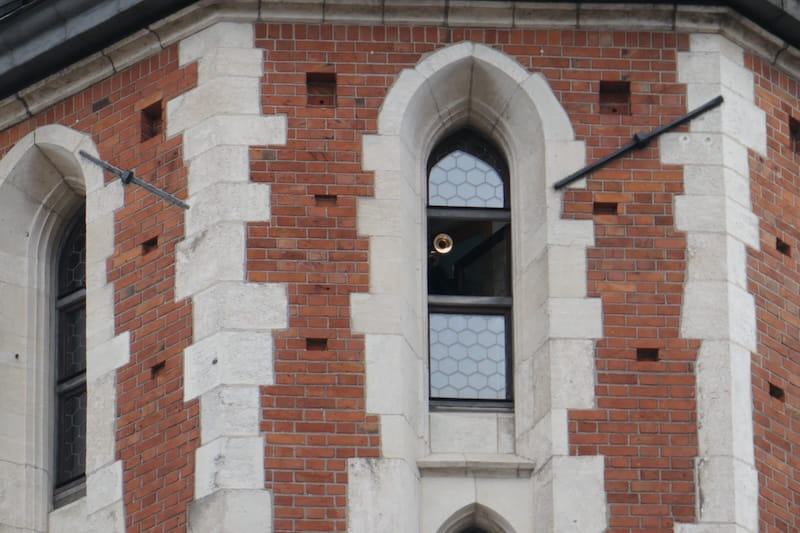
10. Climb the bugle tower
Bugle Tower tours are aligned with the Hejnał and available in 25-minute slots for up to 15 people. This is just enough time to climb the 270 winding medieval steps (with a few short breaks to catch one’s breath), admire the centuries-old posts and beams, and descend the 270 steps to the square.
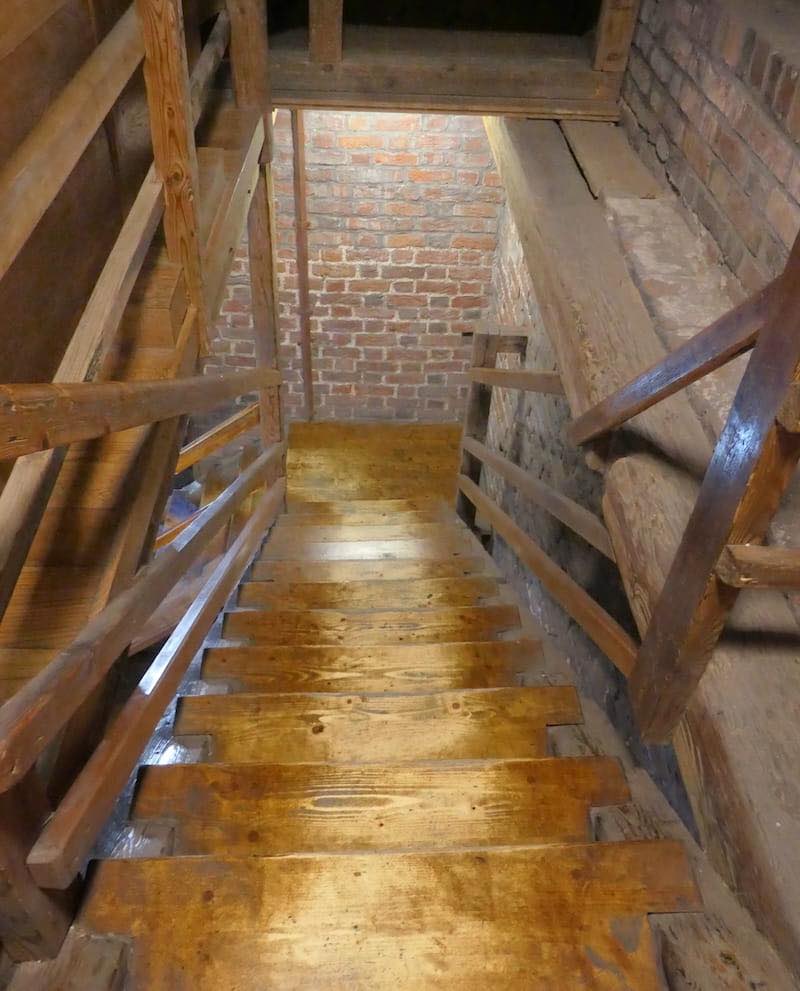
And admire the views from each window.
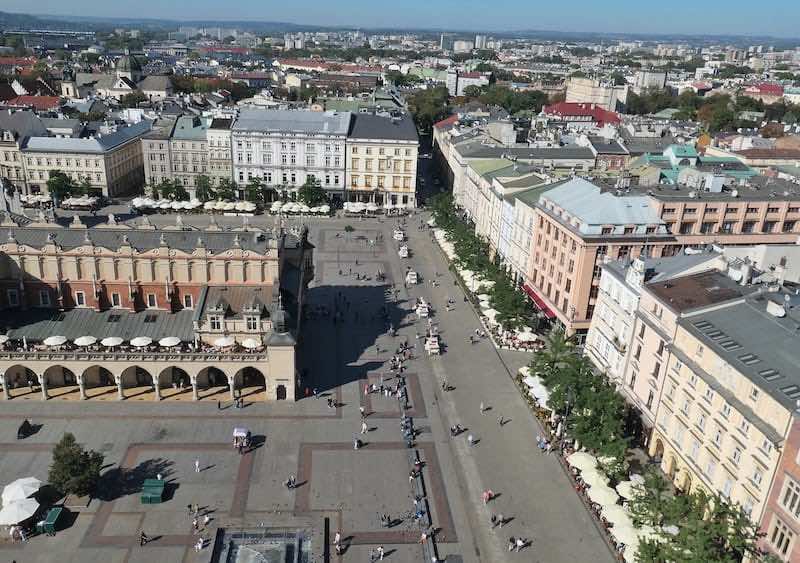
Since 1927, Polish Radio has transmitted the hejnał live at noon every day, making it the longest-running regular radio broadcast in the world.
11. Grab a ticket for inside St Mary’s Basilica
The impressive St Mary’s Basilica has a stunning interior with a beautiful high altar carved by Veit Stoss (1447–1553).
Tickets are available from the Visitors Desk at 7 Mariacki Square. To secure one of the best seats for viewing the opening of the altar, visit the ticket office before 11:30 (14:00 on Sundays and holidays) to secure a spot near the head of the queue. Then, proceed directly to one of the two front benches in front of the altar. A crowd gathers quickly, and groups of children typically sit on the floor in front of the benches. It may be tempting to admire the interior as you enter. However, the crowd disperses shortly after the opening of the altar, so do so then.
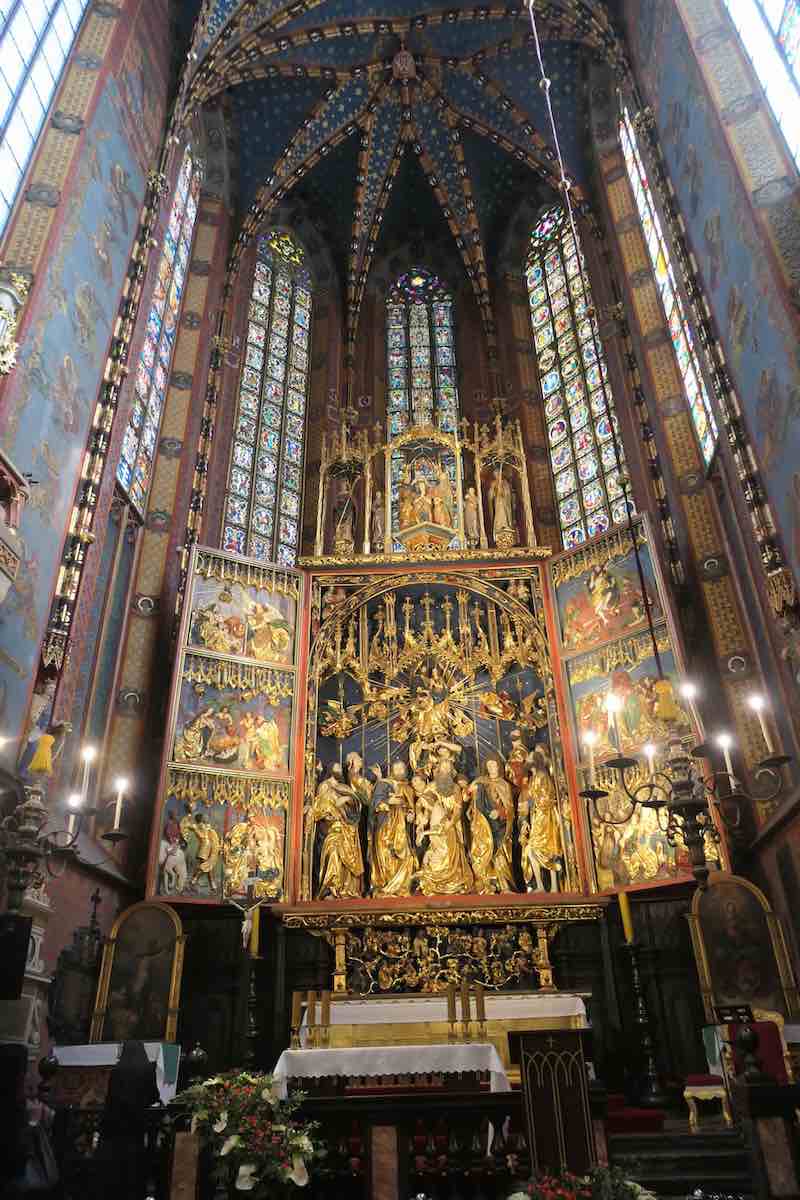
From Monday to Saturday, the altar is open from 11:50 to 18:00. On Sundays and holidays, it’s open from 14:10 to 18:00. The opening is an experience not to be missed. At the scheduled time, a nun uses a long wooden pole to carefully unlock and swing open the outer carved and painted wings of the massive Gothic masterpiece.
The Nazis pillaged the famous altarpiece during the occupation even though it had been disassembled and hidden in various parts of Kraków. The Nazis tracked down the hiding spots, seized the crates, and shipped the altar to Nuremberg Castle. Despite heavy bombing around the castle, the altarpiece survived the war and returned to Kraków in 1946. After years of restoration, it was finally returned to St Mary’s Basilica in 1957.
12. Check out ‘The Head’
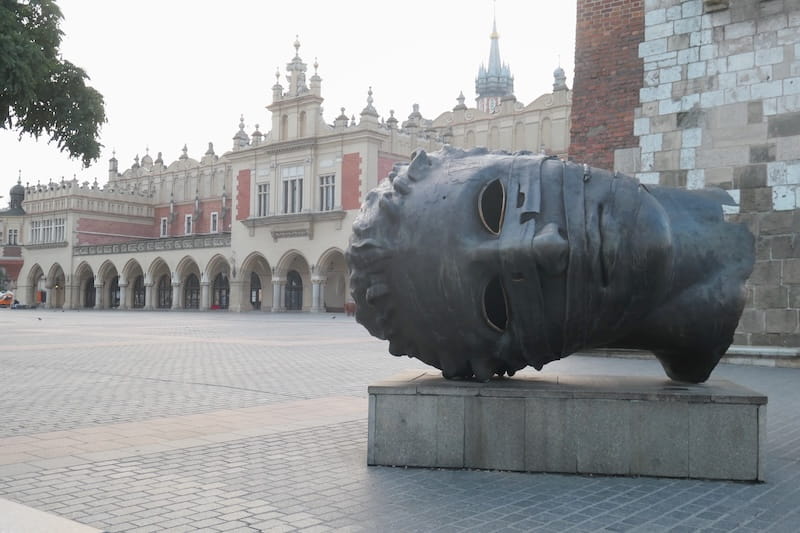
In the western corner of Kraków’s expansive Market Square is ‘The Head,’ a hollow bronze sculpture titled Eros Bound (Eros Bendato), a gift from the creator, Polish artist Igor Mitoraj. It represents the Greek god of love, Eros, bound and blinded, to symbolise being enslaved or consumed by love.
13. Polonia Wax Museum
14. Stroll through Planty Park
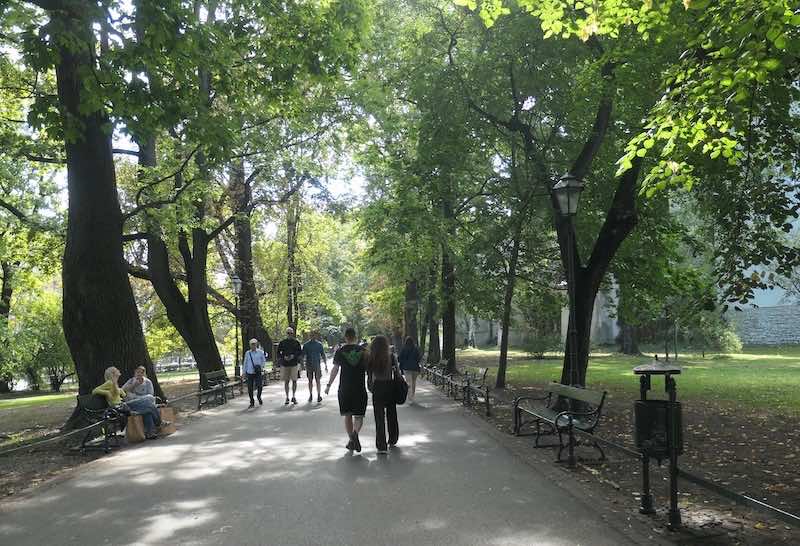
The picturesque park encircles the entire Old Town of Kraków and offers a tranquil escape from the city’s busy streets. The eight separate gardens all merge seamlessly to create a circular walking route.
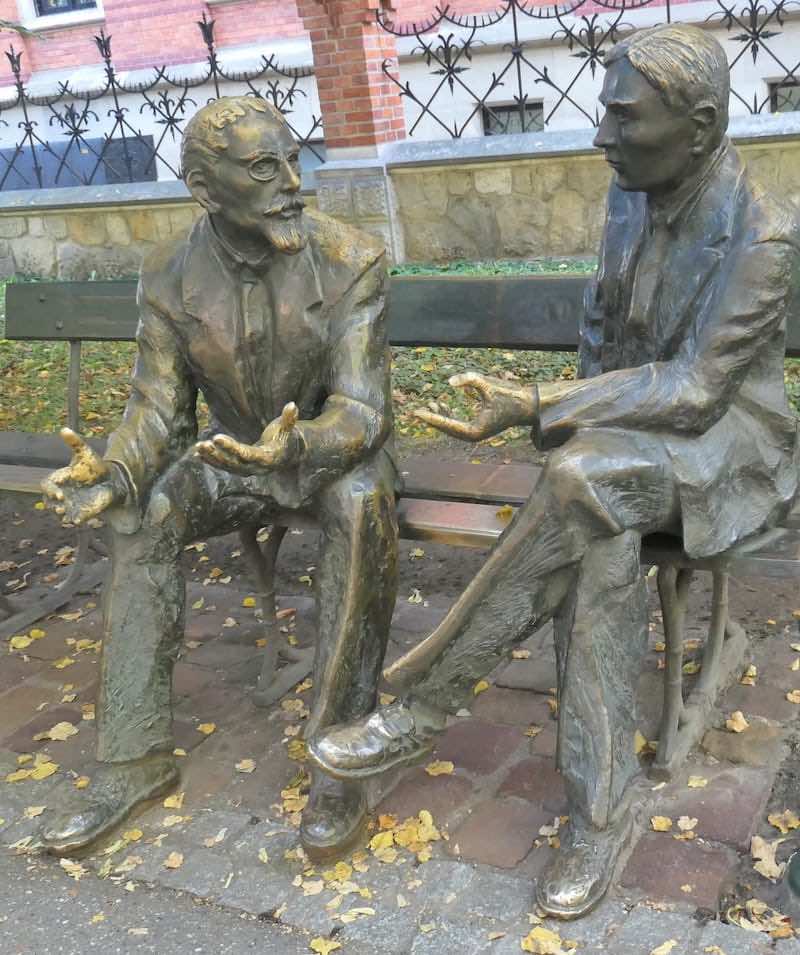
15. Check out the Mathematicians Bench
The Mathematicians Bench in Planty Park honours two outstanding Polish mathematicians of the 20th century, Stefan Banach and Otto M. Nikodym. It stands at the foot of Wawel Hill beneath the Royal Castle and the Kraków Cathedral, in front of the red-brick neo-Gothic seminary building. It commemorates the centenary of one wartime evening in 1916 when mathematician Hugo Steinhaus, strolling in Planty Park, overheard two young people discussing abstract mathematics. He joined them and shared a math problem which had bothered him for some time.
Much to his surprise, a few days later the younger of his new acquaintances, Stefan Banach, then 24, called upon him and provided the solution.
16. Visit the Czartoryskich Museum
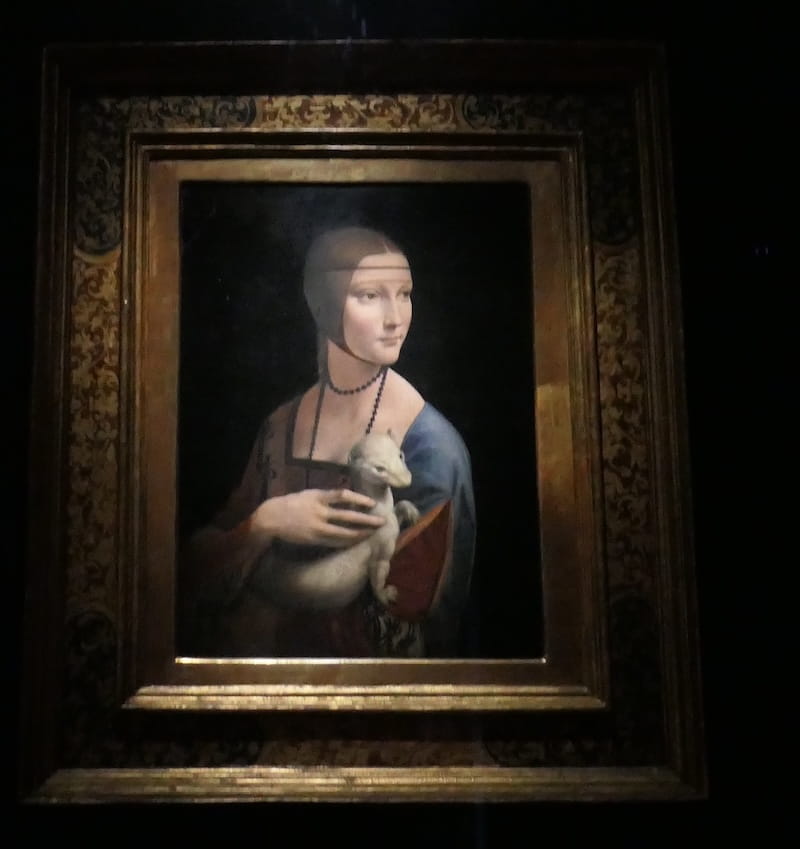
Poland’s oldest museum is home to one of Europe’s finest collections, amassed over several generations by one of Poland’s noble families beginning in 1796. Purchased by the Polish state in 2017, the Princes Czartoryskich Museum displays a wide range of paintings, antiques, sculptures, weaponry, porcelain, glassware, and tapestries.
The treasures have been moved, hidden, and looted many times. After the invasion of Poland in 1939, the plundering of Poland’s cultural artifacts, estimated at half a million art objects, was carried out by the occupying forces of Nazi Germany and the Soviet Union. Thankfully, one such piece, the pride of the museum, Lady with an Ermine by Leonardo da Vinci, was recovered and returned. Unlike the wall-to-wall crowd jockeying for a view of the Mona Lisa at the Louvre Museum in Paris, I was the only visitor in the room admiring the classic masterpiece.
17. Wander around Wawel Royal Castle
The castle is Poland’s greatest architectural treasure and a priceless national heritage monument where Polish kings were crowned and buried.
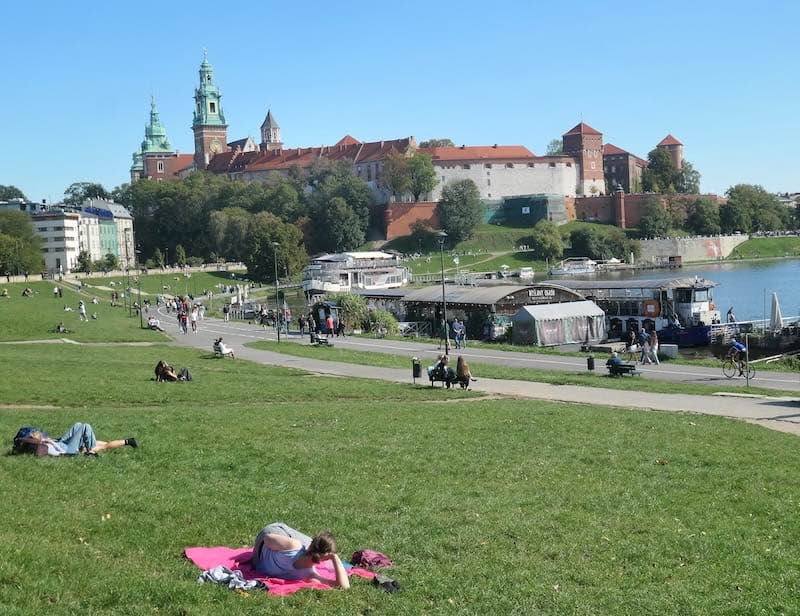
The original castle was built in 970, but it reflects a mosaic of architectural styles from different periods and is considered Poland’s most historically and culturally significant site. In 1978, Wawel joined the first UNESCO World Heritage Sites list as part of the Historic Centre of Kraków.
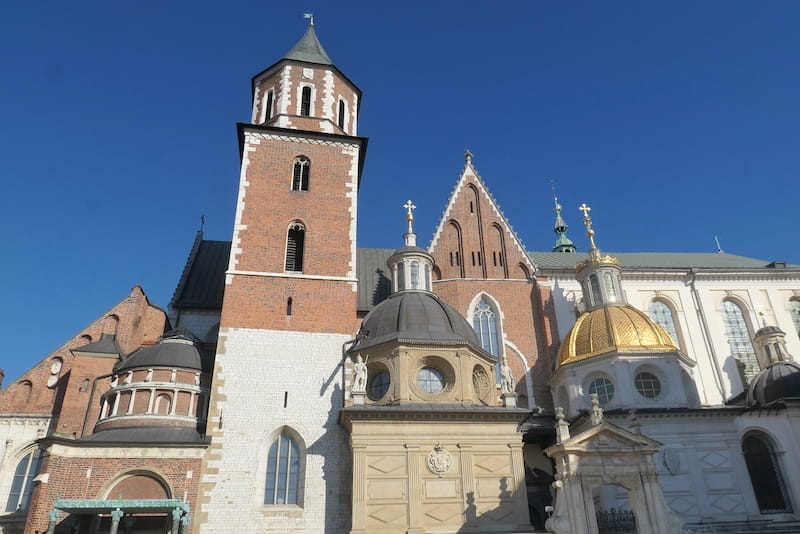
Wawel Royal Palace Courtyard and apartments can be admired from the grounds (admission is free). The Royal Apartments and State Rooms require a ticket, along with the Royal Tombs and Sigismund Bell. The Crown Treasury and Armoury are among the castle’s top places to visit.
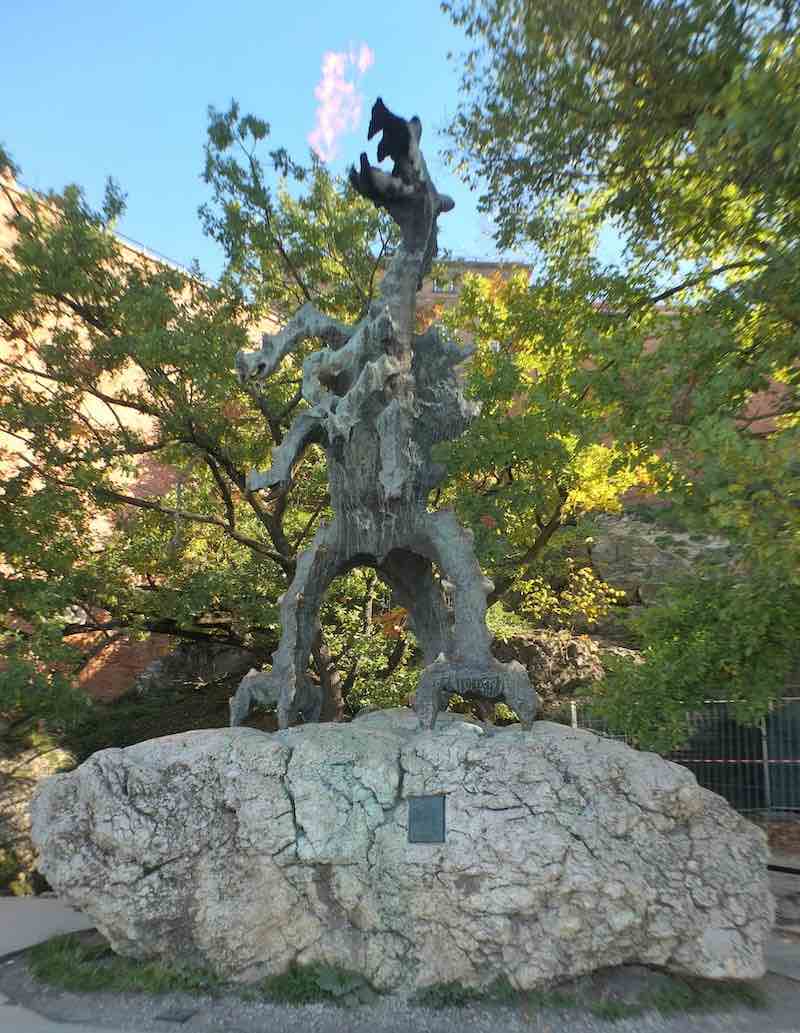
18. Check out the fire-breathing dragon
The Wawel Dragon Statue (Smok Wawelski) is a famous bronze sculpture located at the foot of Wawel Hill. It honours one of Poland’s medieval folktales. According to mythology, a fearsome, cave-dwelling dragon terrorised Kraków during King Krakus’s reign. After many knights failed to slay the beast, a clever local cobbler named Skuba defeated it by stuffing a lamb with sulphur and pitch.
The dragon devoured the bait, which left it with a burning thirst that drove it to drink from the Vistula River until it burst. Designed by renowned Polish artist Bronisław Chromy, the 6-metre (19-foot) metal monument was placed outside the dragon’s lair in 1972. The fire mechanism uses hidden natural gas nozzles built into its mouth to shoot bursts of flame every five minutes.
19. Explore Kraków’s Jagiellonian University
Founded in 1364, the Jagiellonian is Poland’s oldest university.
The main college (Collegium Maius) is the Jagiellonian University’s oldest building, dating to the 15th century. This magnificent example of Gothic architecture now houses the Jagiellonian University Museum, which showcases the university’s rich history and its influence on Polish culture. Visitors can stroll through the elegant courtyard or take a guided tour to admire the impressive rooms, including historic instruments once used for astronomy, meteorology, cartography, physics, and chemistry.
Collegium Maius is famous for the story of the legendary medieval astronomer and mathematician, Nicolaus Copernicus, who studied here in 1491–95. Famous 20th-century graduates included Nobel Prize winners Ivo Andrić and Wisława Szymborska, and Karol Wojtyła, the future Pope John Paul II.
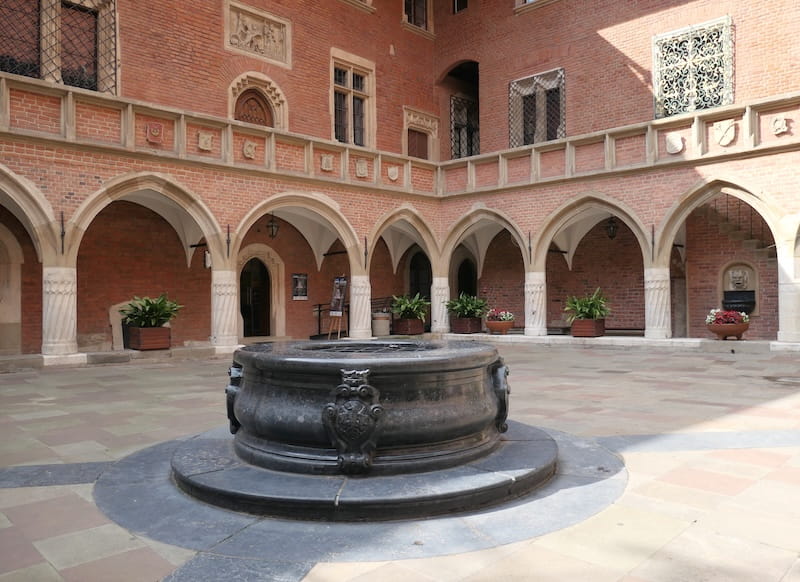
The Collegium Maius Clock in the courtyard plays an instrumental version of the Gaudeamus Igitur academic song, accompanied by a procession of six figures every two hours, five times a day between 09:00 and 17:00.
With over 5,000 plant species, the Botanic Garden of the Jagiellonian University (27 Kopernika Street in Wesoła, a ten-minute walk from Market Square) offers a relaxing escape from Kraków’s busy streets.
20. Explore Kazimierz, Kraków’s Jewish Quarter
Kazimierz, on the north bank of the Vistula River, is a trendy area of restaurants and nightclubs. Traces of the once vibrant neighbourhood remain in many of its old buildings.
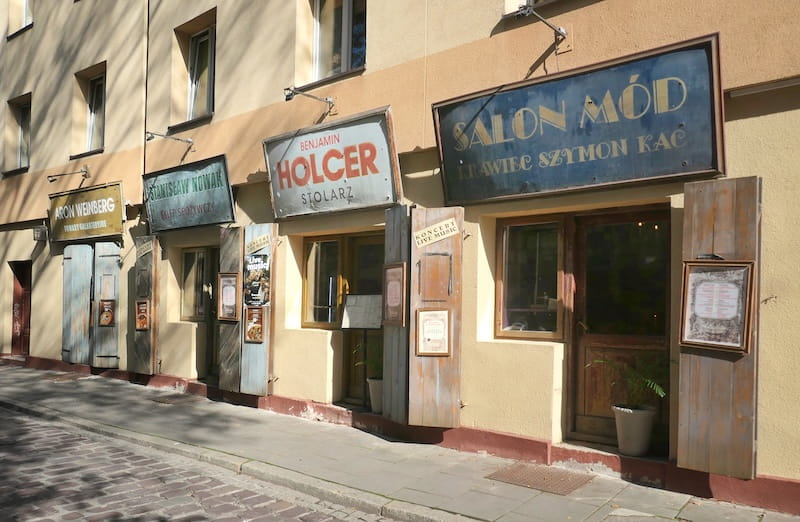
For example, several building facades on Szeroka Street display period-themed and restored wooden shop signs bearing the names of former Jewish merchants and tradespeople.
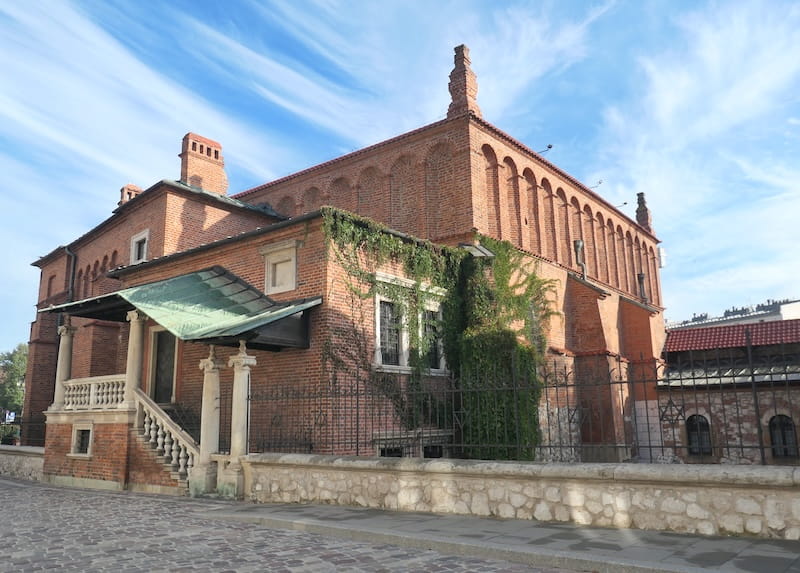
This building was a learning centre for Talmudic studies.
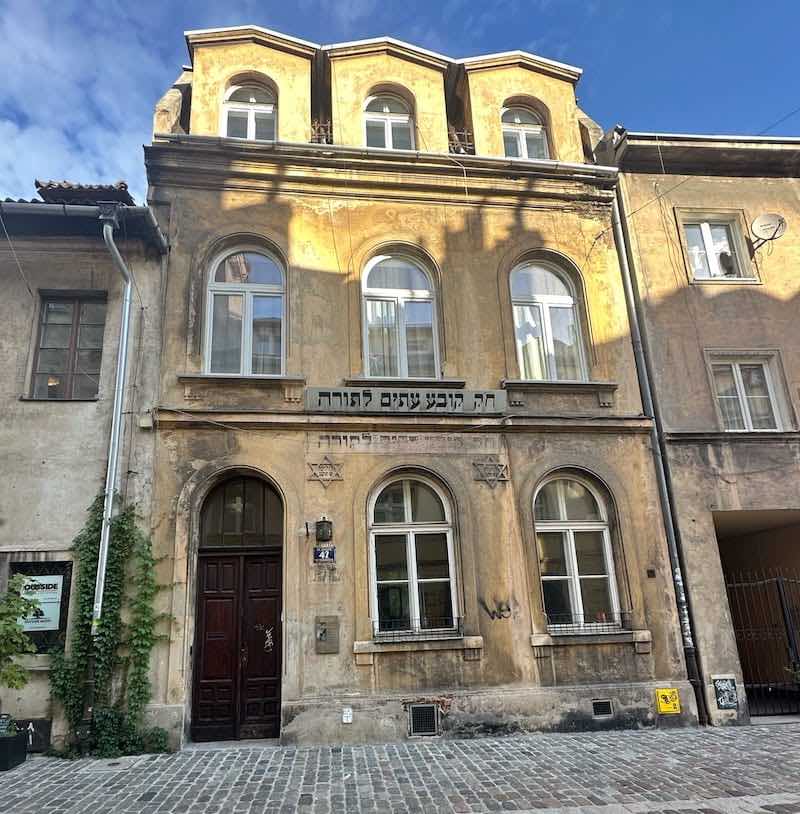
Of a pre-war population of 65,000 Jewish residents, only 2,000 survived the Holocaust. Before World War II, Kraków had at least 90 to 120 synagogues and active prayer houses serving its large Jewish population. Today, only seven remain from the pre-war period. The Old Synagogue is Poland’s oldest Jewish house of prayer, built in 1407. Today, the synagogue serves as the Jewish History Museum.
21. Visit the Remuh Synagogue cemetery and Wall of Tears
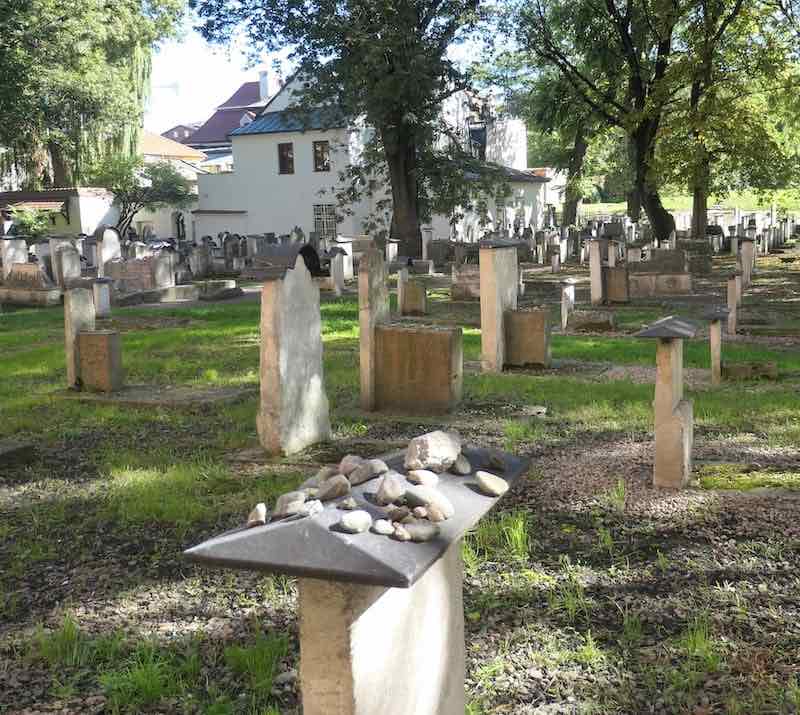
The Remuh Synagogue was built between 1553 and 1557.
Founded in 1551 and closed at the end of the 18th century, the Remuh Cemetery is the resting place of Moses Isserles, known as Remuh (1520–1572). The cemetery features Poland’s largest grouping of coffer (box-like) and stela (vertical tablet) tombs from the 16th to 18th centuries.
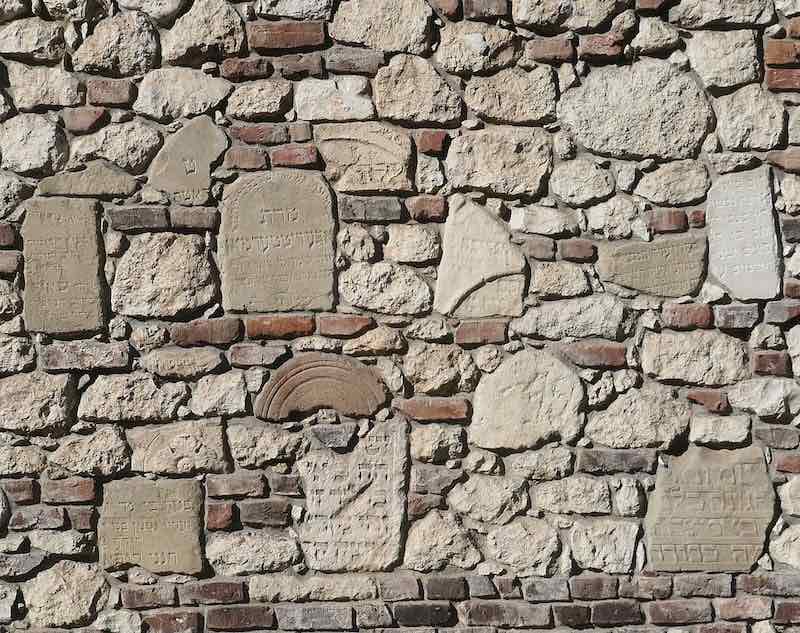
The Wall of Tears is a memorial wall made from broken Jewish headstones and grave markers desecrated by the Nazis during the occupation. People recovered the broken pieces and integrated them into the wall as a testament to the Jewish community’s memory and its thriving life in Kazimierz.
22. Pay tribute to Jan Karski
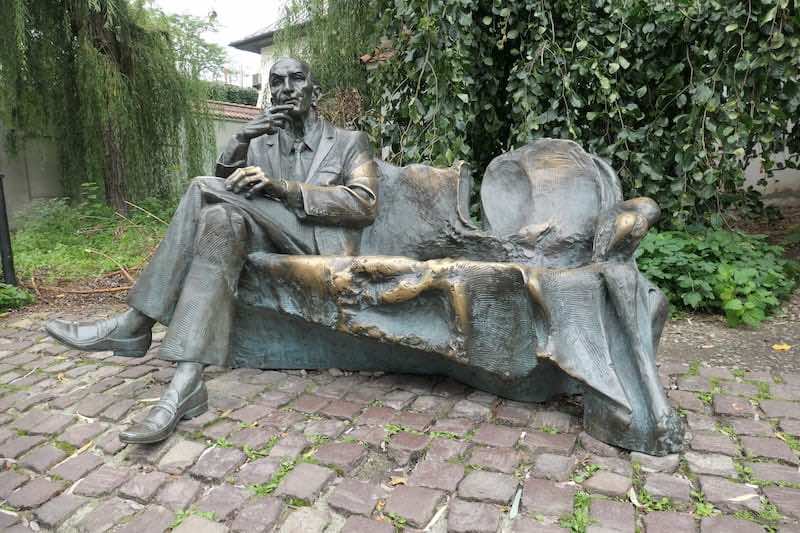
Jan Karski (1914–2000) was a resistance fighter and legendary courier of the Polish Underground during the Nazi occupation. He risked his life to bring eyewitness accounts of the Holocaust to the Allies.
In 1942, Karski was smuggled into the Warsaw Ghetto and the Izbica transit camp by Jewish underground leaders to witness firsthand the mass starvation, disease, and deportations to extermination camps. He travelled across occupied Europe to London and Washington, D.C., where he delivered detailed reports and microfilms to Allied leaders in 1943. As a result of his efforts to communicate the horrors of the Holocaust to the rest of the world, he is known as ‘the man who tried to stop the Holocaust’. The bronze statue of Jan Karski by local artist Karol Badyna sits on a bench near the Remuh Synagogue.
23. See Helena Rubinstein’s childhood home
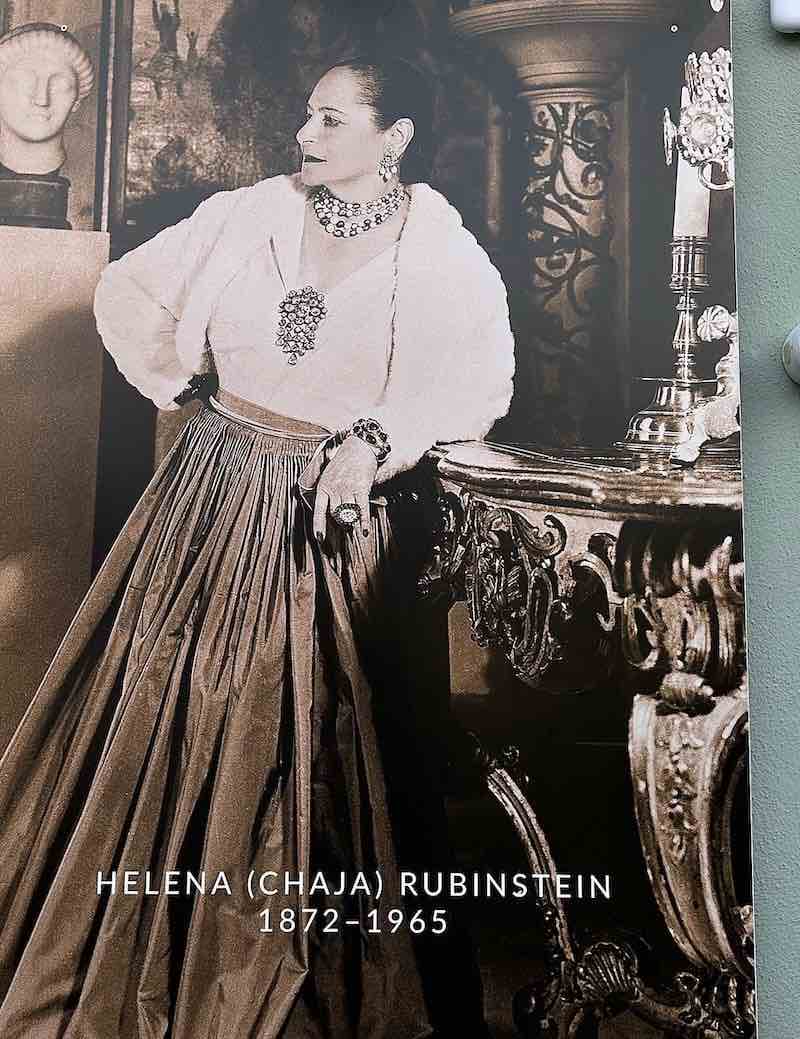
Opposite the Remuh Synagogue is the modest apartment of Helena Rubinstein where she spent her early years with her parents and seven sisters.
Originally named Chaja Rubinstein, Helena Rubinstein founded a beauty empire and ultimately ranked among the world’s wealthiest women. In 1896, at the age of 23, she emigrated to Australia to escape an unwanted, arranged marriage to an older, wealthy Orthodox Jewish man planned by her mother. She arrived with little money, no English, and a dozen small pots of face cream, which eventually inspired her global cosmetics business based on family recipes.
24. Visit the Sky Bar of the Rubinstein Hotel
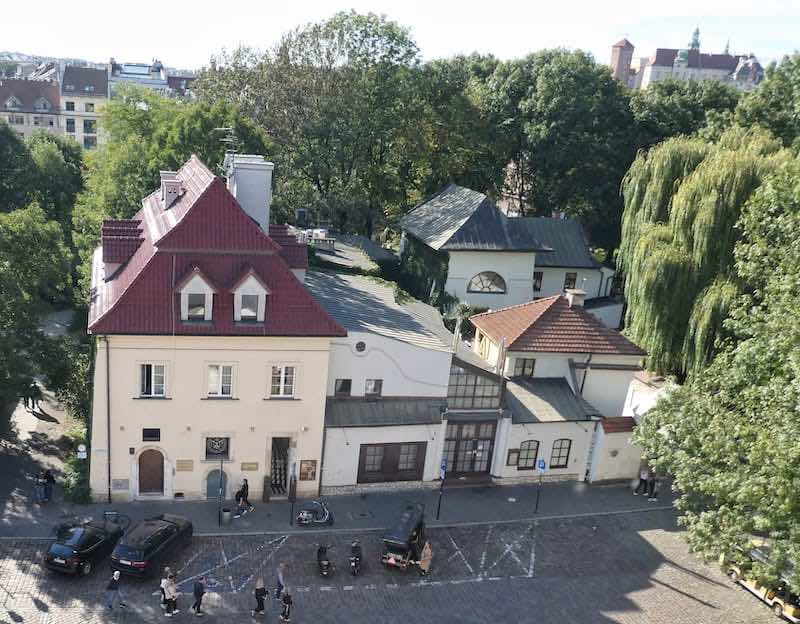
The nearby Rubinstein Hotel has a Sky Bar on the 5th floor with marvellous views of Wawel Hill and the Kazimierz district. The terrace is open daily from 12:00 to 22:00, weather permitting.
25. Enjoy a drink at the Singer Klub
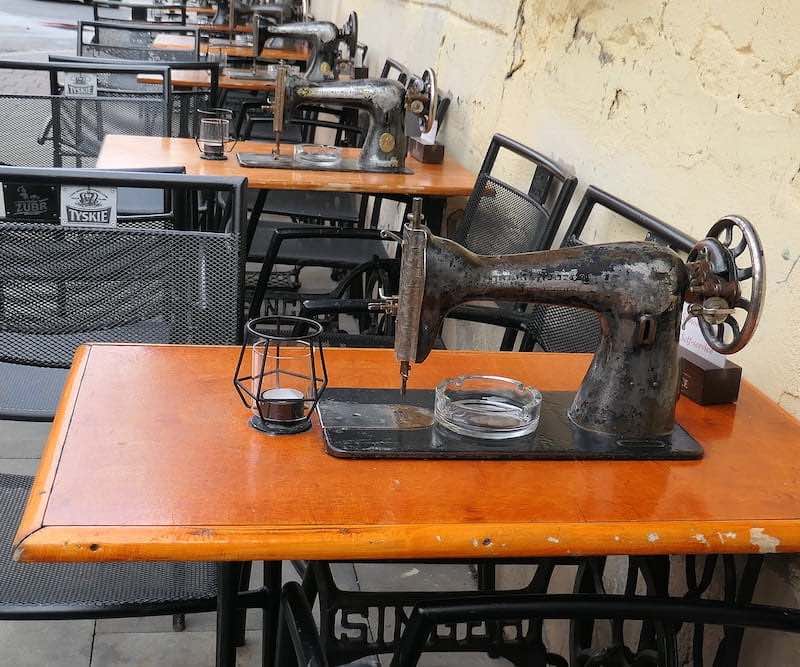
Singer Klub in the Jewish Quarter is a popular late-night bar decorated with Singer sewing machines and trestle tables inside and out. US-born Isaac Merritt Singer, founder of the Singer Sewing Machine Company, was of Jewish heritage (he had a father with a Jewish background, but he was not raised in the faith and lived his life as a Christian). However, the Singer Klub pays tribute to the Singer brand, rather than the founder, using antique Singer sewing machine bases as tables. This has contributed to the myth that a Singer factory once stood nearby. The bar played a pivotal role in the district’s revival following the fall of communism in 1991.
26. Wander around Kazimierz’s Market Square
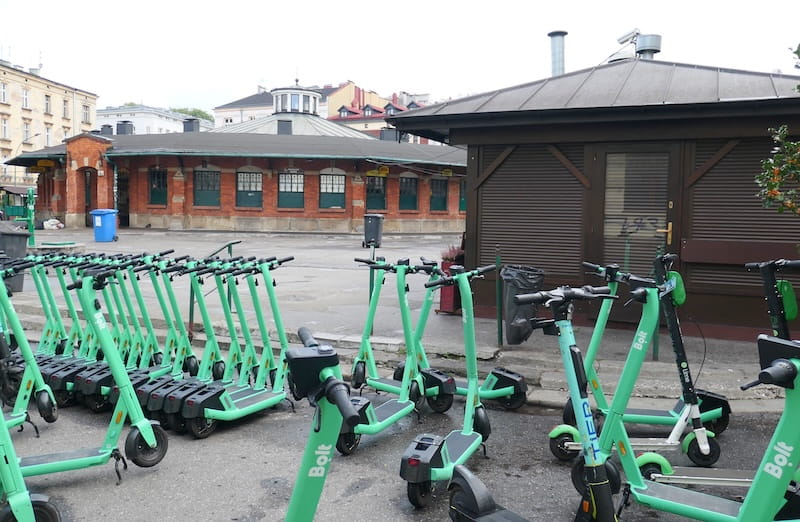
Kazimierz’s Market Square (Plac Nowy), is a vibrant hub of local trade in the Kazimierz quarter. The rotunda, affectionately dubbed the ‘Roundhouse,’ is at the centre. During the interwar period, part of the rotunda was a poultry abattoir. The open-air market extending around the Roundhouse offers a wide variety of products and services, including fresh fruit, vegetables, and traditional Polish food. Another attraction of Plac Nowy is the traditional Sunday flea market, popular with seasoned collectors and curiosity seekers.
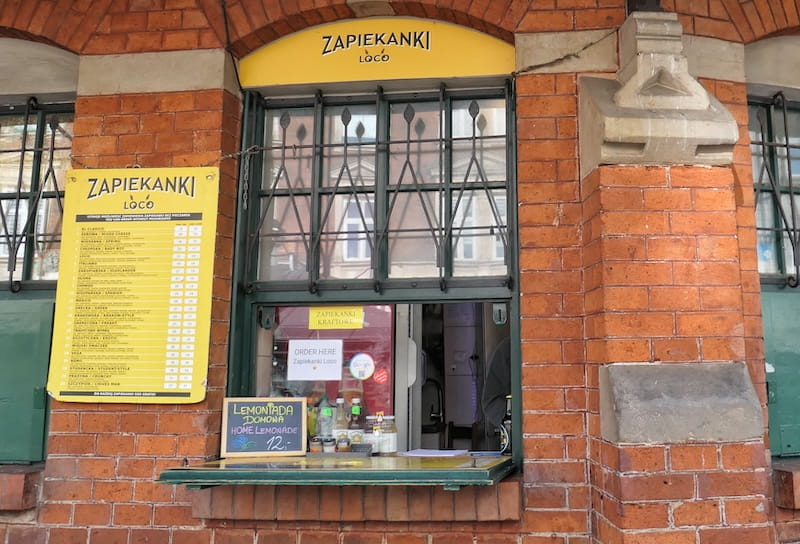
Today, Plac Nowy is regarded as the best place to enjoy zapiekanki. Zapiekanki, also known as Polish pizza, is a toasted open-face sandwich made with a sliced baguette, topped with sautéed white mushrooms and cheese (then topped with a multitude of choices) and sauces.
27. Cross the footbridge to Podgórze
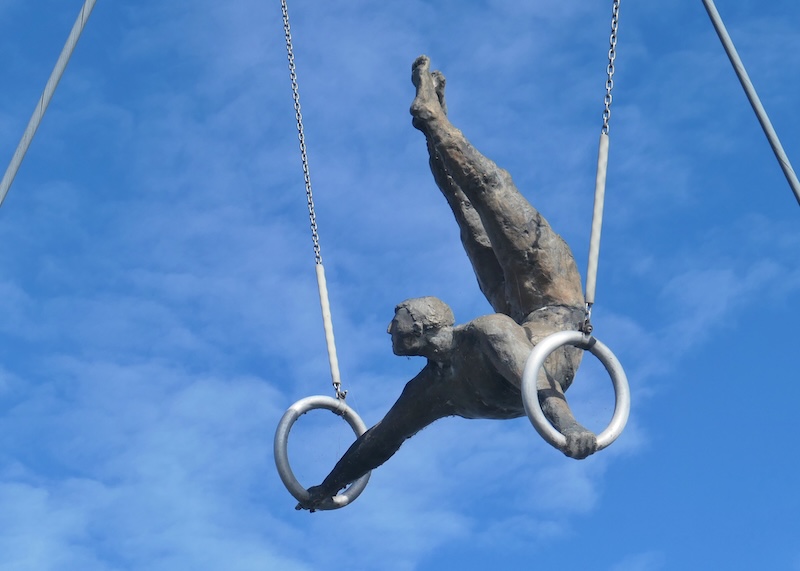
28. Visit remnants of the ghetto wall
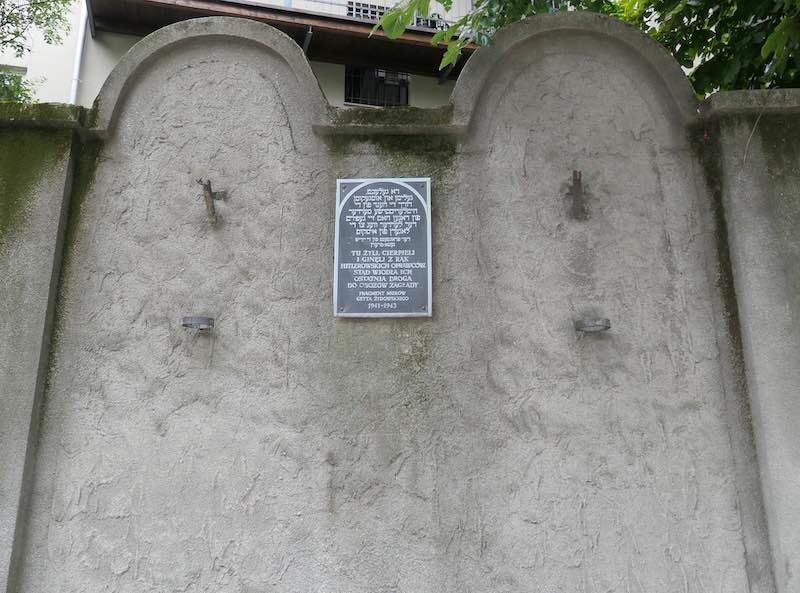
Tucked away in a quiet corner of the Podgórze neighbourhood on the south bank of the Vistula River, fragments of the old wall stand as a reminder of past oppression. In 1941, the area was enclosed by a wall of barbed wire and stone of a distinctive arched design resembling Jewish tombstones (matzevot), a cruel architectural detail conceptualised by the Nazis.
There are two sites to view the wall at Lwowska 29 and Limanowskiego 62. To the restored 12-metre stretch of the original wall at Lwowska 29, a commemorative plaque in Polish and Hebrew was added in 1983. It has been translated as “Here they lived, suffered and died at the hands of the Nazi executioners. From here their last road led to the extermination camps. Fragment of the walls of the Jewish ghetto 1941-1943”.
29. Pause by Ghetto Heroes Square
The Kraków Ghetto is within walking distance of Kazimierz. Its purpose was to exploit, terrorise, persecute, and eventually murder Polish Jews.
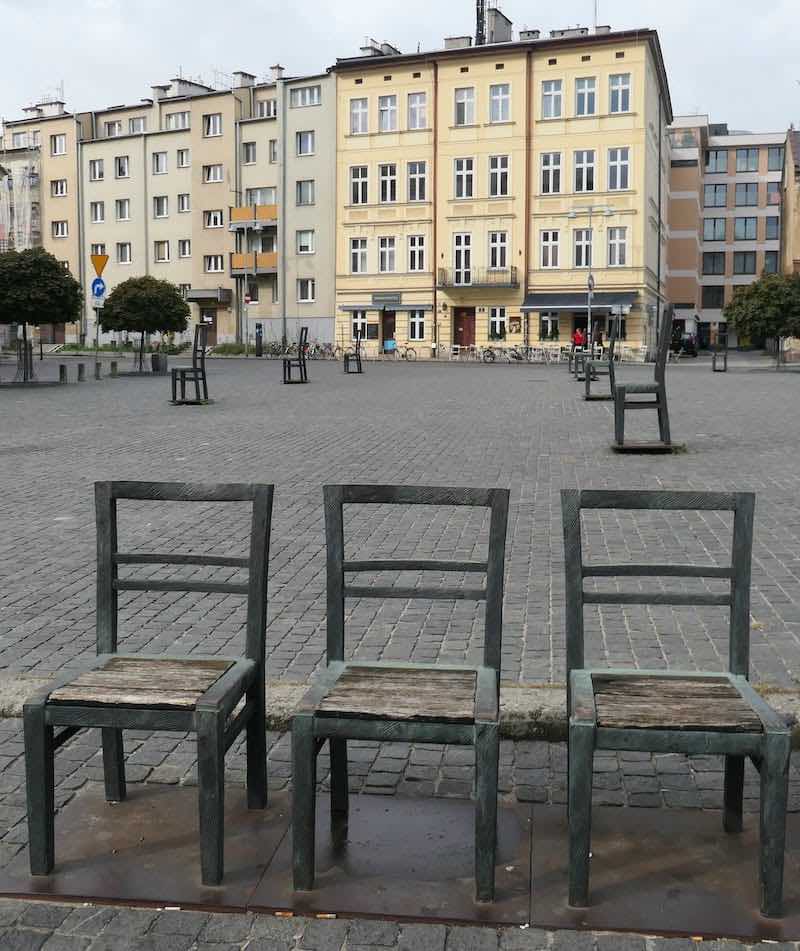
The square was used as a staging area for separating those selected for forced labour and those to be deported to extermination centres. Zgody Square (later named Ghetto Heroes Square or Plac Bohaterów Getta) served as the central assembly and selection point before deportation. Those selected to leave the ghetto were boarded onto trains or lorries and sent to Płaszów, Belzec, or Auschwitz. Today, 70 empty metal chairs (33 large and 37 smaller chairs) are scattered across the square to memorialise ghetto residents. Most chairs face the Eagle Pharmacy, while three specifically face Lwowska Street, where a fragment of the original ghetto wall still stands.
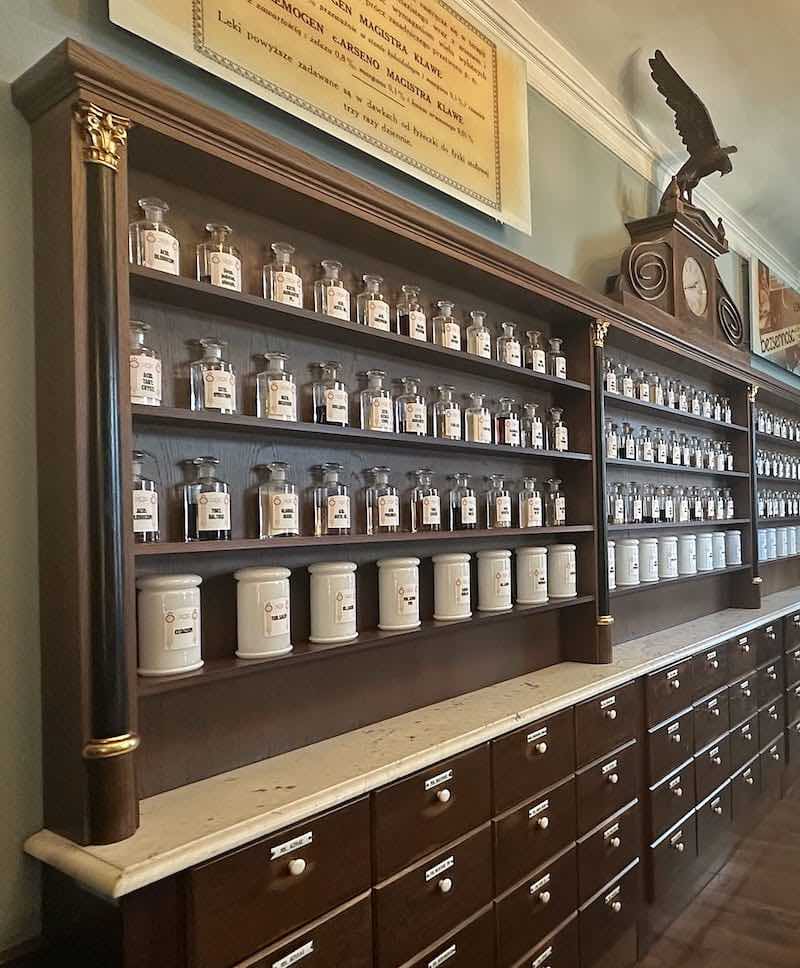
30. Visit the Eagle Pharmacy
The Eagle Pharmacy (Apteka Pod Orłem) operated on the edge of the former Zgody Square (Ghetto Heroes Square) since the early 20th century.
In 1934, Tadeusz Pankiewicz took over the pharmacy from his father and in 1941, when the Nazis established the Kraków Ghetto, he was the only non-Jewish Pole permitted to live and work inside the ghetto. He justified his request by pointing out that the ghetto’s only pharmacy would be helpful in the event of an epidemic.
It is now a museum, preserved to look as it did during the Nazi occupation, featuring interactive exhibits that detail the efforts of Pankiewicz and his staff to aid the Jewish community by providing food, medicine, hidden shelter, and forged documents.
31. Tour Oskar Schindler’s Enamel Factory
The museum has an excellent film and many interesting exhibits. There’s no need to take a guided tour; many people say it can be rushed (some leave to explore on their own). My experience was to take my time reading and lingering beside the exhibits, and moving at a comfortable pace. Book online (or risk scoring one of the tickets reserved for walk-ins, but expect to line up for as much as an hour).
Watching the film Schindler’s List in advance helps provide context. Oskar Schindler is credited with saving the lives of over 1,200 mostly Polish-Jewish workers from the Holocaust by designating them as essential. He was the subject of the 1982 novel, Schindler’s Ark, by the Australian author Thomas Keneally, which was adapted by Steven Spielberg in the 1993 film, Schindler’s List.
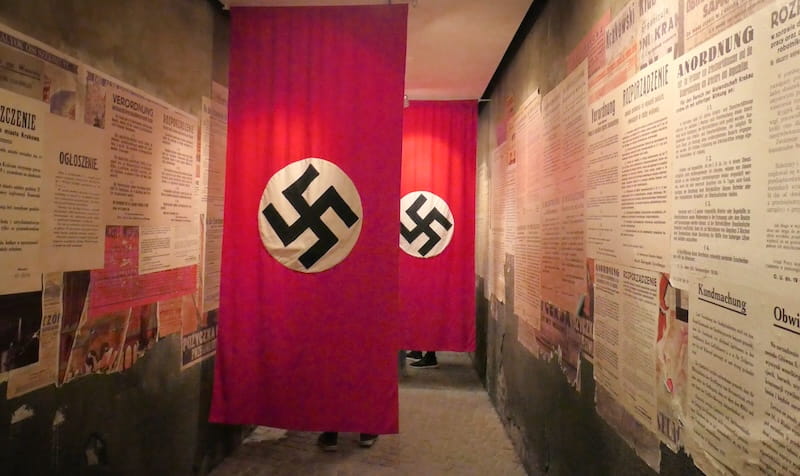
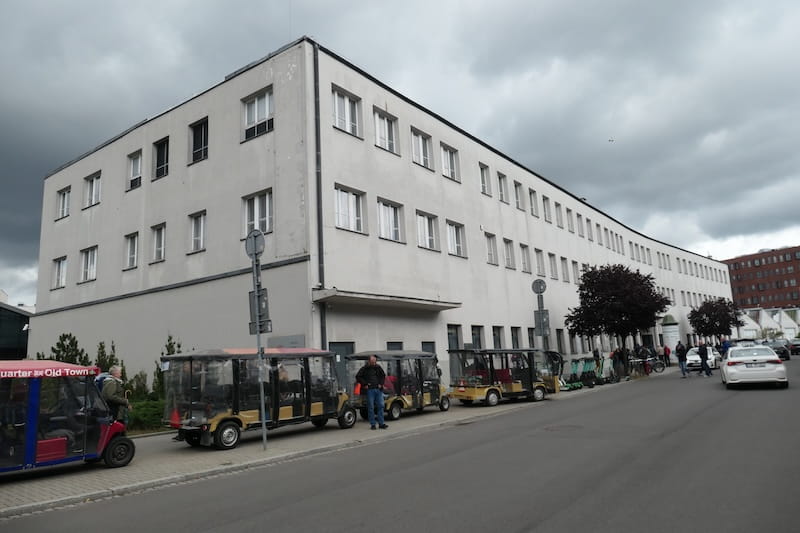
32. Check out Schindler’s List filming locations
Spielberg initially considered using film locations in Budapest, but the Jewish neighbourhood of Kazimierz in Kraków, where Kraków’s Jewish residents lived before being relocated to the Kraków Ghetto, offered many prime locations. Exterior shots of Oskar Schindler’s enamelware factory were filmed at the actual building at 4 Lipowa Street.
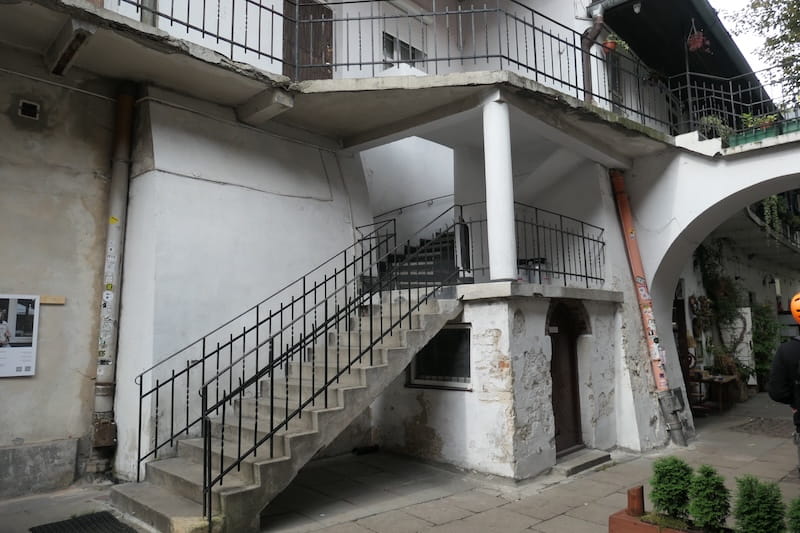
Another location was the famous alleyway scene at Józefa 12, commonly referred to as Schindler’s Passage (Pasaż Schindlera). Today, information panels feature educational text and photographs on the history of the Kraków Ghetto, the tragic events of the Holocaust, the everyday struggles of the Jewish population under Nazi occupation, and stories of Jewish resistance.
33. Take a tour of Nowa Huta
After many visits to sites associated with World War II, I signed up for Walkative’s Nowa Huta: Kraków’s Ideal Communist City Tour, a walking tour dedicated to the communist period from 1945 to 1989. It was centred in the neighbourhood of Nowa Huta, one of two still-existing “ideal communist cities” in the world. Started in 1949 to showcase communist industrial prowess, Nowa Huta took shape around the Vladimir Lenin Steelworks. In 1951, it lost its status as a separate town and was officially incorporated into Kraków as a new residential and industrial district eight kilometres (five miles) from central Kraków.
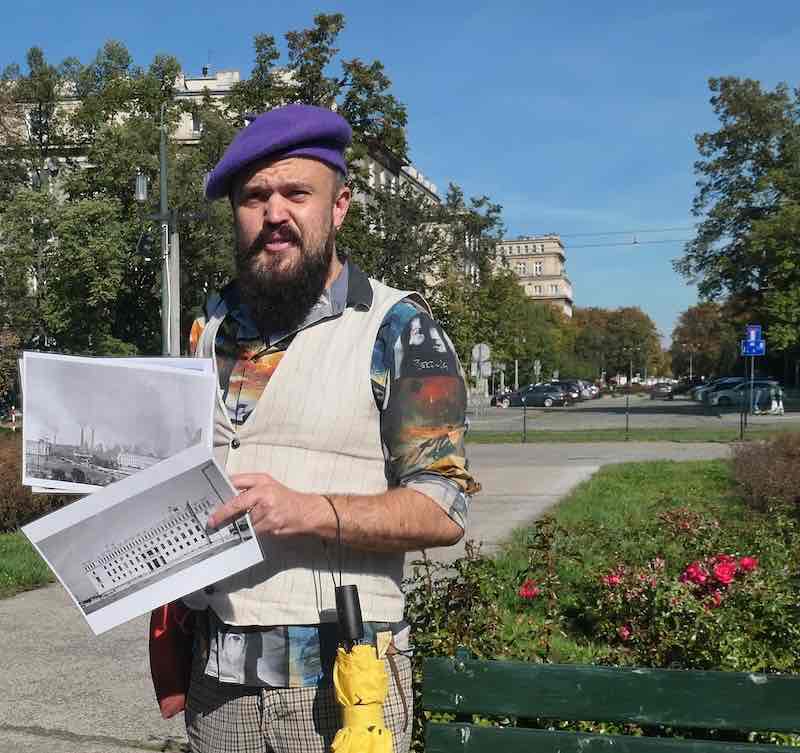
Nowa Huta offers a window into key shifts in 20th-century Europe’s political landscape. For example, a road named in tribute to the Cuban Revolution is now dedicated to Pope John Paul II. Plac Centralny, the huge main square, was renamed in honour of U.S. president Ronald Reagan, who is fondly remembered in Poland for his support of the Solidarność trade union movement.
The southern end of Plac Centralny has a ‘V for Victory’ monument dedicated to the strikers of the Solidarność movement of the 1980s. The pedestrian thoroughfare Aleja Róż (Avenue of Roses) once housed a 7-tonne monument to Lenin, torn down in 1989. It now stands in a theme park in Sweden.
The walking tour visited housing estates and green spaces, and paused at a monument honouring the resistance movement that secured the community’s first church.
The tour ended under the bells of the magnificent Arka Pana church with a moving commentary on the groundbreaking Polish trade union movement that emerged in August 1980 at the Lenin Shipyards in Gdańsk. Solidarność became the first independent labour union in the Soviet bloc, rapidly growing to almost 10 million members and uniting workers, intellectuals, and the Catholic Church. After the Communist regime imposed martial law and outlawed the union in 1981, Solidarność survived underground, re-emerging in 1989 to force negotiations leading to elections that triggered the collapse of communism across Central and Eastern Europe.
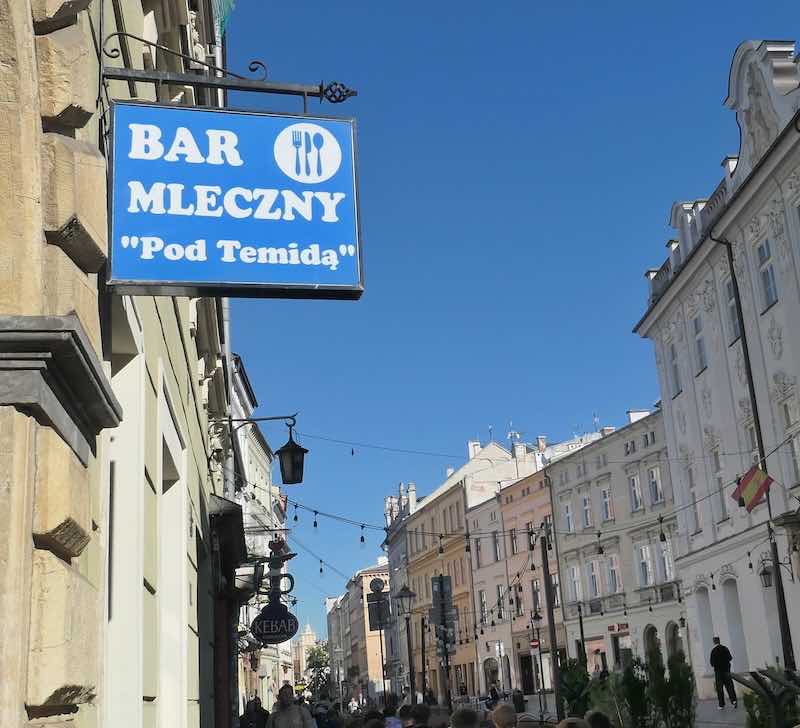
34. Enjoy cheap dishes at a milk bar
35. Enjoy Polish cuisine
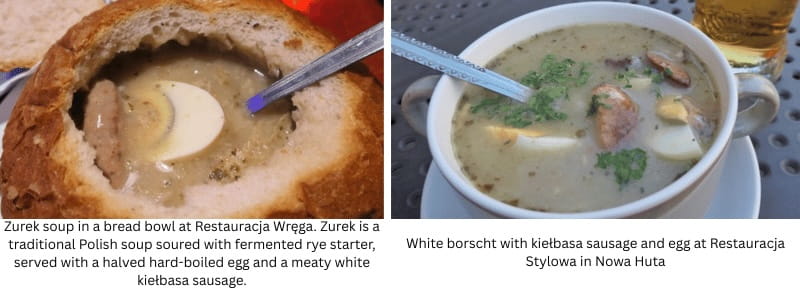
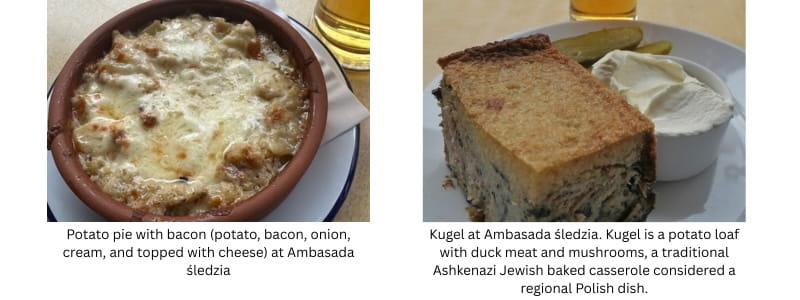
Traditional Polish food is dominated by soups, meats, bread, mushrooms, potatoes, and pickles. Here are some of the dishes I enjoyed at restaurants in Kraków.
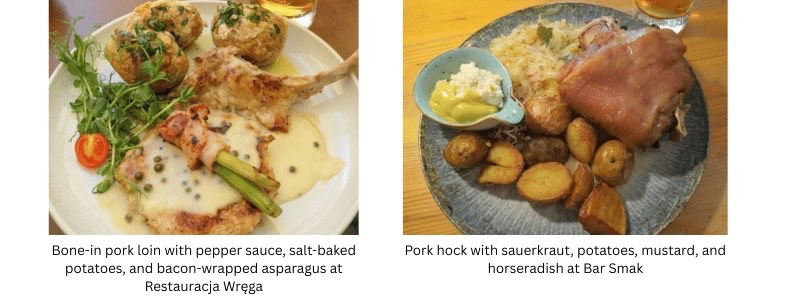
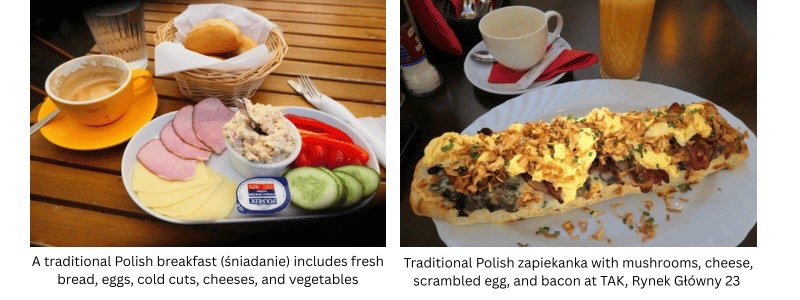
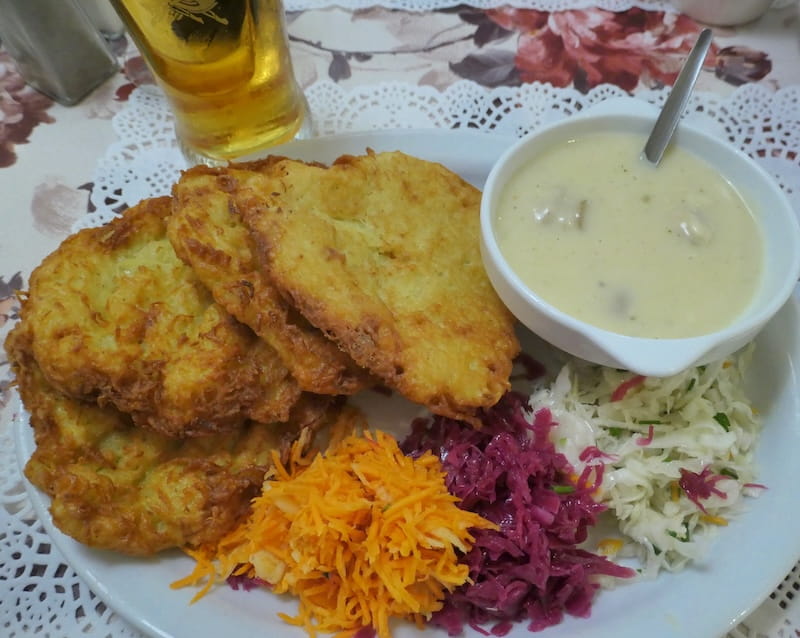
36. Take a day trip
The two most popular day trips are to the Wieliczka Salt Mine and Auschwitz-Birkenau.
(i) Wieliczka Salt Mine
Excavation in the historic underground salt mine in the town of Wieliczka began in the 13th century and operated continuously for roughly 700 years until commercial rock salt production ended in 1996. The mine reaches depths of up to 327 metres (1,073 feet) across nine underground levels and between 245 and 287 kilometres of tunnels, galleries, and chambers.
Visitors on the ‘Tourist Route’ explore underground lakes, subterranean chapels, statues, altars, reliefs, and chandeliers carved entirely out of solid rock salt by miners and artists.
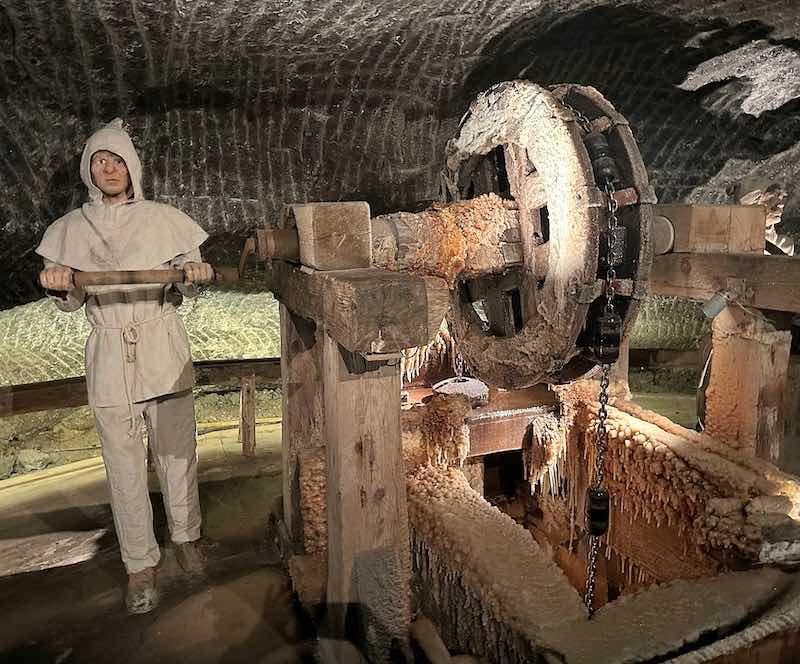
Visitors on the ‘Miners Route’ explore 2.5 kilometres (1.5 miles) of historic mining tunnels and chambers with original mining equipment, narrow passageways, underground workstations, hands-on mining tasks, and stories of Polish miners
(ii) Auschwitz-Birkenau
The Auschwitz Memorial and Museum was the site of unimaginable horrors in the 1940s. In 1979, it was inscribed as a UNESCO World Heritage Site given its direct association with the atrocities of the Holocaust.
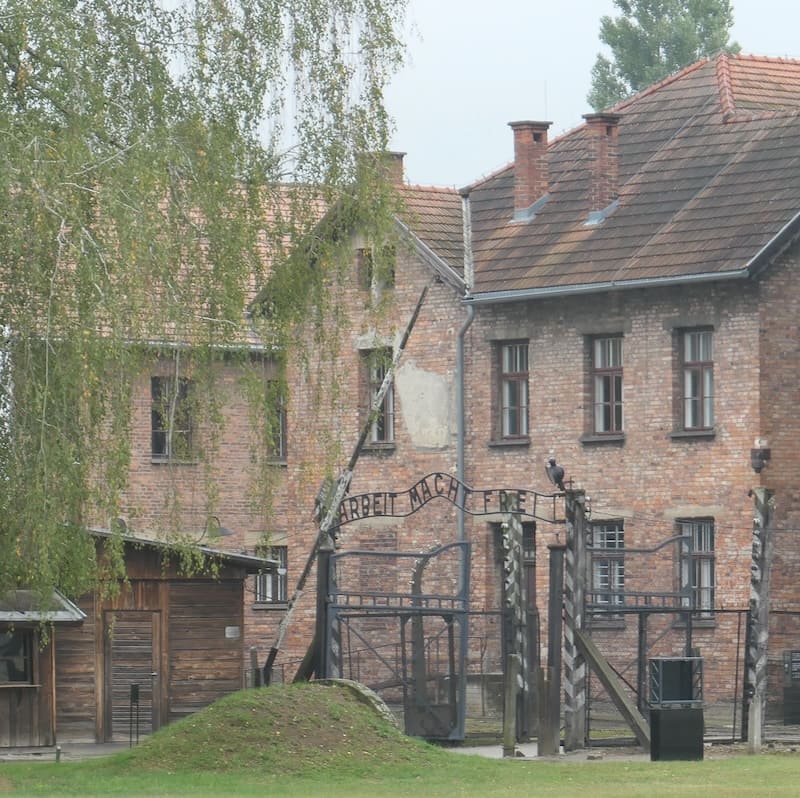
The two former camps of Auschwitz I and Auschwitz II-Birkenau became notorious for their immense scale and the estimate that 1.1 million people perished at the hands of the Nazis.
Auschwitz I and Auschwitz II-Birkenau are in the town of Oświęcim, 70 kilometres (43 miles) from Kraków. Both former camps are 3.5 kilometres apart.
The memorial attracts many visitors. Entry passes are released 90 days in advance, and early bookings (online at the museum site) are essential. For information on tours and transportation, see 15 Essential tips for visiting Auschwitz in Poland.
Are you planning a visit to Poland? If so, you may be interested in 15 Essential tips for visiting Auschwitz in Poland and 25 Best budget-friendly things to do in Gdansk Poland.
If you found this post helpful, please share it by selecting one or more social media buttons. Have you visited Kraków? If so, what other sites and experiences should be added to this list? Please share your thoughts in the comments. Thank you.
Pin it for later?